

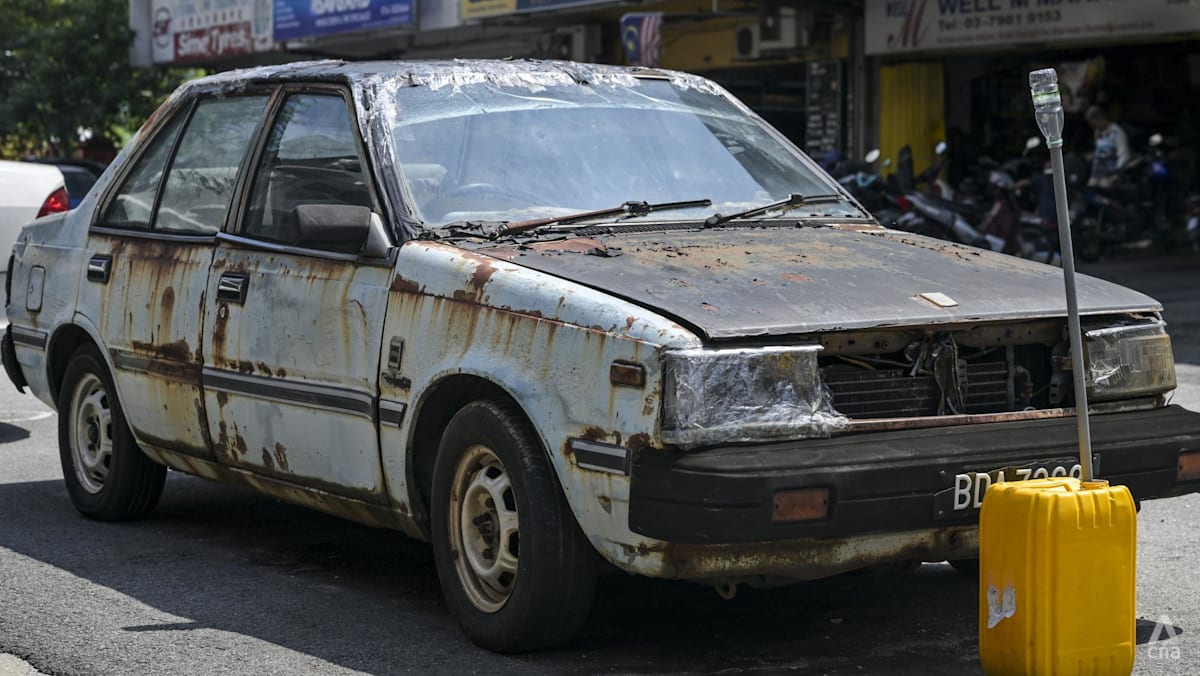
Those caught placing obstacles in public places could be fined up to RM500 (US$123) for the first offence and up to RM1,000 for subsequent offences.
If the vehicle remains unclaimed, the local authority will apply for a court forfeiture order before selling or disposing of it. This court application is the longest part of the process, taking one to three months.
“Whenever we wanted to dispose of an abandoned car, we had to get a court order. And the process, when it touched legal (matters), got very long,” former DBKL advisory board member Andre Lai told CNA.
SPEEDING IT UP
In his interview with The Star, Nga – the local government minister – highlighted that an additional legal route under the Road Transport Act allows broken down or abandoned vehicles on roads to be removed and, if unclaimed after notice, disposed of without going through the full court process.
A review of the existing guidelines, in force since 2020, found the process too lengthy, particularly when authorities struggled to trace owners or prepare investigation papers for court forfeiture, he said.
Chan, the lawyer, pointed out that the legal route the minister was referring to granted powers to specific authorities, rather than local councils generally.
“Therefore, the law should define what an abandoned vehicle is, who may remove vehicles on public roads and in strata developments, and fixed timelines for notices, towing and disposal with automatic period lapses,” he said.
“Even if local councils are allowed to dispose of abandoned vehicles without a court order, owners should be given a simple way to appeal, so that any issue of wrongful detention can be heard before a proper forum.”
CNA has contacted Nga and DBKL for comment.

