

Singapore, as a regional technology and cloud computing hub, could see its data centre operators and technology companies face additional compliance requirements.
Malaysia, meanwhile, could face questions about how the new restrictions might affect its rapidly expanding data centre industry.
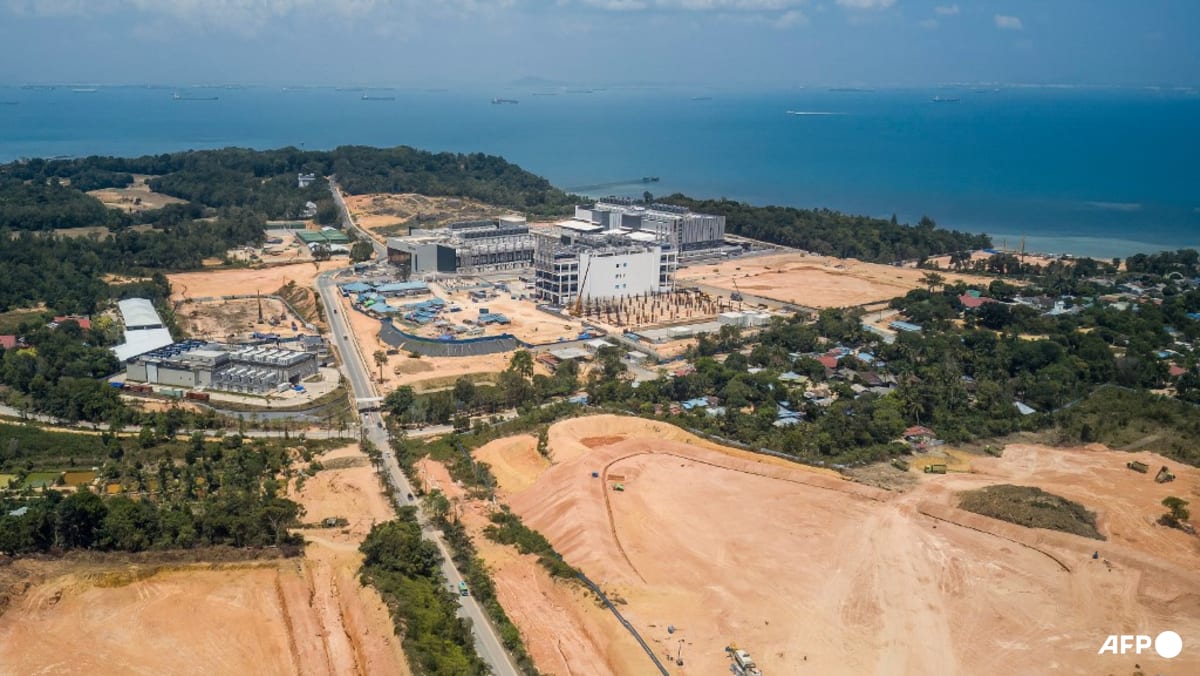
The country has attracted major investments from international technology companies, with Johor emerging as a significant location for new facilities.
The New Straits Times (NST) reported that Malaysia’s construction players with heavy exposure to data centre builds could be affected by a potential slowdown in the rollout of future projects.
In its report, NST said that facilities relying on Chinese AI customers could face longer licensing and customer-verification processes, while projects established by US hyperscalers are expected to be better positioned to meet the new requirements.
Indonesia and Thailand could similarly face additional regulatory hurdles as they seek to attract investments in AI infrastructure and cloud computing.
SMU’s Liu said that the new US rule “links licensing decisions to the effectiveness of each country’s own export controls”.
“That does not formally delegate enforcement to regional governments, since the obligations fall on companies, but it does raise expectations of those governments. How each government responds remains its own decision,” Liu said.
But he warned that the effects may be felt beyond the countries named under the new rules.
“Some of the restrictions are not tied to where a data centre is located, and the rule leaves room for more countries to be added, which may itself be read as a signal to others. How far these restrictions spill over into other markets in the region and beyond remains to be seen.”
Amid the US-China technology rivalry, Associate Professor Eduardo Araral from the National University of Singapore’s Lee Kuan Yew School of Public Policy warned that Southeast Asia is increasingly caught in the middle.
“But ASEAN countries should resist being pushed into a binary choice between the US and China. Their economic interests are better served by keeping their options open,” he said, referring to the regional bloc, Association of Southeast Asian Nations.

