



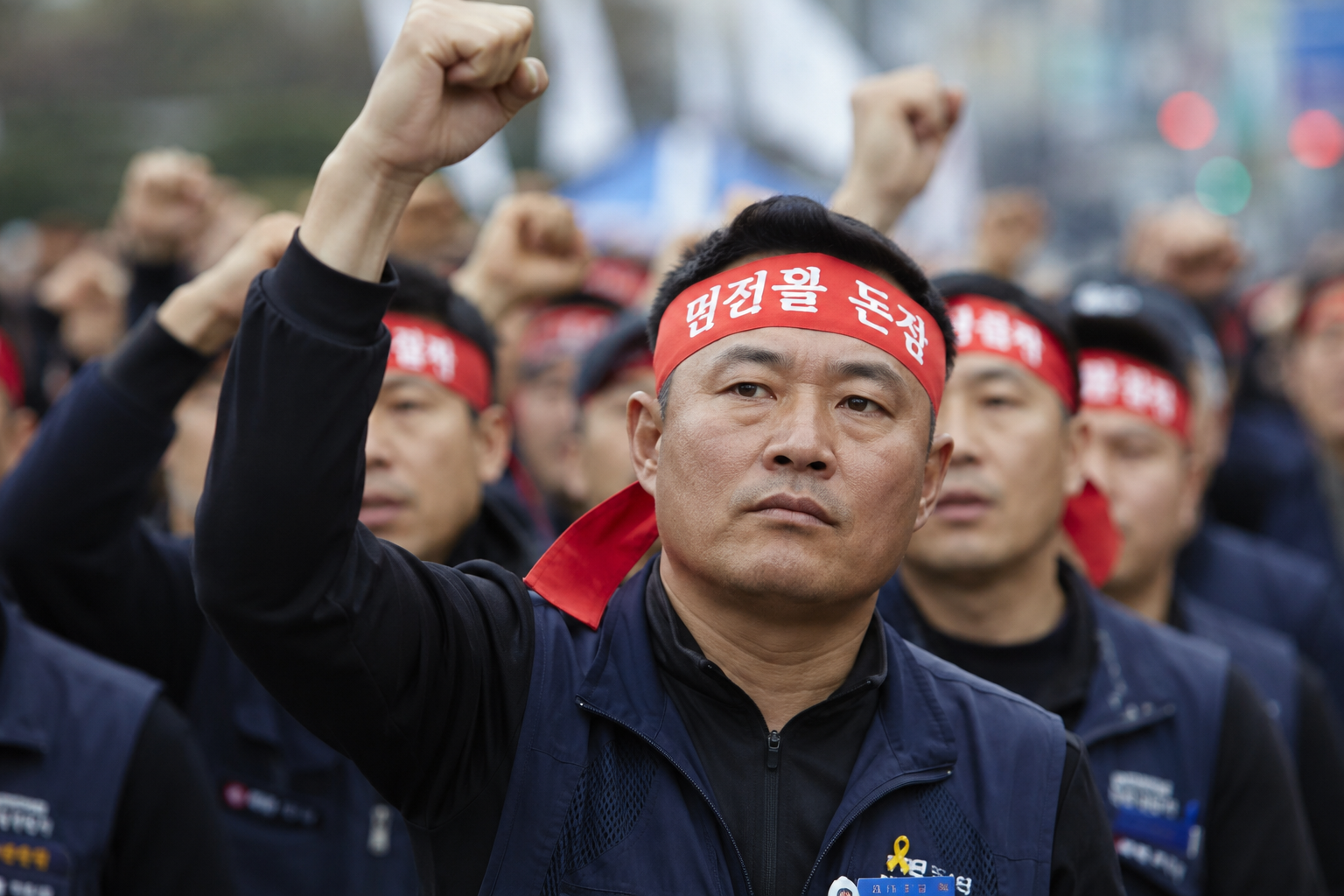
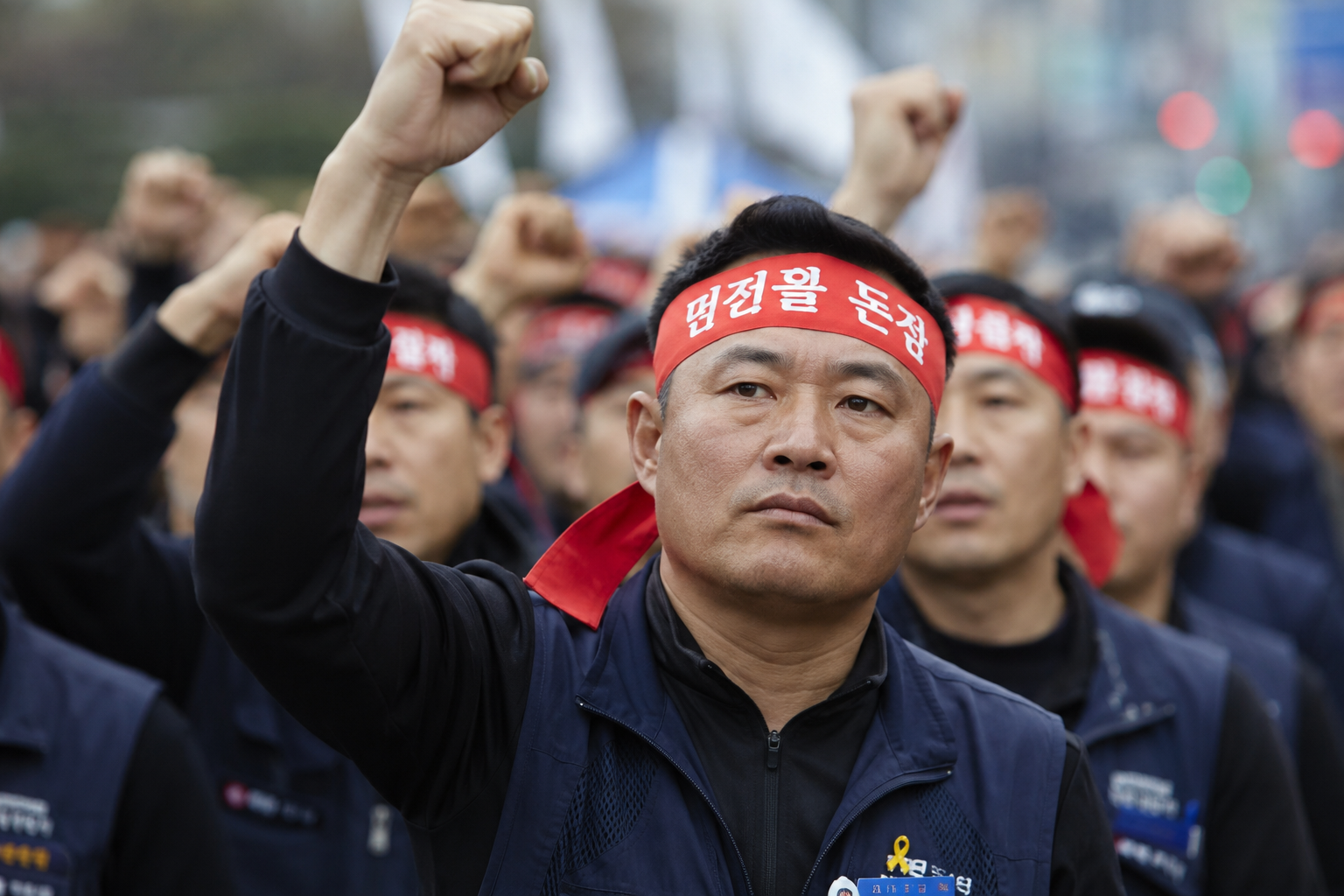
South Korean companies are facing growing concerns over future labour negotiations after Samsung Electronics reached a landmark agreement with its union that ties worker bonuses directly to semiconductor operating profits.
The government-mediated pact, approved by unionised Samsung workers on Wednesday, helped avert a large-scale strike involving the company’s semiconductor division.
The agreement is being viewed as a significant breakthrough for Samsung’s labour unions and could reshape bonus negotiations across South Korea’s corporate sector.
Under the deal, Samsung agreed to allocate 10.5% of its semiconductor operating profit to special bonuses for chip workers.
The company also removed a cap that had limited special bonuses linked to a unit’s performance to 50% of a worker’s salary.
The agreement additionally covers 10 years of earnings.
The deal comes as profits at Samsung’s semiconductor division surged due to the artificial intelligence boom.
The company also faced mounting pressure from workers upset over widening bonus disparities with rival chipmaker SK Hynix.
According to the report, some Samsung memory chip workers are expected to receive total bonuses worth $416,000.
Labour experts warn of wider fallout
The agreement has sparked concerns among academics, business groups, and policymakers that unions at other major South Korean firms may now demand similar arrangements.
Kim Keechang, a professor of law at Korea University, said the deal could trigger broader labour disputes.
“It could start a new fire at other big companies in Korea,” Kim said, as cited in a Reuters report.
Kim added that the agreement breaks with long-standing global practices surrounding corporate earnings distribution.
He noted that bonuses are generally calculated after taxes are paid, whereas Samsung’s chip workers effectively secured a share of operating profit before taxes.
Even South Korean President Lee Jae Myung expressed reservations before the agreement was finalised.
Business groups also reacted cautiously to the development.
The Korea Enterprises Federation said in a statement that Samsung’s agreement reflected “special circumstances” and warned labour groups against spreading “excessive bonus demands” across industries.
Rivalry with SK Hynix intensified pressure
Samsung’s decision appears closely tied to growing frustration among its semiconductor workers over compensation differences with SK Hynix.
According to Samsung’s union, employees had been leaving for SK Hynix in large numbers.
Without the agreement, around 48,000 workers were expected to launch an 18-day strike.
Media reports cited in the draft stated that SK Hynix allocated 10% of its operating profit to bonuses last year while revising its bonus cap structure.
Under the updated system, chip workers reportedly received bonuses nearing 3,000% of their base salary for the previous financial year.
SK Hynix did not respond to requests for comment regarding its pay structure.
Other unions push for profit-linked bonuses
The ripple effects of Samsung’s agreement are already becoming visible across other sectors.
Workers at internet company Kakao and four affiliates have threatened strike action unless demands, including allocating 13%-15% of operating profit toward bonuses, are met.
A labour commission is currently mediating discussions.
Meanwhile, unions at telecom operator LG Uplus and shipbuilder HD Hyundai Heavy Industries have also demanded that at least 30% of operating profit be allocated to performance compensation.
At Samsung Biologics, workers staged a five-day strike this month demanding 20% of operating profit be distributed as performance bonuses.
The dispute remains unresolved, with workers refusing overtime and holiday shifts.
New labour law may intensify disputes
South Korea’s labour tensions are also being shaped by regulatory changes and rising union activity.
Government data showed around 13% of the country’s workforce was unionised in 2024, slightly below the OECD average.
However, labour strikes occur more frequently in South Korea than in neighbouring Japan, a factor foreign firms have previously cited as discouraging investment.
The country’s labour militancy has long been linked to public resentment toward large family-controlled conglomerates, or chaebols, which many workers view as highly authoritarian.
Traditional union activity has already increased this year.
In February, there were 113 filings seeking dispute mediation, compared with 105 during the same month last year.
The recently implemented Yellow Envelope Act is also expected to strengthen labour activity further.
The law expands protections for subcontractors while making it more difficult for companies to financially retaliate against striking workers.
On the day the law took effect, around 400 subcontractor union groups representing 81,600 members demanded wage negotiations with management, according to the Korea Labor Institute.
The Federation of Korean Trade Unions said after the Samsung deal that company growth and production were the result of “many partner companies and workers working together.”
The federation also called for measures to ensure “the fruits of performance can be fairly distributed to partner-company workers.”
The post Samsung bonus pact marks major shift in South Korea’s labour landscape appeared first on Invezz

