



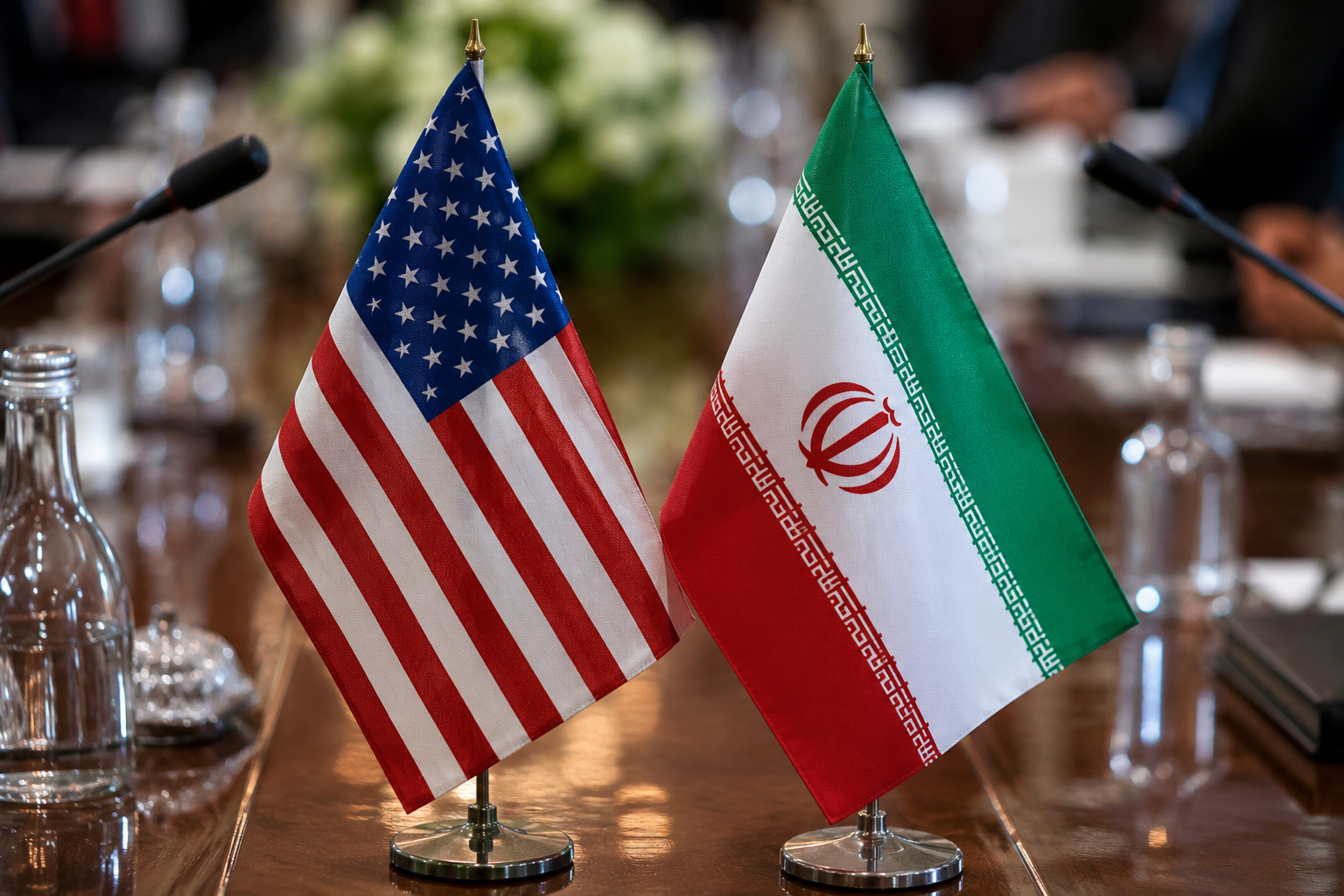
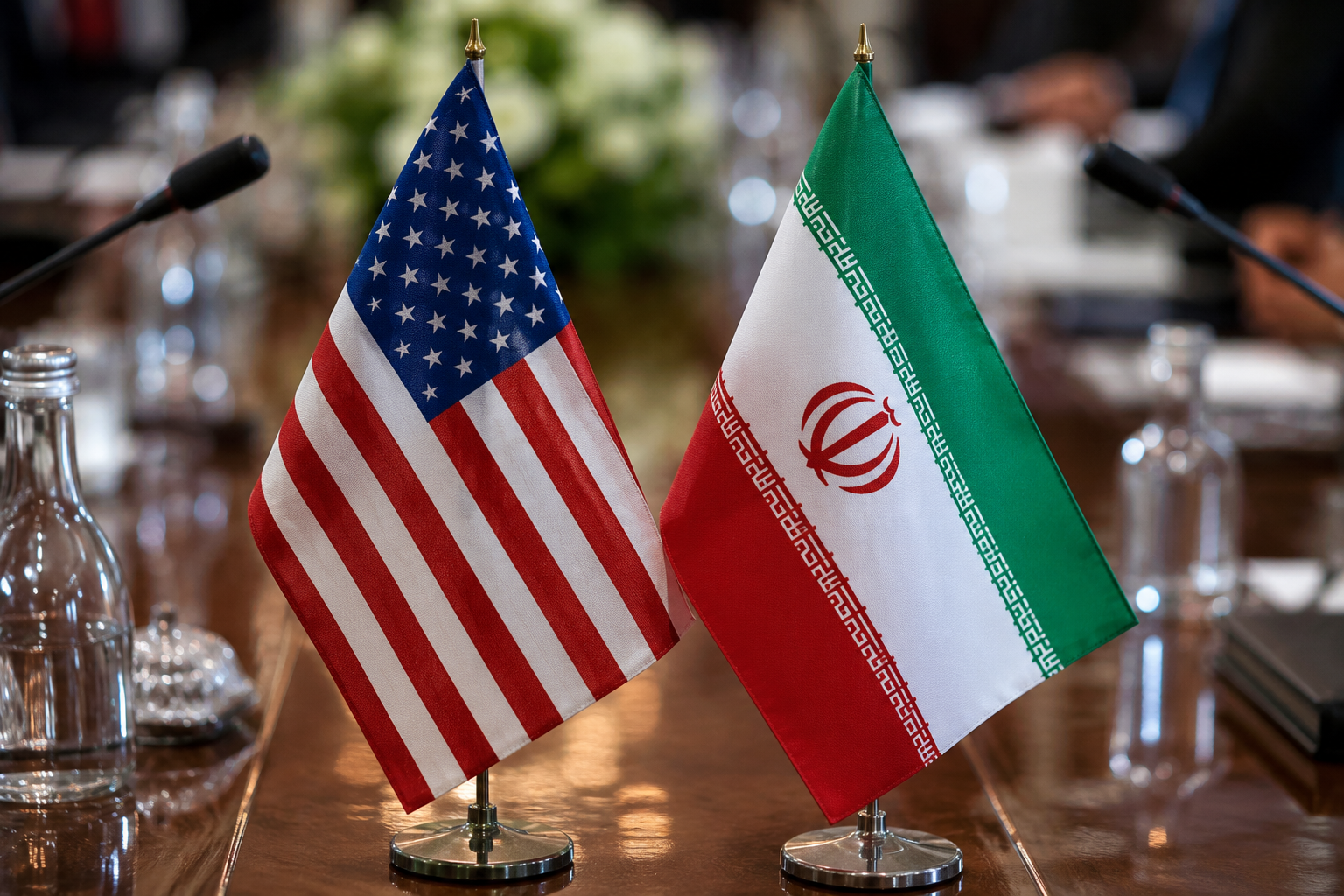
Negotiations between the United States and Iran entered a precarious new phase on Tuesday after overnight American strikes in southern Iran intensified fears of a wider regional confrontation.
The escalation threatened to derail already fragile diplomatic efforts between the two countries.
The military action came even as officials from both countries continued to publicly signal that indirect talks aimed at ending hostilities and reaching a broader agreement were still alive.
Yet the exchange of warnings, military activity around the Strait of Hormuz, and increasingly combative rhetoric highlighted how vulnerable the negotiations remain.
Markets, meanwhile, oscillated between optimism over a possible breakthrough and anxiety that another escalation could disrupt global energy flows and prolong instability across the Middle East.
Overnight strikes raise tensions
Explosions were heard overnight in Bandar Abbas, a strategically important Iranian port city near the Strait of Hormuz, according to the Islamic Revolutionary Guard Corps (IRGC).
Iranian media outlets also reported similar sounds near Sirik and Jask along the Persian Gulf coastline.
Shortly afterward, US Central Command confirmed that American forces had carried out what it described as “self-defense strikes” in southern Iran.
CENTCOM spokesman Timothy Hawkins said the strikes were conducted “to protect our troops from threats posed by Iranian forces,” adding that the targets included “missile launch sites and Iranian boats attempting to emplace mines.”
The Strait of Hormuz remains one of the world’s most critical oil shipping chokepoints, and any military confrontation around the waterway risks disrupting global energy supplies and financial markets.
US Secretary of State Marco Rubio defended the operations, saying “the straits have to be open, they’re going to be open one way or the other, so they need to be open.”
Iran responded with sharp warnings.
The IRGC later said it had “shot down a US drone and forced a US drone and fighter jet to flee,” though it did not specify exactly when the incidents occurred.
In a statement carried by Iranian state-affiliated media, the IRGC warned against “any violation of the ceasefire by the aggressive US military,” adding that it “considers its right to reciprocal response to be legitimate and certain.”
Trump insists negotiations are moving forward
President Donald Trump on Monday had maintained that negotiations with Tehran were continuing.
Speaking on Monday in the United States before the strikes became public, Trump said discussions were “proceeding nicely.”
But he also warned that failure to secure an agreement could quickly lead to renewed military escalation.
“It will only be a Great Deal for all or, no Deal at all,” Trump said, threatening to take matters “Back to the Battlefront and shooting, but bigger and stronger than ever before.”
Rubio echoed that position on Tuesday while visiting Jaipur, India, suggesting that negotiations had entered a technically difficult stage centered around specific language in the draft framework.
“There were some talks going on in Qatar today, so we’ll see if we can make progress,” Rubio said.
“I think it’s a lot of talking back and forth going on about specific language in the initial document, so it’ll take a few days. The president’s expressed his desire to make it. He’s either going to make a good deal or no deal.”
Qatar has emerged as one of the principal intermediaries in the negotiations, with regional mediators attempting to keep communication channels open despite repeated military incidents.
Iran signals limited progress but warns against retreat
Iranian officials also indicated that some diplomatic progress had been made, though they cautioned that major disagreements remain unresolved.
Iran’s Foreign Ministry said a “degree of understanding” had been reached with the United States on several issues, while emphasizing that a final agreement was not close.
At the same time, Iran’s leadership signaled it was unwilling to soften its broader strategic posture.
Iran’s supreme leader, Mojtaba Khamenei, on Tuesday said the latest confrontation demonstrated that American military installations in the region were increasingly vulnerable.
The newly appointed head of Iran’s Supreme National Security Council also struck a defiant tone, declaring that “there will be no retreat” in Iran’s struggle against the United States and Israel.
Iranian media reported that Tehran is seeking the release of roughly $24 billion in frozen overseas funds as part of any agreement being negotiated with Washington.
That demand could become one of the central sticking points in future talks, especially given political sensitivities in Washington surrounding sanctions relief.
What are the issues that remain unresolved?
Although negotiators appear to be discussing interim arrangements aimed at reducing hostilities, several of the most contentious issues surrounding Iran’s nuclear programme remain unresolved.
Among the biggest disputes is the fate of Iran’s highly enriched uranium stockpile.
According to the International Atomic Energy Agency, Iran currently possesses roughly 970 pounds of uranium enriched to 60%, a level approaching weapons-grade material.
US officials have indicated that some of these issues could be addressed in later negotiation rounds rather than in the initial framework agreement currently under discussion.
One possible option could involve transferring much of the stockpile abroad, similar to arrangements made under the 2015 nuclear deal negotiated during the Obama administration, when Iran shipped substantial quantities of enriched uranium to Russia.
Another proposal reportedly under consideration would dilute the uranium to lower enrichment levels that would not be usable for nuclear weapons.
The duration of any enrichment restrictions also remains heavily disputed.
The United States has previously pushed for at least a 20-year moratorium on enrichment activity, while Iran has proposed significantly shorter timelines.
American officials now appear somewhat more flexible regarding the precise duration of restrictions, focusing instead on enforcement mechanisms.
Notably, the current discussions reportedly do not include limits on Iran’s ballistic missile programme — an issue viewed as critical by Israel given Iran’s missile capabilities.
Israel remains a complicating factor
Israel’s position continues to loom over the negotiations.
An Israeli source told CNN that the Israel Defense Forces were preparing to expand operations in Lebanon despite Iran’s insistence that regional issues involving allied militant groups be included in any broader settlement.
Israeli Prime Minister Benjamin Netanyahu said in a video statement that Israel would “intensify the blows” and “increase the force” used against Hezbollah.
That raises the possibility that even if Washington and Tehran manage to reach a limited understanding, broader regional tensions involving Israel and Iranian-backed groups could continue destabilizing the situation.
Markets react cautiously
Financial markets reacted unevenly to the latest developments as investors attempted to assess whether diplomacy would ultimately prevail.
Oil prices remained volatile.
US West Texas Intermediate crude futures fell about 5% to $91.87 per barrel, while Brent crude rose more than 2% to $98.2.
European equities retreated after the fresh strikes dampened optimism that a peace agreement could be imminent.
US stock futures, however, moved higher as investors continued betting that Washington and Tehran would eventually reach some form of settlement.
Dow Jones Industrial Average futures rose 234 points, or 0.5%, while S&P 500 futures gained 0.7% and Nasdaq-100 futures advanced 1.1%.
“The consensus view still assumes there will be some type of a détente formally reached within the next few days between Washington and Tehran,” Adam Crisafulli of Vital Knowledge wrote in a note.
“The real question is how much of this is already priced in?”
Daniela Hathorn, senior market analyst at Capital.com, said investors still appeared willing to remain optimistic despite periodic escalations.
“Investors still appear willing to buy dips on the assumption that the conflict ultimately de-escalates,” she said.
Strait of Hormuz remains central to negotiations
Much of the focus remains on the Strait of Hormuz, through which roughly a fifth of the world’s oil supply passes.
Japan’s Nikkei newspaper reported that Washington and Tehran were discussing a possible arrangement to reopen the waterway approximately 30 days after a deal is reached, though details remain limited.
Until clearer progress emerges, analysts expect energy prices to remain elevated, complicating inflation management for central banks and increasing costs for businesses and consumers globally.
For now, the diplomatic process appears to be balancing uneasily between negotiation and confrontation — with both Washington and Tehran publicly insisting they want a deal even as military tensions continue simmering across the Gulf.
The post US-Iran talks hang in balance after fresh strikes as markets watch for breakthrough appeared first on Invezz

