



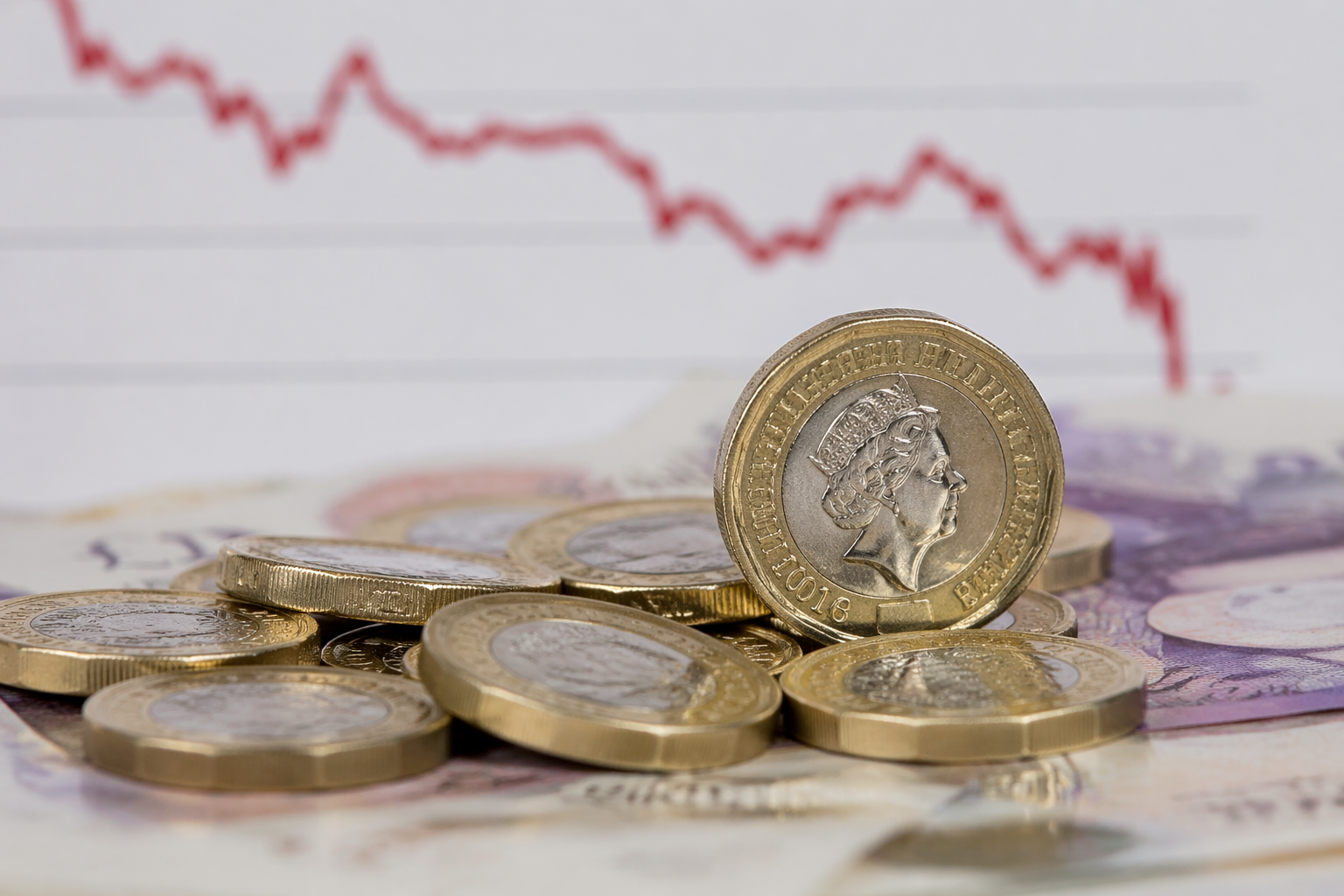
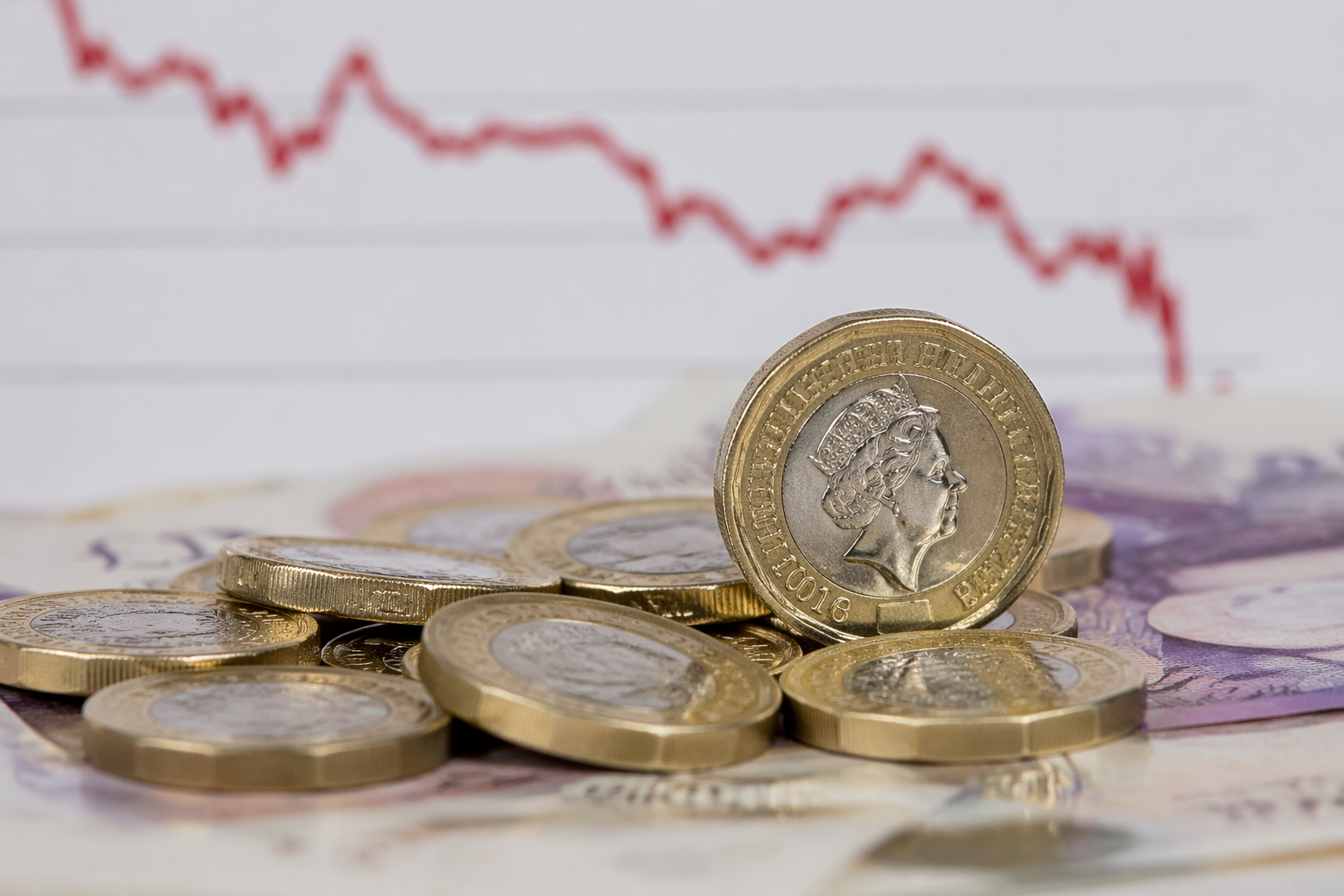
The British pound edged lower on Monday as escalating tensions between the United States and Iran pushed investors towards the safe-haven US dollar.
The renewed geopolitical uncertainty raised concerns that a fragile two-week ceasefire could collapse, weighing on risk sentiment across markets.
Sterling was last down 0.1% at $1.3503 as the dollar strengthened.
Meanwhile, the euro gained 0.1% against the pound to trade at 87.10 pence.
The move came as global markets reacted to rising oil prices and declining equities, signalling a shift towards safer assets.
US-Iran tensions lift oil, pressure risk assets
Investor caution intensified after Iran stated it would not participate in a second round of negotiations.
At the same time, the United States said it had seized an Iranian cargo ship attempting to breach its blockade of the Strait of Hormuz, further heightening tensions in the region.
The rise in oil prices, coupled with falling stock markets, supported the US currency as investors sought safety.
This dynamic put additional pressure on currencies such as the pound, which tend to weaken during periods of global uncertainty.
Sterling holds near recent highs despite volatility
Despite Monday’s dip, the pound remained close to its recent two-month high of $1.3599 reached on Friday, reflecting some lingering optimism in markets that the worst of the Iran conflict may have passed.
Sterling has gained around 2% this month after declining 1.9% in April.
The earlier rally was driven by hopes of a ceasefire agreement, which had encouraged investors to move away from the dollar.
However, analysts suggest that the currency’s recent strength could be vulnerable if geopolitical risks persist or escalate further.
UK political uncertainty adds to pressure
Market participants were also closely watching developments in the United Kingdom, where Prime Minister Sir Keir Starmer is facing mounting political pressure.
Starmer is set to address parliament amid calls for his resignation following revelations that former US ambassador Peter Mandelson failed a vetting process.
The situation has intensified scrutiny on UK assets, with investors assessing the potential impact of political instability on economic policy and market confidence.
Outlook hinges on politics and policy risks
Analysts warn that further downside risks for the pound could emerge if political uncertainty deepens.
Some investors believe that a potential leadership change could shift Labour Party policies further to the left, potentially increasing government borrowing.
Such concerns could weigh on investor confidence and add to pressure on sterling in the near term.
For now, the pound remains caught between competing forcessupport from earlier optimism around geopolitical easing and pressure from renewed tensions and domestic political uncertainty.
The post Pound weakens as US Iran peace talks falter and tensions rise appeared first on Invezz

