

More than 50 new cases of measles have been reported in Pennsylvania since Wednesday, state health officials said, as efforts continue to combat an outbreak that has spread across the state.
The 55 new cases, reported by the Pennsylvania Department of Health in a statement on Friday, bring the total number of cases to 890 across 39 counties so far this year.
The outbreak has led to 173 hospitalizations and four measles-associated deaths, according to the department.
“While daily numbers fluctuate,” the department said, “tracking these trends provides Pennsylvanians and health care providers with visibility into community transmission across the Commonwealth and helps inform the department’s ongoing response.”
The agency noted that fewer than 1 percent of reported cases were among people who were vaccinated against the disease and that 31 percent of cases were among people under 18.
The latest case figures arrive as the state has been leading the country in outbreaks and at least two of the deaths have become the focus of a contentious disagreement between state and federal officials over whether they were a result of measles or merely coincided with the infection.
Health Secretary Robert F. Kennedy Jr., has disputed whether measles directly caused deaths reported by state health officials across the country.
Lancaster County, Pa., which is about 60 miles west of Philadelphia, recorded the highest number of cases in the state so far this year, with 359, followed by Mifflin County, with 102, according to the health department.
It was not clear on Sunday which counties had reported the latest 55 cases.
Earlier this year, another large outbreak was reported in South Carolina in its tightly knit evangelical Slavic community. Outbreaks have also been ongoing in other states, including California and Indiana.
The United States has recorded more measles cases in 2026 than in any year since the virus was declared eliminated in 2000. Last year, the disease infected more than 2,200 people and killed three.
The Centers for Disease Control and Prevention on Friday reported one death so far in 2026 but added: “This number is subject to change; C.D.C. will update its reporting as additional information becomes available and relevant reviews are completed.”
It did not identify where or exactly when that death had occurred.
Measles, one of the most contagious diseases, spreads when infected people cough or sneeze and release viral droplets that can linger in the air for hours or that can land on surfaces and contaminate them.
People with the disease begin to feel sick around a week or two after they come into contact with the virus.
The disease may be difficult to differentiate from other common viral infections because early symptoms can include a cough and a runny nose.
Most measles cases are mild, but roughly one in every five unvaccinated people in the United States who contracts the virus ends up in a hospital.
The recent cases in Pennsylvania may be an undercount because some people who have symptoms may forgo testing. Communities with high case counts include Mennonite and Amish residents who typically avoid modern medicine.
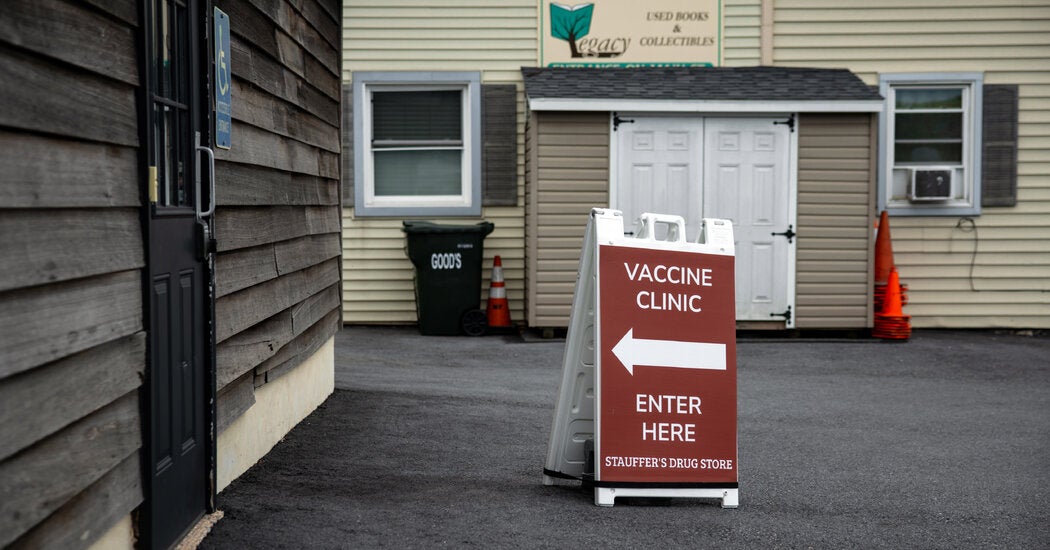
Since the outbreak began in Pennsylvania in late April, state officials said they had “administered more than 5,300 M.M.R. vaccinations at 165 pop-up vaccination clinics in the affected communities.”
Dozens of additional vaccine clinics are scheduled in the weeks and months ahead, “based on community interest and need,” according to the department.
More than 7,900 M.M.R. vaccine doses were administered to residents across the state this year, the department said.
The department said that the “best protection against measles remains getting fully vaccinated,” adding that the M.M.R. vaccine “boosts a person’s immune system and provides 97 percent lifetime protection.”

