

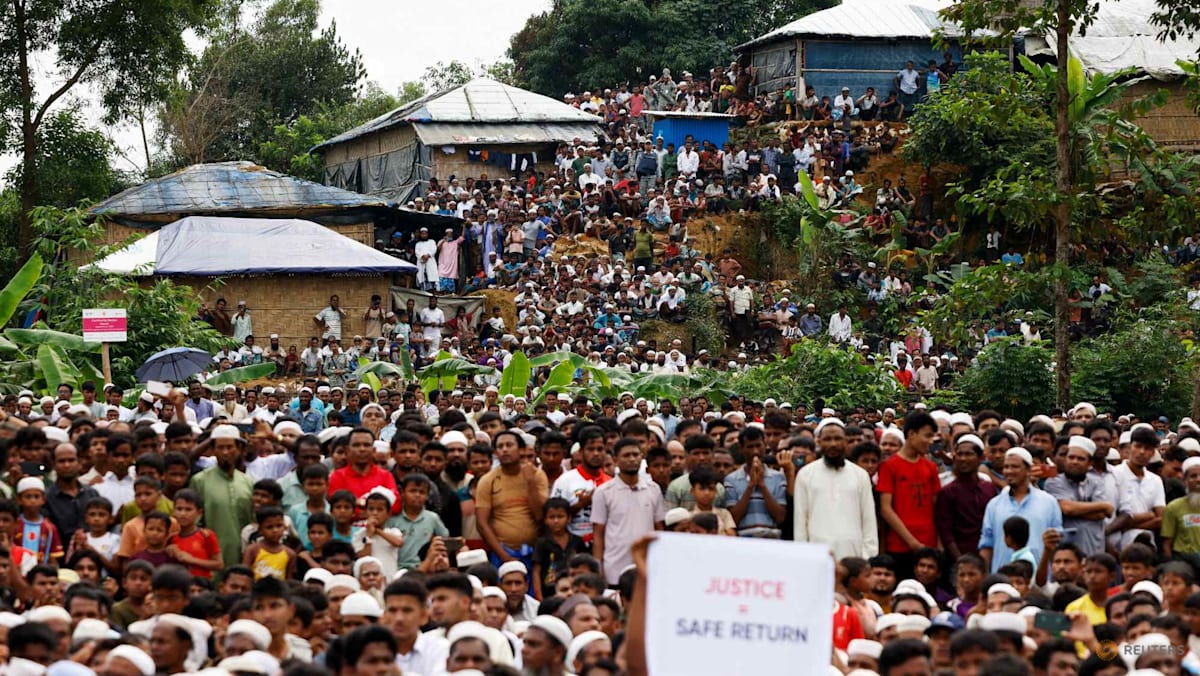
NO ENFORCEMENT
The court ordered that refugees be given safe passage home and awarded compensation, with specific sums to be determined later.
While the decisions of the ICJ are binding and cannot be appealed, the court has no way of enforcing its verdicts, and it remains to be seen whether Myanmar’s rulers will adhere to the orders.
But the ruling may heap more international pressure on its leader Min Aung Hlaing, who commanded the military during the Rohingya crackdown before ousting the elected government of Aung San Suu Kyi in a 2021 coup.
This year, Min Aung Hlaing was installed as civilian president following deeply restricted elections and is waging a diplomatic campaign for legitimacy.
China, a rare enduring partner for Myanmar after the 2021 coup, raised concerns of judicial overreach after the ICJ ruling.
One of the ICJ’s judges is from China and voted in Myanmar’s favour on all but one count.
The United States reacted to the ruling with caution, stressing the need to avoid “politicisation” of the international court.
Despite determining in 2022 that Myanmar committed genocide against the Rohingya, Washington has more recently pushed back on another case before the court, involving accusations by South Africa that US ally Israel perpetrated genocide in Gaza.

