

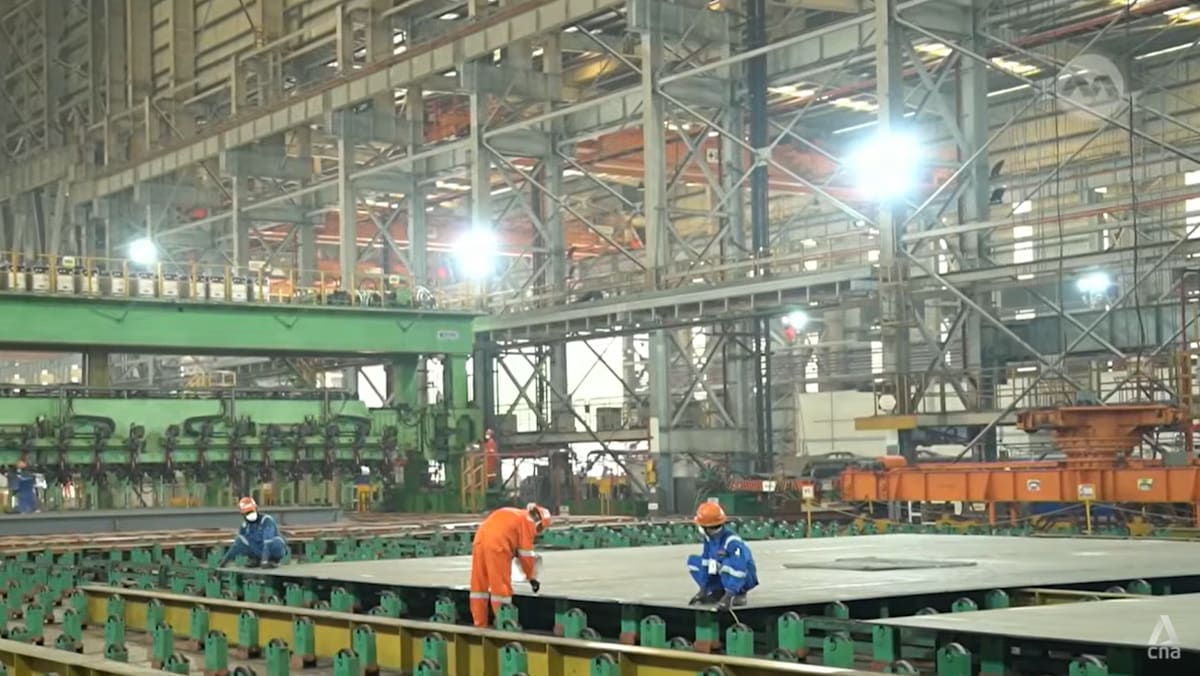
TenneT’s Abbenhuis said the availability of skilled workers and the size and quality of the yards were among the factors behind the company’s decision to build the platforms in both places.
“For us, the driver is the technical capability to manage the two-gigawatt standards,” he added.
For Singapore, the projects also draw on expertise via its established offshore and maritime sector.
Seatrium CEO Chris Ong noted that supply chain management is critical to delivering projects of such scale and Singapore provided “certain advantages” in that area.
“The maritime ecosystem, the offshore ecosystem that we have does help us a lot,” he said.
While the platforms will help bring more renewable electricity ashore, TenneT’s Abbenhuis said demand for clean power would also need to grow alongside greater electrification of industries, households and transport to support the broader energy transition.
“That momentum is now … for us to be able to distribute all the offshore wind, the industry needs to electrify now,” he added.

