

BALANCING HEALTH AND LEARNING
The federal government’s decision to change the API threshold for school closures has also raised questions.
On Oct 9, Anglican Bishop of Sarawak and Brunei Danald Jute noted the revision was made only after haze began affecting Peninsular Malaysia and called it a “glaring and unacceptable double standard”.
Experts said the authorities ultimately face a balancing act: Protecting children from harmful haze while minimising disruption to their education.
“Ultimately, the safety of the children here is the key issue, and the aim is to minimise harmful haze particles from affecting them,” said Malaysia observer James Chin, a professor of Asian Studies at the University of Tasmania.
Johor’s decision could have been influenced by concerns from the palace, he said.
Zainal, a former president of the Malaysian Association of Public Health Physicians, backed the federal government’s decision to close schools when the API exceeds 180, noting that children are particularly vulnerable to air pollution. This is because their lungs are still developing.
“Their airways are narrower, and they breathe faster – inhaling more pollutants per unit of body weight than adults,” he said, adding that haze exposure can increase the risk of respiratory infections, asthma attacks and eye irritation.
Zainal also cautioned against directly comparing Malaysia’s closure threshold with Singapore’s, saying the countries use different air quality frameworks and health advisories.
There are differences in categorisation and corresponding health measures between Malaysia’s API and Singapore’s PSI.
“In Singapore’s framework, PSI 300 is not the trigger to start protecting students. It is the final escalation when even indoor mitigation fails to be enough,” Zainal said.
“Before PSI 300, schools (would have) already implemented heavy protective measures.”
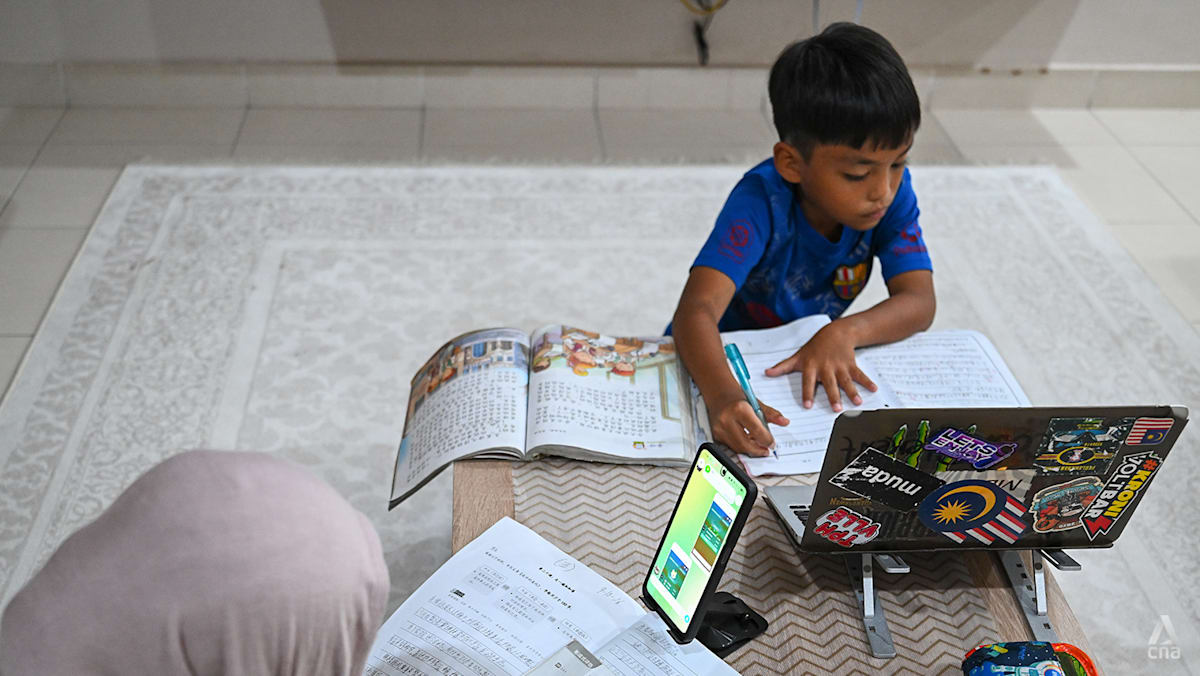
For mother-of-five Jacques, however, the concern is how long the disruption will last.
While she understands the need to protect her children’s health, she said the uncertainty over when schools will reopen has left her frazzled.
“I keep checking the API reading, and I saw that it’s still high today,” she said.
“On the one hand, I worry for the children’s health when it’s high … but if the threshold goes below 150, I’m hopeful they can resume school.”

