

Washington — The Supreme Court on Tuesday agreed to take up a dispute involving a government watchdog group’s attempt to get information from the Department of Government Efficiency as part of a fight over whether the controversial cost-cutting entity is subject to public records law.
Arguments in the case, U.S. DOGE Service v. U.S. District Court for the District of Columbia, will likely take place in early 2027, with a decision coming by that summer. The Trump administration has attempted to prevent the group, Citizens for Responsibility and Ethics in Washington, from getting information about DOGE, which spearheaded government-wide firings of federal workers and cancellations of government contracts.
The case arose out of a Freedom of Information Act request CREW filed in early 2025 for information about DOGE, including its organizational chart and financial disclosures.
But the Trump administration declined to process the request, arguing that DOGE is not subject to FOIA because it is housed within the Executive Office of the President and is a purely advisory entity. As a result, CREW sued and sought a court order declaring that DOGE is covered by FOIA and requiring the task force to respond to the records request.
A judge went on to allow the group to collect limited information about DOGE’s structure and the scope of its authority, and to conduct a deposition with its administrator, Amy Gleason, to better address the question of whether it is an advisory panel that falls outside FOIA’s scope or is an agency subject to the law.
The Trump administration attempted to stop the discovery process, and as part of that effort, went on to file an emergency appeal with the Supreme Court.
In a 6-3 decision, the Supreme Court set aside the lower court order that required DOGE to turn over information about its work. The high court took issue with some of the material DOGE had to provide to CREW, which “require[s] the Government to disclose the content of intra-Executive Branch USDS recommendations and whether those recommendations were followed.”
“Separation of powers concerns counsel judicial deference and restraint in the context of discovery regarding internal executive branch communications,” the Supreme Court said.
The high court sent the case back to the lower courts for more proceedings and ordered the U.S. Court of Appeals for the D.C. Circuit to take “appropriate action to narrow” the district court’s discovery order.
When the case returned to the lower courts, CREW withdrew its request for some categories of records and sought only information on DOGE’s structure, its directives to cancel federal contracts and fire government workers, and examples of DOGE exercising substantial independent authority, like by gaining access to sensitive systems.
The D.C. Circuit then allowed that information-gathering to proceed, finding that CREW had narrowed its request for information in a way that was consistent with the Supreme Court’s order.
The Trump administration appealed to the high court, arguing that if allowed, CREW would receive much of the information it sought in its FOIA requests before a court has said whether DOGE is even covered by the law.
“The decision below intrudes into the autonomy and confidentiality of presidential advisors and augurs time-consuming and burdensome discovery litigation, including through a deposition of USDS Administrator Amy Gleason,” Solicitor General D. John Sauer wrote in a filing. “Beyond this case, the court of appeals’ FOIA ruling threatens to burden future presidential administrations with FOIA suits designed to leverage discovery against advisors in the Executive Office.”
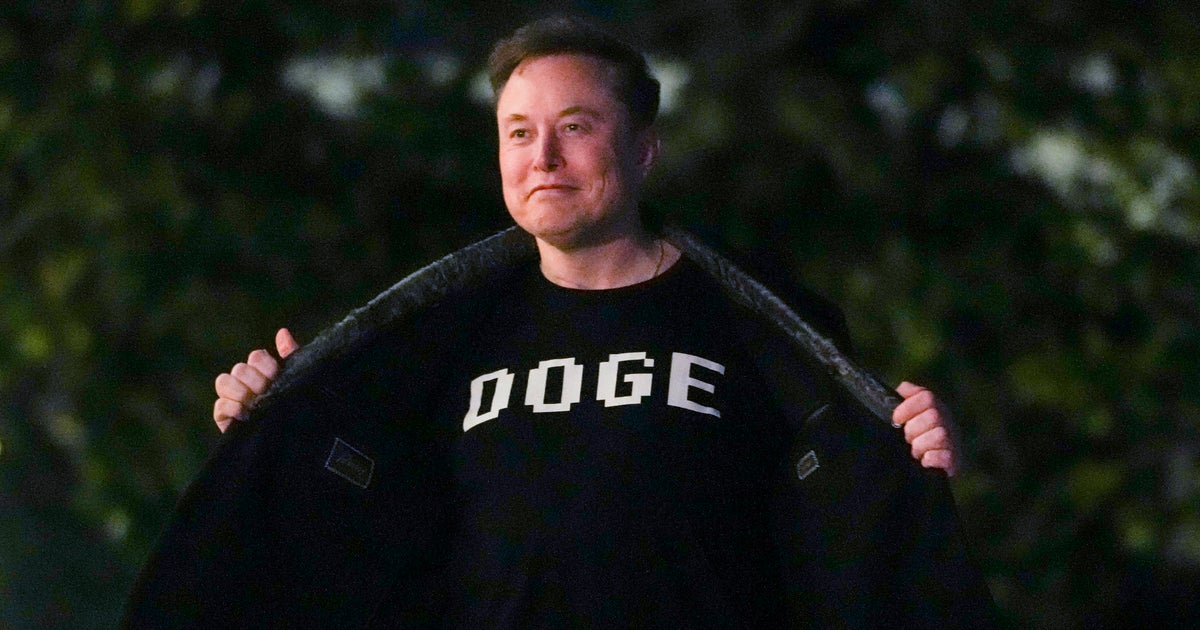
President Trump announced DOGE’s creation soon after he began his second term as part of his plans to slash the size of the federal government. Led by billionaire Elon Musk and housed within the Executive Office of the President, the task force deployed team members to agencies across the executive branch. DOGE was behind efforts to shrink the federal workforce and cut contracts worth billions of dollars, as well as to shutter agencies like the U.S. Institute of Peace and U.S. Agency for International Development.
But the agency sparked concerns with its attempts to gain access to sensitive databases kept by the Internal Revenue Service, Social Security Administration and Office of Personnel Management.
Musk, who was working as a “special government employee,” left DOGE in May 2025.
While DOGE’s goal was to decrease government spending, an analysis from the Government Accountability Office found that the Trump administration spent $9.5 billion on employee administrative leave costs in 2025, a sixfold increase from 2023. The GAO said $6.7 billion of that total was because of employees who accepted a buyout offer from the Trump administration that was part of DOGE’s initiative to shrink the federal government.

