

The world is getting thirstier. But water alone will not do.
The familiar picture of an athlete in sweats, pausing mid-workout for a neon-coloured hydration drink, is changing.
You no longer have to be an athlete to care about hydration.
Growing health awareness and consciousness are pushing electrolyte drinks beyond the sports field and into everyday life.
Demand is booming, reshaping an industry that was once synonymous with just a couple of popular names, like Gatorade.
The global electrolyte drinks market is valued at approximately $40 billion to $43 billion in 2026 and is projected to reach over $66 billion to $82 billion by the mid-2030s.
While giants like PepsiCo are revamping Gatorade amid intensifying competition, a new wave of entrants — from athletes such as Travis Kelce and Stephen Curry to celebrities — is rushing to capture a share of the growing market.
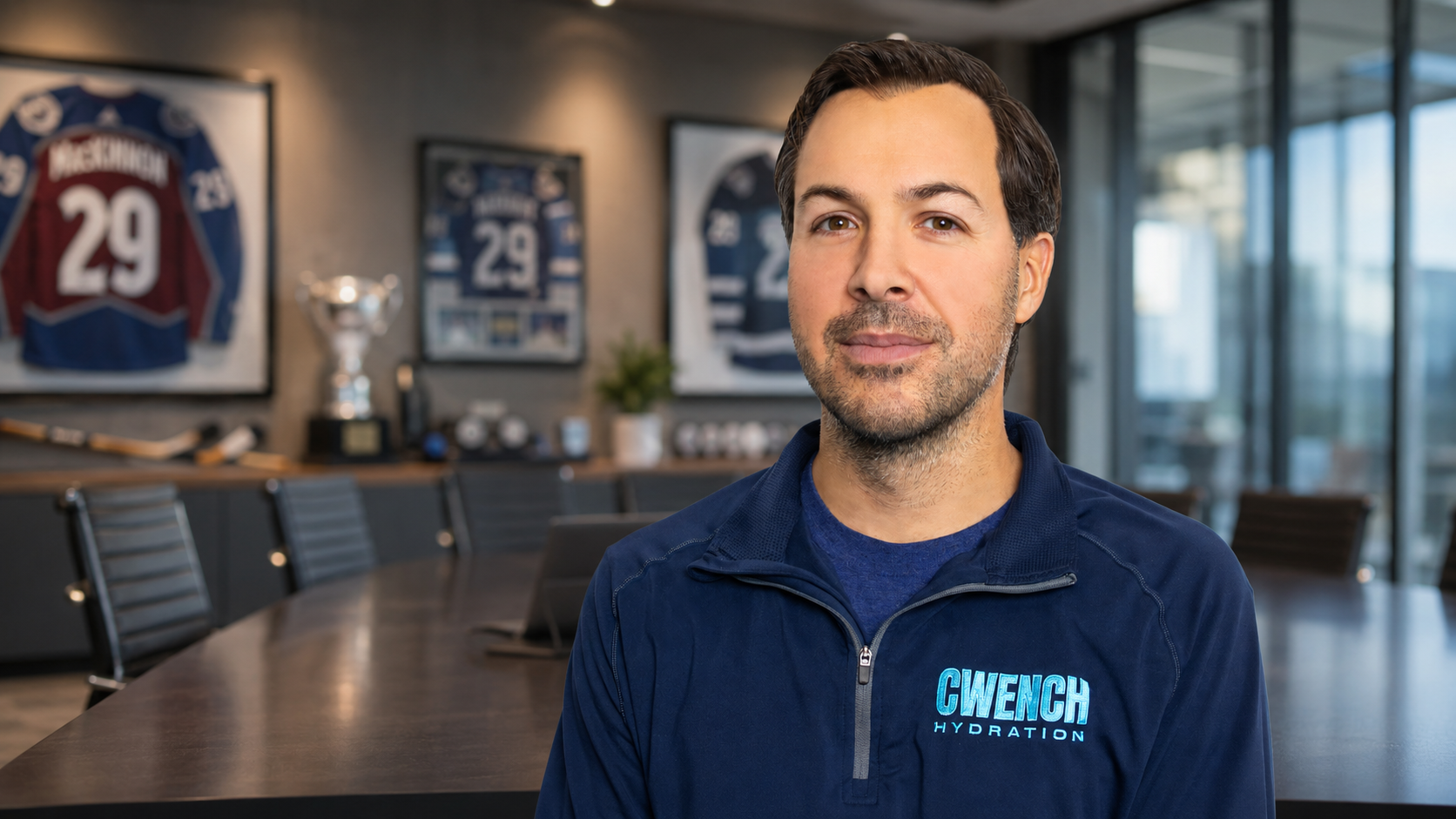
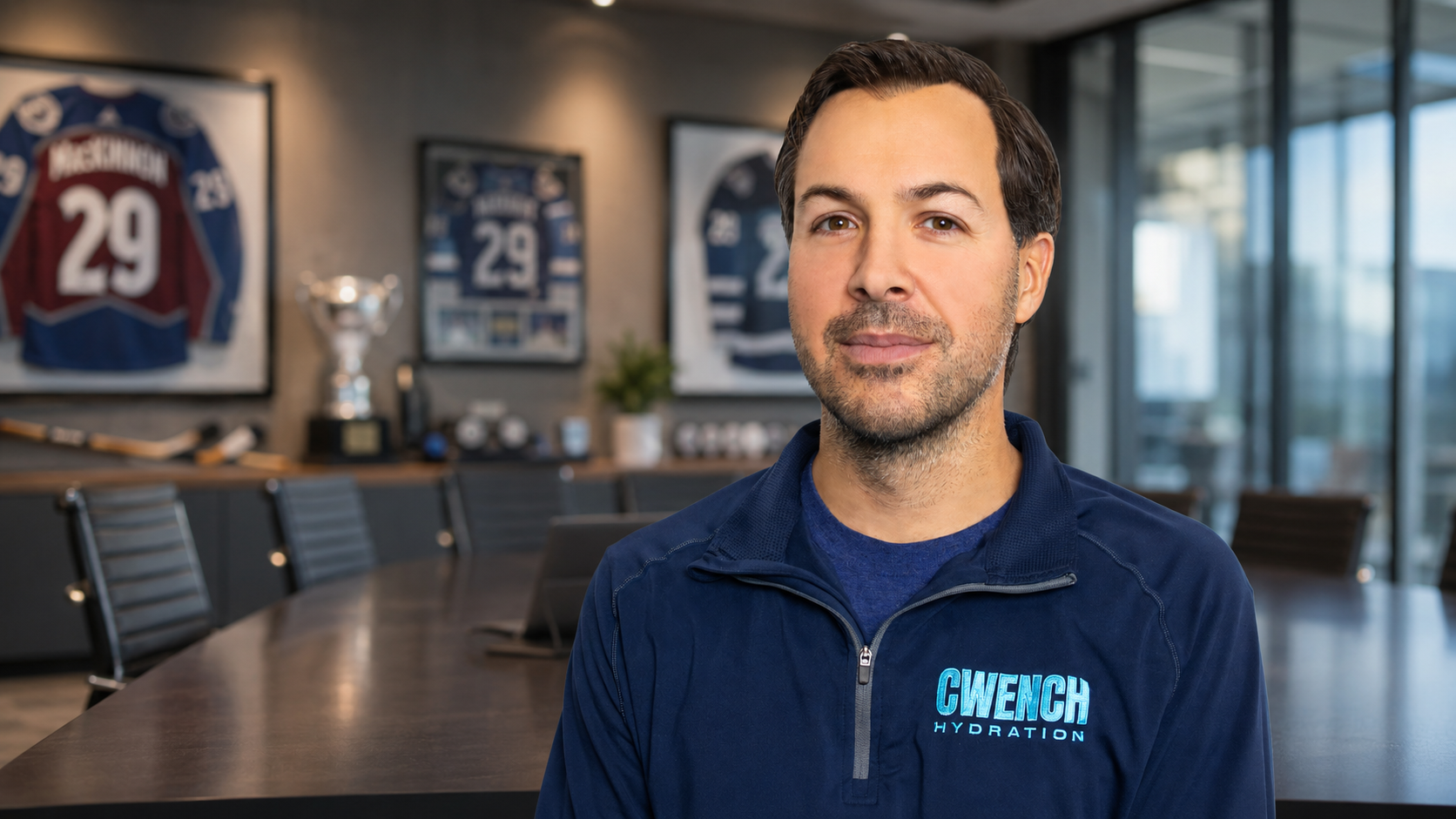
“I’ve been in the industry 17 years, and it’s definitely more crowded now than it was 17 years ago,” John Celenza, founder and CEO of Cizzle Brands, which makes CWENCH Hydration, tells Invezz in an interview.
Celenza’s previous sports nutrition company, BioSteel Sports Nutrition, which he founded alongside former NHL player Michael Cammalleri, was acquired by Canopy Growth Corporation in 2019.
He is now seeking to establish CWENCH as a go-to for North American professional sports teams, with the brand’s products already ordered by teams across the NHL, MLB and NFL.
More importantly, Cizzle is pushing CWENCH for more household uptake through its expanding presence in retail stores, including Walmart in Canada and Target in the US.
“Two years from today, our goal, and what we think is very manageable considering the expansion that we’re getting at the velocities that we are, is on the branded side to be at $100 million in net sales,” Celenza says.
Celenza also talks about why it is hard for startup Consumer Packaged Goods (CPG) brands to grow, eventually leading to more consolidation in the industry.
As Cizzle Brands prepares to list on US stock exchanges later this year, Celenza also discusses investor appetite for consumer stocks amid the AI trade, a global whey shortage, and the US-Canada tariff war.
Excerpts:
On hydration drinks market becoming too crowded
Invezz: The sports hydration market is becoming extremely crowded. We have your legacy drinks like Gatorade and Powerade, Liquid IV has become very popular, then we have Prime and a whole bunch of independent companies also launching their own hydration drinks. Is the market becoming too crowded, and what is driving demand for the sector?
It’s definitely getting more crowded; it’s a very popular space with many major M&A exits.
I’ve been in the industry 17 years, and it’s definitely more crowded now than it was 17 years ago.
But I think the gap in product quality still remains. And that’s the hole that CWENCH is filling at the end of the day.
So you see brands like Prime, which had an enormous rise and now an enormous fall; Body Armour- an enormous rise; now they continue to write off product.
Consumers are becoming far more educated, especially post-COVID, where people are spending more of their disposable income on health and wellness.
So for us, that gap that we’re filling with CWENCH hydration is the quality of our product.
And that’s where we’re gaining market share, and continuing to grow into the retailers that we are.
And our velocity speaks for itself.
On Cizzle Brands’ aim to reach $100M in net sales
Invezz: You have seen over a 250% jump in your revenue as well in your most recent earnings. A lot of it came from contract manufacturing as well, though. So, how much of your sales do you expect to come from the branded business over the next two to three years?
Two years from today, our goal, and what we think is very manageable considering the expansion that we’re getting at the velocities that we are, is on the branded side to be at $100 million in net sales.
We’re a young business. We’ve gotten great traction early on with a lot of what we deem to be foundational accounts, like points of sweat, whether it’s gyms, hockey arenas, soccer fields, independent sporting goods.
And then from there, we went into grocery, and they were fantastic.
So, now we’re going to be taking on the larger retailers, more mass, more club.
And that’s where the retail numbers become far more explosive.
So that’s our goal on the branded side.
For calendar 2027, on the manufacturing side, we expect to do between $35 and $40 million of EBITDA- not revenue, EBITDA, which brings us, as a consolidated whole, very profitable.
Why hydration is now becoming a mass-market need
Invezz: The trend that we’re seeing currently is that manufacturers want to sell hydration and electrolyte drinks as not just something that sportspersons need, but the intent is to market it as a mass-market need, meaning everybody needs hydration drinks. So, is that the intent driving the push into the sector by so many players and the way we’re seeing so much money chasing the sector?
For sure. Consumer education has been key.
So, if you look at the kids, they’re growing up a lot differently than I did, per se.
They’re becoming far more educated on hydration and quality foods and what you should be putting into your body.
Back in my day, you drank out of a water fountain because you wanted to get out of class for a couple of seconds.
Every kid now is going to school with their own custom water bottle because hydration is such a big part of their lives.
So, the consumers in general are getting more educated. And for us, we like to qualify our products as best-in-class.
So, we sell a tonne of CWENCH to professional sports teams.
They’re sponsored by some of the bigger brands that you mentioned earlier on in this call.
And they’re choosing to purchase our product based on the efficacy of our ingredients and our formulas.
Do high-profile partnerships still work for brands?
Invezz: But when the consumer is becoming so intentional and educated, do high-profile partnerships still work in today’s day and age in influencing their purchasing decisions?
Definitely. It’s far more difficult again because consumers are just that much smarter.
But a good spokesperson who comes from a place of authenticity, who actually enjoys and consumes the product on an everyday basis, makes it a part of their family, and is actually willing to tell their real story, still works at the end of the day.
Because they’re a subject matter expert in their field, and they’re qualifying these products and these statements for the everyday consumers.
They do still look up to them and trust them.
I think gone are the old pay-for-play partnerships. Now, you see athletes taking equity in businesses that they believe in.
They’re invested in the upside of these businesses.
Sports salaries have gone through the roof in the last 10 years.
So, it’s not like people are desperate for these marketing deals.
But what they are interested in is that they want to help tell their story and be a part of something that they authentically believe in.
And, I believe every day, the consumers are becoming more and more educated in regard to what’s real and what’s not.
How brands are getting people to consume hydration drinks
Invezz: Which driver is more promising in driving sales of hydration drinks currently- converting households that were not consumers of the category earlier, or providing existing customers with sugar-free options since the traditional hydration drinks used to be high in sugar?
I think the answer is two-pronged.
So, the two bad words in the industry that are trending right now are sugar and plastic.
People are trying to stay away from sugar, and people are trying to stay away from plastic.
For CWENCH, being sugar-free with the most and best bioavailable electrolytes and coming in a tetra paper packaging, it’s a huge win for us.
So, what’s happening is you’ll get that athletically inspired person in the family.
Maybe it’s a child, maybe it’s mom or dad, and they’re the ones who are keen on getting that proper hydration, that best-in-class product.
And before you know it, the other family members start to get involved.
And that’s what we call being a part of a family’s pantry.
Why startups CPG brands are hard to grow
Invezz: There’s also a lot of consolidation taking place in the sector because a lot of the independent brands eventually get acquired by the biggies. So, what are the challenges that smaller brands face in scaling up?
For sure, my previous hydration company was acquired by a big strategic buyer, so I’ve gone through that before.
These brands are very hard to grow. There’s a reason why over 90% of startup CPG brands fail.
It’s very cash-flow intensive. It’s not just about making a great product and marketing it.
It’s very much, especially in this day and age, about shipping and logistics and route to market.
So, it makes a lot of sense that these brands are getting acquired by big strategics because they are hard to develop.
And once you put it into the big strategic trucks, their warehouses, the costs come down, and the retail reach becomes far more robust.
So for CWENCH, we’re very well-schooled in that, as a part of our team went through a prior successful exit.
So, it’s really about keeping your cost structures in place, and your margins in place.
There’s a big difference between shipping one and two cases and entire pallets, and having strategic warehouses across the country to be able to service the retailers the way you want.
I mean, direct store delivery is not the only way to go.
Many of these larger chains allow you to ship warehouse direct, and they distribute the product as well.
And then in some markets, you want to pick the right distributor who has the experience and is not only just your truck and wheels, but also selling on your behalf.
So they’re adding incremental value to your business.
For the US in particular, you have to be very strategic and take a shotgun approach.
You can’t just do the US at once. That’s CPG suicide at the end of the day. It’s too big, it’s too strong.
On US listing plans and investor appetite for consumer brands
Invezz: You’re also looking to list on the US market, and when we talk about markets these days, it is all about the AI trade. So, as a small-cap consumer company, do you think there’s enough capital that the sector is attracting, or is there a dearth of capital because everybody wants to invest in the big tech names related to AI?
I think the US marketplace is a wonderful place for consumer packaged goods products.
You know, take Celsius as an example, and the rise that they had after being listed on the US exchange as a public company.
I think American investors really do understand the space, and the explosive potential of the space.
It’s also a much broader audience that we were able to speak to.
We are the official sports drink of USA Hockey, picking up US retailers by the minute.
So, it makes a lot of sense for us.
I’ve met with many, many investment banks and various exchanges.
The Canadian exchanges have a big appetite for things like cannabis and mining.
We’re on the US side. Yes, AI and all the different hot topics and hot industries going on right now are having their rise.
But a good CPG company that’s able to produce positive EBITDA, that has potential for strategic M&A, has always done well, whether it’s on the NYSE or the NASDAQ.
So, we feel as though speaking to that audience, where we have a strong foothold, will only broaden our reach and provide us with more interest in the business.
Invezz: Do you have a timeline for when you want to close the listing there?
Before the end of the calendar year, we’re looking to be listed.
On the US-Canada tariff war and sentiment among Canadian businesses
Invezz: There is this whole tariff war going on between the US and Canada currently. And, you are a Canadian company, but you have facilities in the US. I don’t know how much you get impacted by the tariffs, but generally what is the sentiment among Canadian businesses, especially those that stand to get affected? Is there an anti-American sentiment brewing there?
I don’t feel any anti-American sentiment, you know, from our community.
For CWENCH, we’re the official sports drink of USA Hockey.
We also have fabulous partnerships up in Canada. We believe that a brand doesn’t have to live within a certain border.
We’re available to everybody. We’re for everybody. So I don’t think there’s an anti US sentiment at all here.
We just want to do business with all our friends and continue to do so.
And, we’re all hopeful that everything will iron out here in the near future and stability will be back in place for the entire business community, let alone our sector.
But for us, it hasn’t had a big effect on our business.
If anything, being vertically integrated on the manufacturing side, it’s actually presented us with even more opportunity.
‘We hope cooler heads prevail’
Invezz: But what’s the word on the ground? You know, when it comes to business, when entrepreneurs discuss tariffs, what’s the general sentiment there?
The general sentiment is that we hope cooler heads prevail.
Any other CEO or entrepreneur that I speak to on a regular basis, we just hope the cooler heads prevail.
There’s are a lot of Canadians in the US, and a lot of Americans in Canada.
I know there are a lot of Americans that love Canadian brands and a lot of Canadians that love US brands, right?
That’s how we all kind of grew up in this industry, working together.
So, I think the sentiment across the board is there’s a lot of politics going on right now.
And we’re all hopeful and rational in the sense that this is just a negotiation, and cooler heads will definitely prevail.
On the future of the functional beverage sector
Invezz: What do you see as the future of the functional beverage sector? Are we going to get to a point where we have one drink for each function, since it has already started to take place with calming drinks etc., even though hydration drinks and protein drinks have been there for a while?
It depends what consumer you’re talking to.
We’re in a world right now where there is one tablet or one beverage for each occasion.
But at the end of the day, that’s a very niche crowd. Convenience is always going to weigh out.
Everybody’s busy. Everybody’s on the go.
So, how can I do what’s best for my body, what’s best for my family in the least amount of time?
And I want it to taste good.
Because people want to enjoy what they’re drinking and what they’re eating.
So, in the one, two percenters- there is a different type of shot for every occasion.
But from a mass standpoint, it’s still going to be about convenience, ease of doing business, ease of consumption.
And at the end of the day, does this product make me happy?
On the scope of the health-food segment
Invezz: You also have a health food segment with Spoken Nutrition- you make sports pasta, and other things…
We have sports pasta. We have protein bites. We have some supplement products as well.
So, creating the world’s healthiest sport pasta that actually tastes good, creating the world’s healthiest snack bites with 16 grammes of protein per bag, just filling a void in the marketplace.
With the science and all the creation that you can do in this era, you can make products taste good that are actually good for you.
‘Protein craze strategic, not mindless’
Invezz: Do you also feel like there’s this mindless need to fill everything with protein these days, with every category of edibles being converted into a protein–enriched version of itself?
Protein is very much still on the rise. The demand is crazy.
Hence, the price hike on your typical whey proteins or caseins or what have you.
At the end of the day, it’s a hot topic right now because with all the research out there, people aren’t getting enough protein.
So, now you have brands trying to put it into people’s different occasions, be it fortifying your coffee, your snacks, or giving you a protein shake.
And depending on the average person’s weight, you’re still not getting enough protein.
So, I don’t think it’s mindless, I think it’s very strategic.
And again, with the science out there and being able to make these products taste good, I think consumers are welcoming it.
Could it get to the point of mindless? Maybe it could, but right now I don’t see it being mindless.
I see it being very strategic, very smart, and allows brands to differentiate themselves for sure.
And I think as more research comes out there and people get more in tune with health and wellness, and what’s actually good for them, you’ll see that pop up with other key ingredients as well.
It’s protein now; it could be something else down the road.
And on the protein side, unless there’s a piece of science I’m missing, I don’t see it being a fad.
I see it really being a staple, just like greens.
So I’m all for it because it’s doing right by people at the end of the day.
And if consumers are willing to pay an extra dollar or two for that, why not? We’re all helping each other.
Price of whey likely to come down in the next 6-18 months
Invezz: You spoke of a scarcity of whey protein. Would you like to weigh in a little on that? There is a global whey protein shortage. So, is it impacting your operations as well?
No, it’s not affecting our operations.
You just have to pay more for the product. The retailers have to be willing to pay a little bit more, and the consumers have to be willing to pay a little bit more.
It’s like anything else.
But, I have seen some very interesting new sources of protein come to life, different ways to get protein into products.
And that’s just like any other industry: when the price of something gets too high, someone’s going to figure out another way to do it and give you the same effect.
So, we’re starting to see that right now.
And I think, in the next 6 to 18 months, we’ll see the price of your basic whey, casein, concentrate-type ingredients start to come down as the segment gets more competitive through other sources of protein.
Invezz: So you’re talking about plant-based proteins…?
Not just plant-based proteins. There’s everything under the sun right now, all kinds of different formats coming out.
And that’s because of the price hike.
People are going to find another way, a more feasible way to still look after themselves and after consumers.
So it’s definitely expensive right now, but I think it will correct itself within the next 6 to 18 months.
Health and wellness sector not affected more than others by inflation
Invezz: Is the whole health and wellness sector more sensitive to changes in inflation? Because inflation is a big concern in the US right now, with the war going on and oil prices shooting up, and gas prices going up.
I don’t think it’s more susceptible than other businesses, because at the end of the day, we’re in the health and wellness industry.
People these days are doing a better job of looking after themselves.
And I think that the last thing that they want to let go of is their own health, or at least I hope so.
So, maybe you’re not going to buy a certain watch.
Maybe you’re not going to buy a fancy car. Maybe you’re not going to purchase the fanciest home per se.
Those are wants. But I hope that people consider properly hydrating themselves and consuming proper foods a need.
So I think we follow the needs side of things more than the wants.
And I think the wants are definitely going to be affected more than the needs.
The post Interview: Cizzle's John Celenza on why hydration is becoming a mass-market category appeared first on Invezz

