

What happens now?
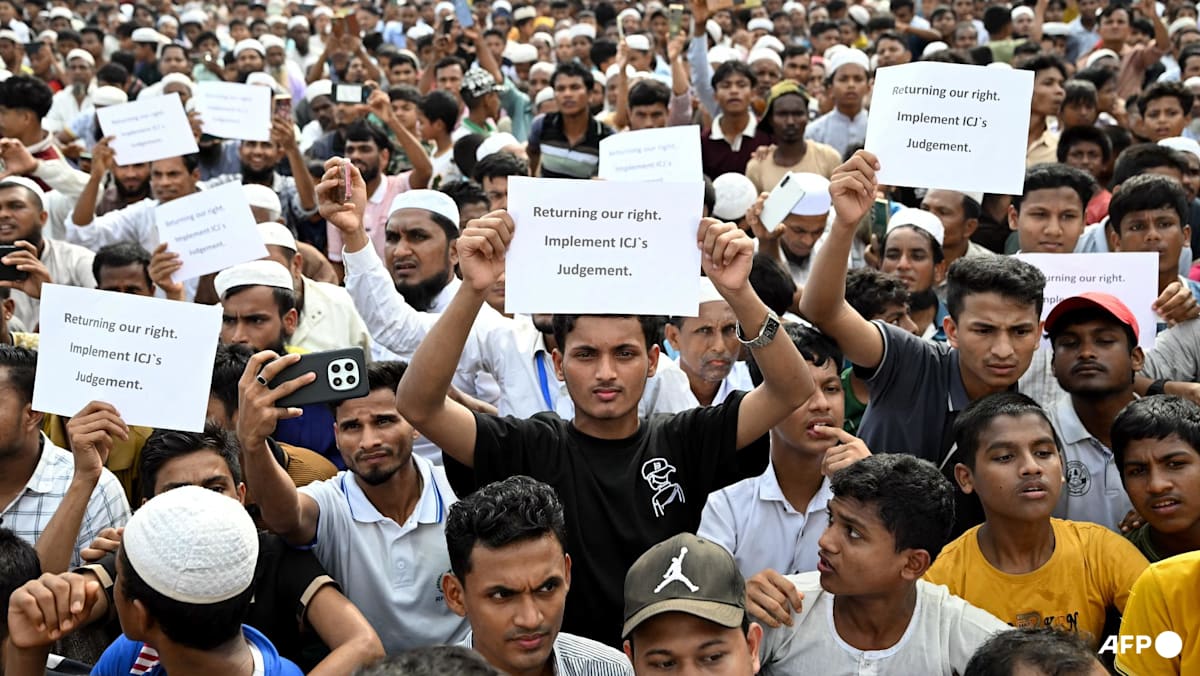
Attention now turns to whether, and how, Myanmar will comply with the ICJ’s ruling.
Myanmar’s government has criticised the ruling as unfair, saying the country had been “unjustly accused”.
“I want to say that this decision is not a unanimous decision by everyone, it is not fair,” government spokesperson Khaing Khaing Soe told a press conference in the capital Naypyitaw on Friday.
The two-year deadline does not require Myanmar to complete all reparations or pay compensation by then. Under the judgment, the amount of compensation and arrangements for payment will be determined at a later stage.
But the country is legally obliged to comply with the judgment, which is final and cannot be appealed.
Speaking to CNA’s Asia First programme on Friday, associate professor Emma Palmer of Griffith Law School said the ICJ’s ruling could also undermine the legitimacy of Myanmar’s military leaders, including Min Aung Hlaing, who oversaw the 2017 crackdown on the Rohingya.
In 2024, ICC prosecutors requested an arrest warrant for Min Aung Hlaing over alleged crimes against humanity involving the persecution and deportation of the Rohingya group.
“That certainly affects the legitimacy of those leaders within Myanmar because they have been directly associated with now committing a genocide,” Palmer said.

