

Harper 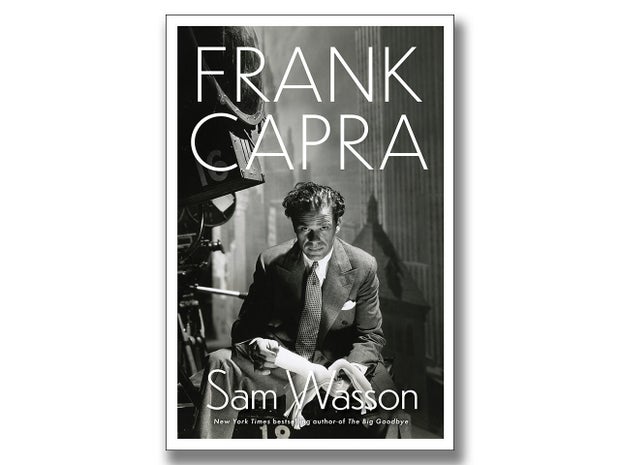
We may receive an affiliate commission from anything you buy from this article.
Returning to movie screens after his service in World War II, actor Jimmy Stewart was nervous about appearing in Frank Capra’s “It’s a Wonderful Life” – a film now acknowledged as one of his very best.
In his biography of the director, “Frank Capra: A Life” (published by Harper), Hollywood historian Sam Wasson writes of how Capra helped shepherd Stewart back into the public limelight in a role that was perfectly suited to Stewart’s talents – and in the process created a timeless classic.
Read the excerpt below – and don’t miss Lee Cowan’s report on Jimmy Stewart’s post-WWII experience on “CBS Sunday Morning” November 1!
Prefer to listen? Audible has a 30-day free trial available right now.
Unlike Capra, Stewart refused to promote his return to Hollywood. His contract with Liberty stipulated that he was not to be made to discuss his heroism. “In all advertising and publicity issues by the corporation, or under its control,” the relevant clause read, “the corporation will not mention or cause to be mentioned the part taken by the artist in World War II as an officer in the U.S. Army.”
By then, Stewart had read the script Capra had given him. George Bailey, the hero of the picture they would call It’s a Wonderful Life, was the truest to his own life. Still, he was terrified. It was to be his first film in almost five years. Had he lost the audience? Had they forgotten about him? Leaving a department store in Beverly Hills, he was mistaken by a gaggle of bobby-soxers for MGM’s new heartthrob Van Johnson. But more than tastes in movie stars had changed since Stewart went to war. At a Lux Radio Theatre performance of Destry Rides Again, the script he was holding shook so hard, they could see it from the control room.
“No sense running away,” Stewart told his friends one night at Chasen’s. “The truth is I’m scared as hell.”
Scared, and also emotionally fried. “I don’t think I’ll ever get into an airplane again,” he confessed. “I rolled two thousand hours overseas, and that’ll just about do me.” There was, one journalist observed in 1946, “a trace of weariness” about him now. To another, Stewart said, “It got pretty rough overseas at times.”
What Capra would not have told Stewart was that he, the director, was the more frightened of the two. Without [Robert] Riskin, it had been the most chaotic script gestation of his career—a career that had never been more vulnerable. The script he had given Stewart was still changing, and where once he could have turned to [Jo] Swerling or Myles Connolly or Sidney Buchman to pitch in for a polish or, at least, talk story, friend to friend, none of them was available to him. Capra’s loneliness was, for him, unprecedented, impossible to describe.
The night before his first day of filming, April 15, 1946, Stewart’s worry intensified. He studied the scene, as if being word-perfect—never a requirement on a Capra set (in fact, a disadvantage)—would save him from disaster.
The first day of It’s a Wonderful Life was also William Wyler’s first day on The Best Years of Our Lives, which would be his last picture with Goldwyn before he joined Liberty. “Last one in is a rotten egg,” Wyler had cabled Capra. With its hundreds of partying extras, that scene that first day—the first of several on location at Beverly Hills High School, where George and Mary fall into the swimming pool beneath the gymnasium floor while dancing—would open Capra’s production on a happy note. Using his independence to the hilt, Capra would go to the trouble and expense of shooting It’s a Wonderful Life, to the best of his ability, in sequence, as was his preference, but in his capacity as social director of a new filmmaking community, he understood that the best way to break the ice was with a bang—three days at a high school dance in Bedford Falls.
Cannily, he also knew it was the setting for the first adult meeting of George and Mary.
Rather than Jean Arthur, who would have added an unnecessary tinge of knowing sophistication to Mary Hatch, Capra cast the fresh-faced midwestern beauty Donna Reed, whom he had first seen opposite John Wayne in John Ford’s 1945 They Were Expendable. It was a lucky break for the director who rarely needed luck when casting. One look at Reed grinning with unguarded devotion at the man she loves, and any audience would see just why Bailey, blind for so long, might see her face in the right light, at the right moment, and open his eyes to life.
It was true also of Jimmy Stewart that the first time he saw Donna Reed that day in the gym of Beverly Hills High, “I fell in love with her right off the bat. She just seemed to be everything. … Everything just seemed to come out of her.”
“Jimmy,” Capra said, doing a bit of acting himself, “I meant to call you last night to tell you our first scene starts on page 31, not 33. Ready?”
Capra, directing without directing, had surely never intended to call Stewart the night before. But it got the actor just where Capra wanted him: off his guard, a little nervous, that is, to approach Donna Reed as Mary Hatch, for Stewart was meeting both for the first time, nervous enough to fumble his answer to her question—not in the script or finished film, but tossed in just moments before they shot, by Capra—”Are you going to walk me home tonight?”
Stewart didn’t have to act the scene. He just did it, perfectly, gulping, “N– n– no.”
“That’s it,” Capra said. “Cut!” He grinned at Stewart. One take was all they needed.
From “Frank Capra: A Life” by Sam Wasson. Copyright © 2026 by Sam Wasson. Published by Harper, an imprint of HarperCollins Publishers. Reprinted by permission.
Get the book here:
“Frank Capra: A Life” by Sam Wasson
Buy locally from Bookshop.org
For more info:

