



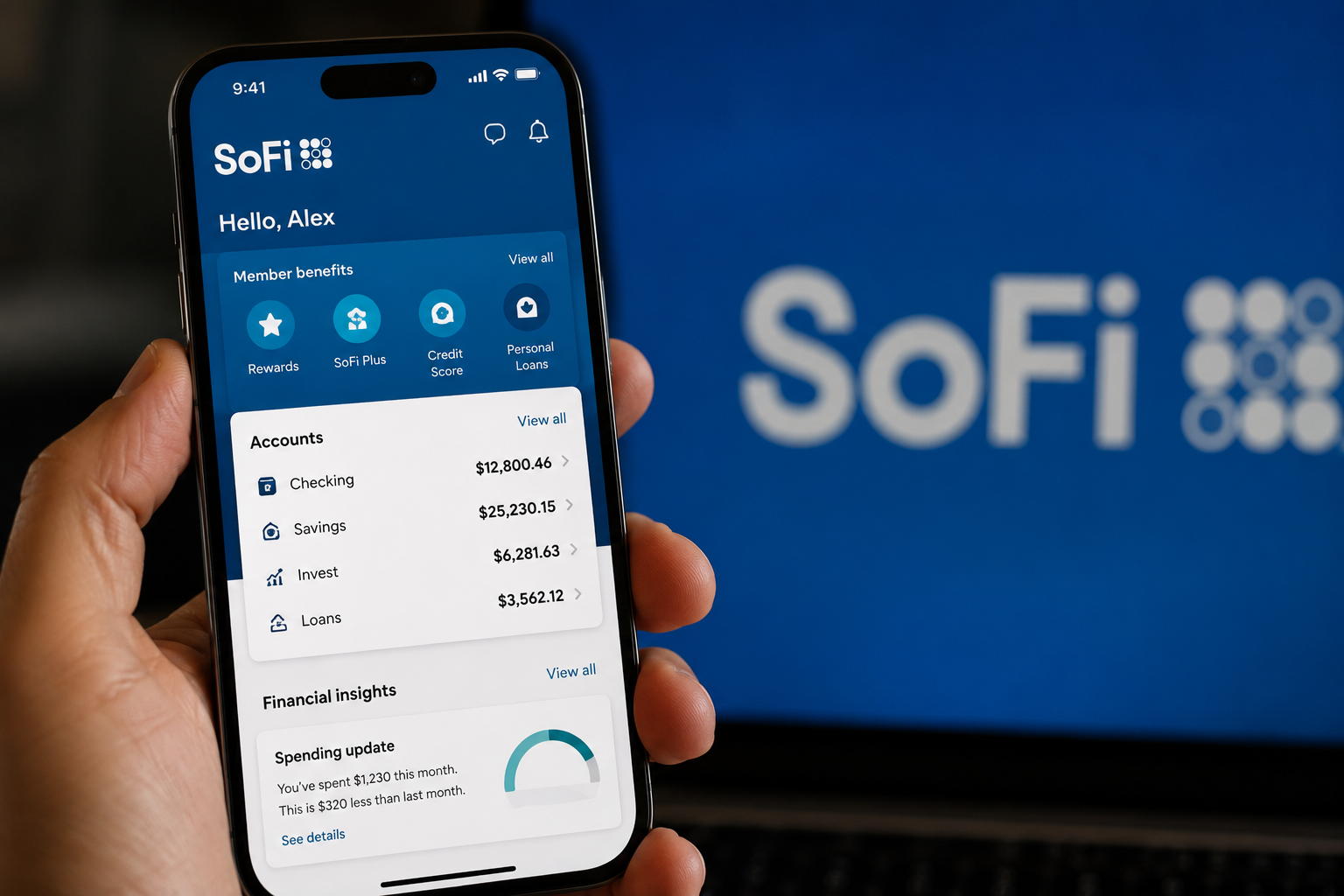
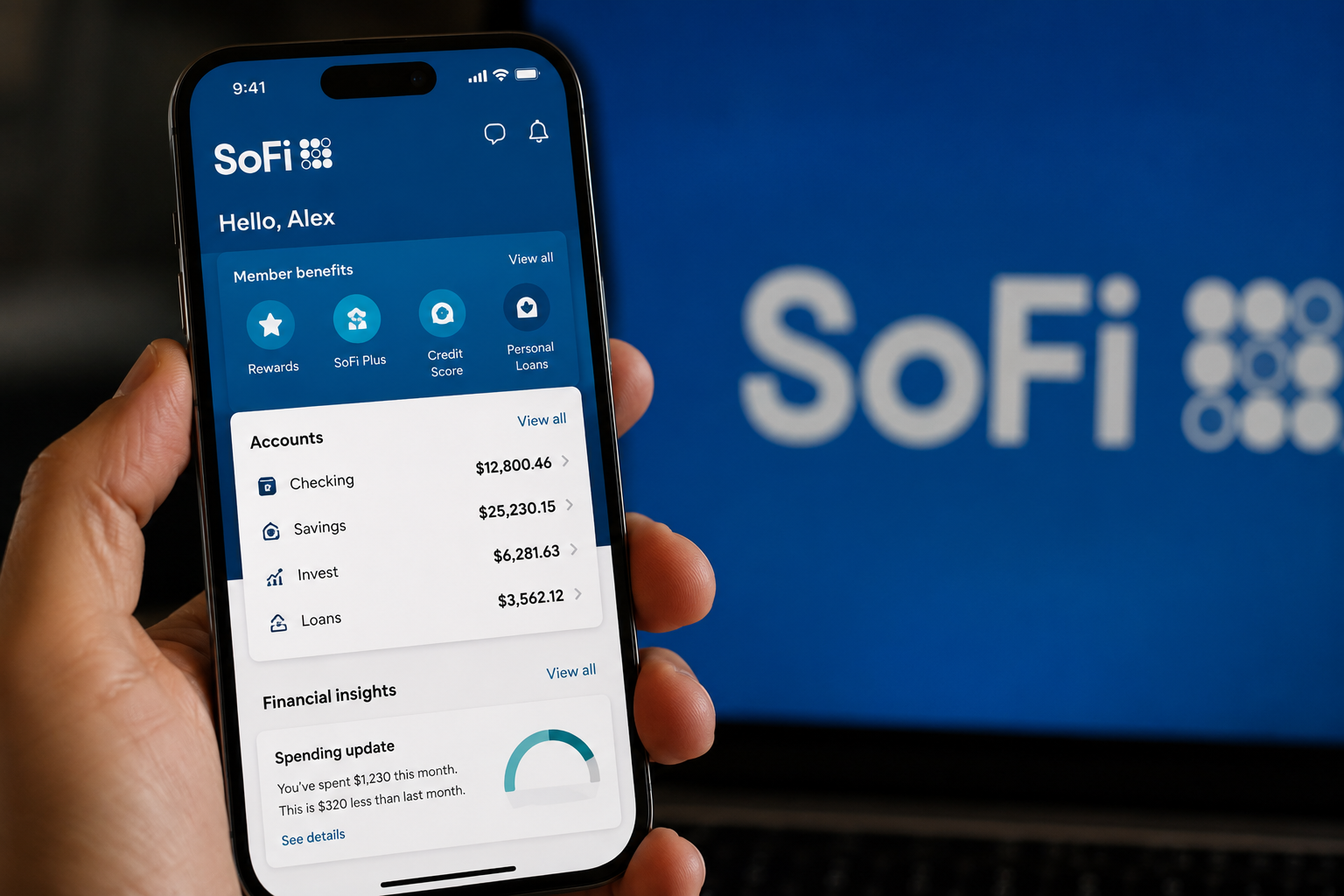
SoFi Technologies SOFI shares fell over 9% on Wednesday despite the fintech company reporting stronger-than-expected second-quarter earnings and revenue and raising its full-year 2026 revenue guidance.
Investors were likely focused more on execution risks and uncertainty surrounding US interest rates.
The online lender reported earnings per share of $0.12, ahead of analysts’ expectations of $0.11, while quarterly revenue climbed 43% year over year to $1.2 billion, exceeding the consensus estimate of $1.1 billion.
The company also lifted its 2026 revenue outlook to between $4.8 billion and $4.9 billion, above analysts’ expectations of approximately $4.7 billion.
Despite the upbeat results, investors appeared reluctant to push the stock higher after a strong run into earnings, with analysts pointing to elevated expectations and questions over second-half profitability.
Record growth continues across lending and membership
Chief Executive Anthony Noto described the latest quarter as a turning point for the company, highlighting record customer growth and deeper engagement with existing users.
“2026 is shaping up to be a defining year, and our second quarter results mark a clear inflection point for SoFi,” said Anthony Noto, CEO of SoFi.
“Despite continued market uncertainty, our business model continues to prove its durability. We grew members 35% year-over-year and added a record 2.2 million products, a 42% increase. For the first time, we added twice as many products as members, a major milestone that underscores the trust members place in SoFi and the power of our ‘everything app’,” he added.
The company said total loan originations reached a record $14.8 billion during the quarter, while its member base expanded 35% year over year to a record 15.8 million.
The results suggest consumer borrowing activity has remained resilient despite elevated borrowing costs and persistent inflationary pressures.
Fed uncertainty remains a key risk
Investor sentiment toward SoFi perhaps remained sensitive to expectations surrounding US monetary policy.
While the Federal Reserve is still widely expected to leave interest rates unchanged at its latest policy meeting, markets have increasingly priced in the possibility of a surprise rate hike following higher energy prices and more hawkish comments from several policymakers.
According to CME Group’s FedWatch Tool on Tuesday, traders assigned a 64.2% probability that the Fed would leave rates unchanged and a 35.8% chance of a quarter-point increase.
Just a week earlier, the probability of a rate hike stood at only 16%.
Interest-rate swaps similarly implied roughly a 40% probability of a hike, an unusually high level of uncertainty so close to a policy announcement.
Higher interest rates create a mixed environment for banks and consumer lenders.
While lenders can earn higher yields on loans, elevated borrowing costs typically reduce demand for credit, increase the risk of loan defaults and constrain deposit growth.
Those dynamics can have an outsized impact on companies such as SoFi, whose lending business remains its largest revenue contributor and whose customer base skews toward younger borrowers.
Analysts point to high expectations
Analysts said the weak share price reaction reflected more than just macro uncertainty.
According to Investing.com, the decline appeared consistent with a classic “sell the news” reaction, with investors taking profits after closely positioning for a strong earnings report.
Attention has also shifted toward SoFi’s second-half outlook.
To meet its full-year adjusted EBITDA target, the company will need to increase its adjusted EBITDA margin from roughly 30% during the first half of the year to about 38% in the second half.
That significant improvement remains a key area of investor scepticism.
Ahead of the results, Truist maintained a Hold rating on the stock with an $18 price target, warning that the remainder of 2026 “may prove difficult” for the company.
The broader market weakness also did not help.
The S&P 500 also slipped 0.12%, whereas the Nasdaq Composite was down by 0.16%.
Investors were also monitoring fintech peers such as LendingClub and Upstart for signs of changing credit conditions across the consumer lending sector.
Although SoFi delivered another quarter of rapid growth and raised guidance, Wednesday’s market reaction suggests investors are looking beyond headline results and demanding evidence that the company can sustain margin expansion while navigating an uncertain interest-rate environment.
The post Why did SoFi stock fall despite earnings beat and higher 2026 outlook? appeared first on Invezz

