



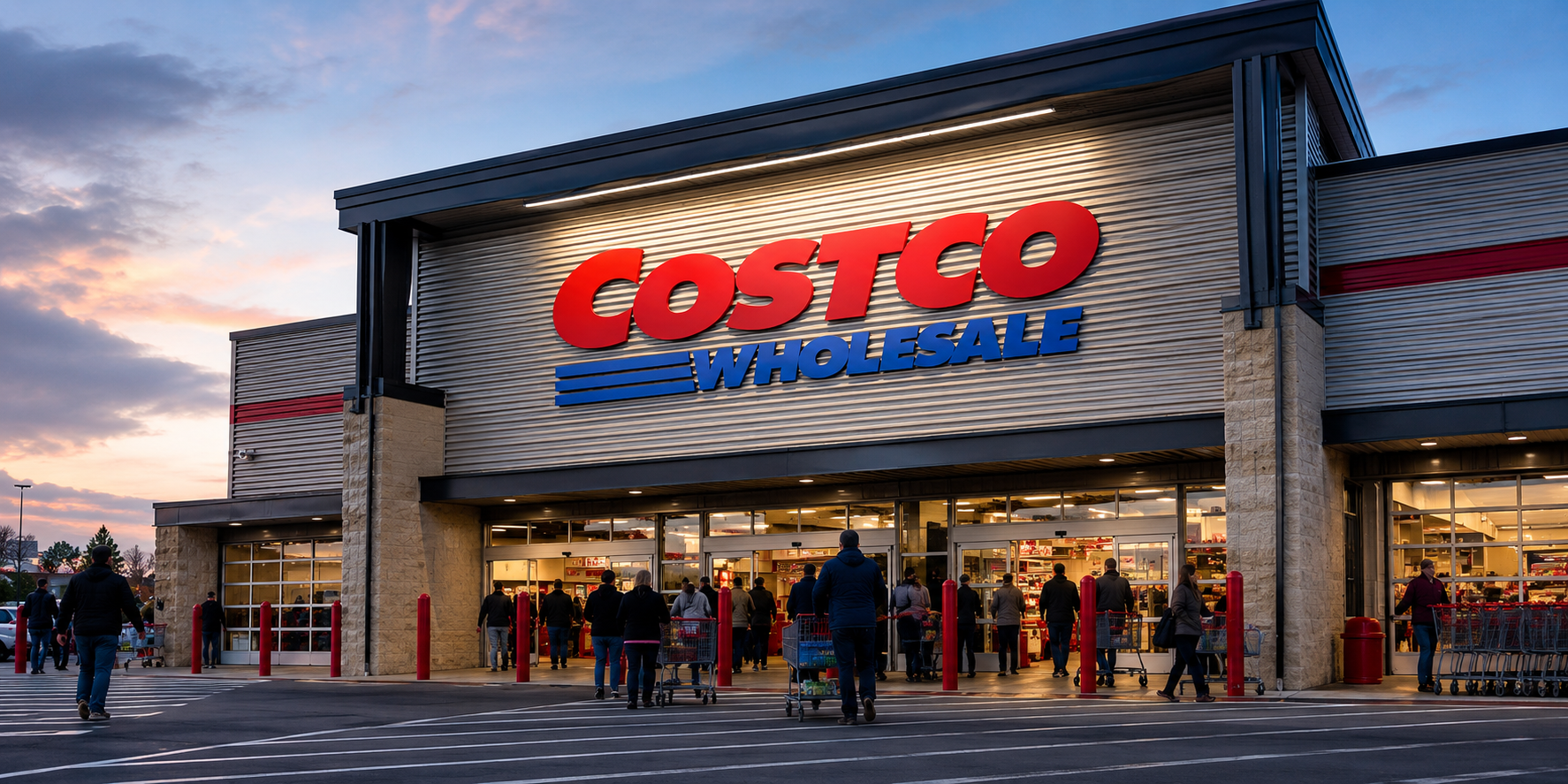
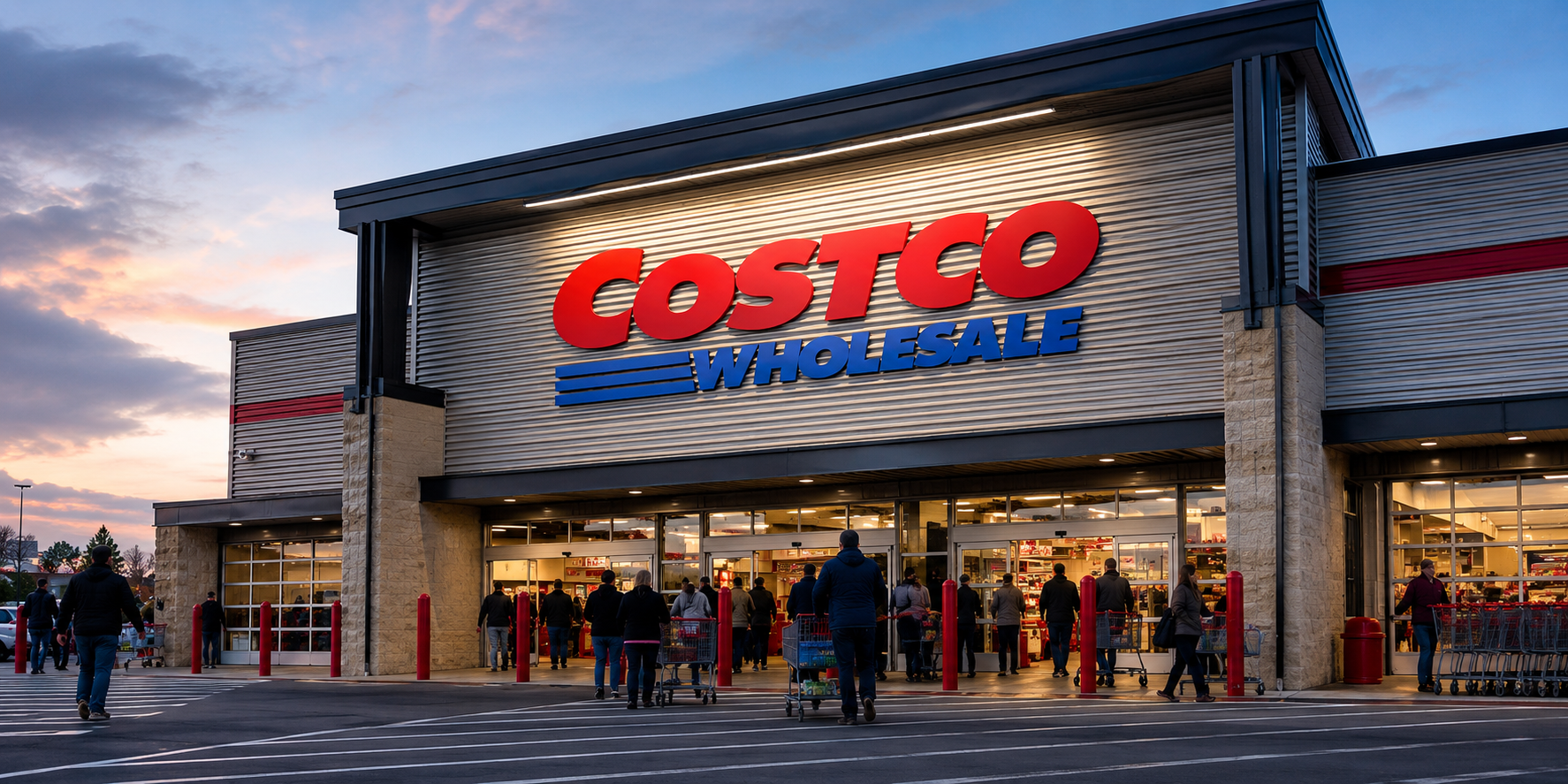
Costco Wholesale COST shares have come under pressure following the retailer’s latest quarterly earnings report, but several analysts argue that the recent pullback may not reflect the company’s long-term strengths.
The stock fell again on Monday, marking its seventh decline in the past eight trading sessions.
At around $949.50, Costco was on track for its lowest closing price since late January.
While the shares remain up more than 10% for the year, they have fallen about 13% from their record closing high of $1,094.32 reached earlier this month.
The decline followed a mixed fiscal third-quarter report.
Costco reported earnings per share that missed Wall Street expectations by six cents, although revenue came in ahead of forecasts.
With the stock trading near all-time highs before the earnings release, investors appeared to take profits after the report despite continued strength in the retailer’s underlying business.
Low-price strategy supports member loyalty
Analysts say Costco’s focus on value remains one of its key competitive advantages, even as inflation and rising costs affect profitability.
Mizuho analyst David Bellinger noted that the company’s willingness to keep prices low is consistent with its long-standing strategy of maintaining customer loyalty and encouraging membership renewals.
Jefferies analyst Corey Tarlowe echoed that view, arguing that Costco’s pricing advantage continues to drive store traffic and market share gains in a price-sensitive environment.
The strategy comes with trade-offs. Maintaining low prices can pressure margins, particularly during periods of elevated inflation.
However, analysts view that investment as critical to preserving Costco’s high membership renewal rates.
“Elevated gas engagement is reinforcing member loyalty and frequency, supporting both near-term comps and long-term ecosystem strength,” Tarlowe notes.
Gasoline sales were a significant contributor to the company’s recent revenue growth.
Costco reported a 12% increase in sales during the quarter, helped by strong demand at its fuel stations as consumers sought lower-priced gasoline.
However, excluding the impact of gas sales, the company’s comparable-store sales growth was 6.6%, slightly below analyst expectations of 6.7%.
Warehouse model continues to gain market share
Despite concerns about slowing growth, analysts point to the strength of the warehouse club business model.
According to D.A. Davidson analyst Michael Baker, warehouse clubs account for roughly 5% of total US retail sales but have expanded at an average annual rate of 6% since 2007 and 11% since 2018, outpacing both broader retail and grocery markets.
“Costco has taken share from other warehouse clubs and in retail overall, growing 9% annually since 2007,” Baker notes.
Following the recent selloff, Baker added Costco to the firm’s best-of-breed list, citing the advantages of the warehouse club model.
Those advantages include high barriers to entry, a focused merchandise selection, recurring membership income, and valuable customer data generated through membership programs.
The membership model allows Costco to gather insights into customer behavior and tailor promotions and merchandise offerings accordingly.
Valuation remains a key debate
While analysts remain constructive on Costco’s business fundamentals, valuation concerns continue to weigh on sentiment.
Baker noted that the stock still trades at roughly 42 times forward earnings.
Another assessment cited the shares trading at nearly 50 times trailing earnings, levels that some investors view as demanding given the company’s growth outlook.
Consumer sentiment and broader economic conditions also remain areas of concern.
Even so, Wall Street consensus forecasts still call for double-digit earnings growth during the current fiscal year and the next.
Costco has also continued returning capital to shareholders. Over the past five years, the company has distributed $19.7 billion through dividends and repurchased an additional $3.2 billion of stock.
For investors, the debate now centers on whether Costco’s premium valuation can be justified by its steady market share gains, loyal membership base, and long-term growth prospects.
The post Why analysts are backing Costco despite its post-earnings slump appeared first on Invezz

