


In the days after Tadhg Kennelly was sensationally sacked from his AFL coaching job during COVID, the former Sydney Swans player found himself withdrawing and isolating at home.
His mate Dave Eccles, a fellow Irish expat, kept calling, texting and showing up at his door, until Kennelly finally agreed to go on an early morning walk and get a coffee.
Other friends soon started joining them, and in 2020, the two mates turned the morning routine into a global men’s charity, When No One’s Watching.
The organisation has since opened its first Perth chapter at Cottesloe Beach, with a second running at the Rockingham foreshore. The two groups are among 62 WNOW chapters now running across seven countries.
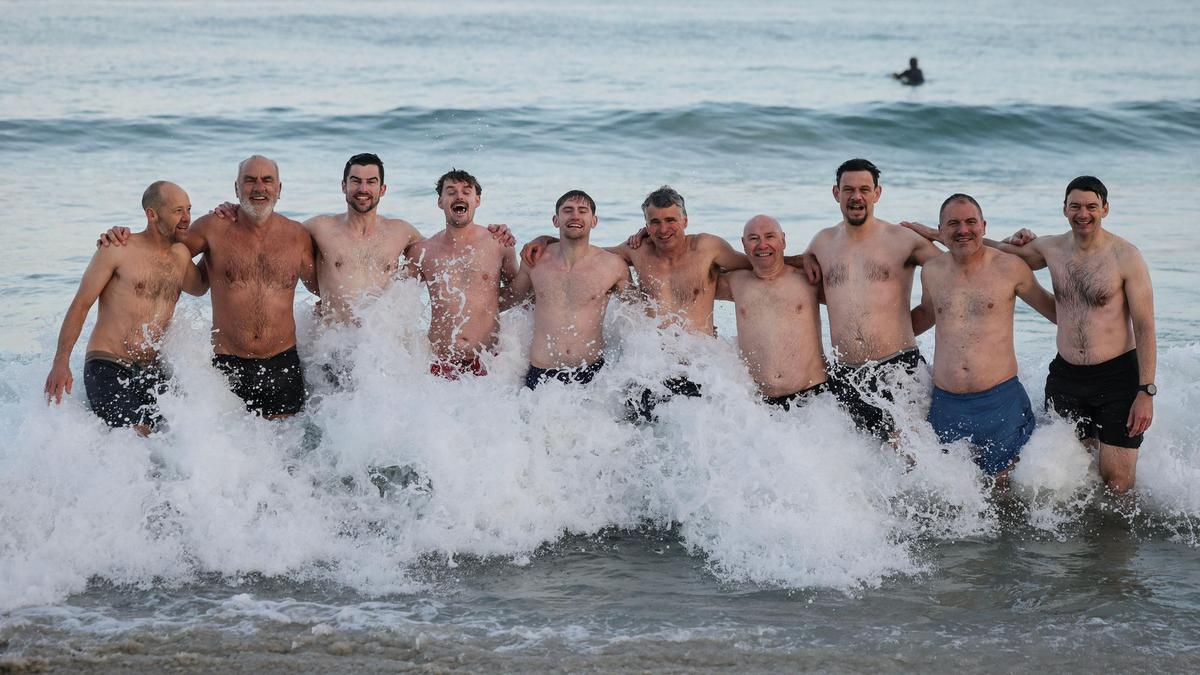
That means, at 6am every Wednesday morning, you’ll find at least a dozen or more Perth blokes of various ages and backgrounds gathered together for an early morning ritual aimed at tackling loneliness and supporting their own and each other’s mental wellbeing.
“You can’t miss us, we are the only men on the beach,” laughs Adam Brennan, another Irish expat who set up the Cottesloe chapter two years ago.


Mr Brennan was drawn to the group after experiencing his own mental health challenges. He has received treatment for anxiety and depression after a close friend and flatmate died by suicide in Ireland.
“I always wanted to do something after that, that I felt would make a difference and have a really positive impact,” he said.
“When I heard about the group in Sydney, I reached out to the guys and was like ‘Can I start something here? It’s such a brilliant idea.’ And the guys were like, ‘we would love you to’.”
Mornings at Cott begin with light exercise, followed by a fun game of touch rugby or baseball. A talking stick gets passed around the circle to give everyone a chance to get their thoughts of their chest, they take a quick ocean dip and then head for coffee at Il Lido, paid for by the charity.
Between exercising and talking, the group perform 61 push-ups. “Sixty push-ups represent the 60 men around the world who take their own lives – we do one push-up in unison until we get to 60,” Mr Brennan said.
“And then we do 61, because unfortunately, we lost one of our guys last year to his own battle with mental health. We do an extra one to remember him.”


The “circle of trust” allows the men to talk about anything that’s going on in their lives or that they want to get off their chest, Mr Brennan said. He’s found men will naturally open up when they are passed the talking stick, as the ritual has become normalised within the group.
“It’s just a really good opportunity for everyone to speak up about things they may have closed off,” he said.

The regular activity has become a mainstay for the core group of participants, and comes against a background of declining friendships and increased loneliness among men in general.
Men’s friendships have declined over the past 15 years, according to a national survey, which tracks men’s self-reported friendship networks.
Men also report higher rates of social isolation than women, which reach their peak among 35 to 54 -year-olds.
They also account for more than three-quarters of all deaths by suicide in Australia, in part because those facing challenges are reluctant to get help. Studies show about 25 per cent of men delay seeing their GP for help when they need it.
Mr Brennan said the participants had offered each other incredible support over the past two years.
“We’re all just there for each other,” he said.
“We’re not a therapy group and we’re not a rescue group, but because we open up so much about things, we all help each other – and we listen, which is the most important thing.
“The guys are all so open about therapy they are going to, or counselling they are receiving, or visiting their GPs.
“Sometime some guys will be having a 10 out of 10, best week ever, and then another guy might be a three out of 10, but we’re all in the struggle together.”
About 14 regulars usually turn up in the brisk winter months, but the numbers grow to a peak of 20 in summer – and there’s plenty of room for more.
Its been so useful, that some of the group now bring their teenaged sons and the group chat runs to about 70 or 80 people, including FIFO workers.
“We try to get as many different people down as we possibly can,” Mr Brennan said.
“It doesn’t matter if you’re old or young or if you’re injured or if you’ve got a sickness, we just want to try to get everyone down.”

