

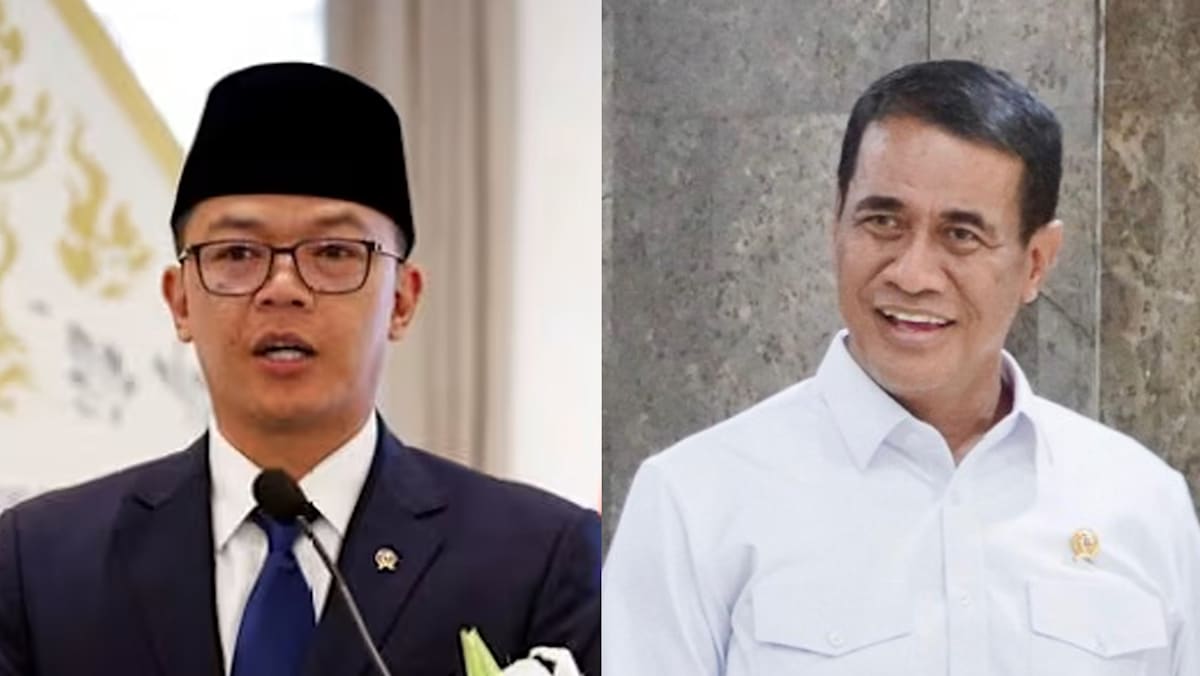
“Sugiono … is unlikely to become a political competitor to Prabowo. After all, he has been Prabowo’s loyalist from the beginning, and his entire political career was built by Prabowo,” said Wawan Mas’udi, a political lecturer at Gadjah Mada University.
“Amran, meanwhile, has a more technocratic background,” he added.
After submitting the names to the People’s Consultative Assembly (MPR) on Monday (Nov 23), Prabowo himself stressed that his considerations were based “solely on achievement, dedication, loyalty to the state, and my conviction that they will perform to the best of their ability”.
Members of the MPR will convene on Dec 11 to choose one of the two as Indonesia’s next vice-president.
Analysts say the two candidates offer different advantages and potentially different risks, reflecting Prabowo’s wider considerations of government stability, political control and preparations for the 2029 presidential election.
The next vice-president could become Prabowo’s running mate if he seeks re-election in 2029, or potentially emerge as a successor within his political organisation.
Wawan said the nominations should be viewed as part of Prabowo’s efforts to consolidate both his administration and political power.
He said Prabowo needs a deputy who can help deliver his flagship programmes such as the free meal programme to combat malnutrition, while ensuring political stability ahead of a possible second-term bid.
“In terms of consolidating the administration, the goal is to ensure that the president’s priority programmes – the key initiatives – can be implemented,” said Wawan.
“The choice of these two individuals is, in fact, a combination of factors aimed at achieving that.”

