

Cybersecurity breach exposes bank customer data
Morgan Wright, former State Department antiterror advisor, joins the broadcast to analyze a massive cybersecurity breach affecting Chase, Visa and Mastercard. Wright explains how customer data was exposed in the leak and outlines critical safety measures individuals must take to protect their financial information amid a period of unprecedented global technology turmoil.
NEWYou can now listen to Fox News articles!
You trust your bank to protect your money. But how much do you know about the outside companies that also handle your personal information? That’s a question worth asking after a ransomware group leaked customer data linked to Visa, Mastercard and JPMorgan Chase.
On Nov. 19, 2026, The Wall Street Journal reported that hackers had leaked information allegedly linked to thousands of customers of the three financial companies. The reported exposure involved third-party service providers that work with the financial companies. Now, customers are left wondering what information hackers obtained and whether they need to take action.
Missed CyberGuy LIVE? Watch the replay and discover 5 ways to travel smarter and save money.
Our free CyberGuy LIVE class, 5 Ways to Travel Smarter and Save Money, has ended, but you can still watch the full replay. Kurt “CyberGuy” Knutsson walks you through five practical ways to protect your phone and personal information, avoid common travel scams, find better deals, save money on bookings and use technology to make your travels easier and less stressful. No technical experience is needed.
Watch the free replay + downloadable checklist now at CyberGuyLive.com.
A SCAMMER HAS YOUR NAME, PHONE NUMBER AND ADDRESS. WHAT CAN THEY ACTUALLY DO?

JPMorgan Chase says hackers may have accessed customer names and email addresses held by outside vendors, but its banking services remain operational. (Photo by ANGELA WEISS/AFP via Getty Images)
What happened in the Visa, Mastercard and JPMorgan data leak?
A cyber extortion group known as n0n claimed to have stolen information associated with the three financial companies. According to Reuters, the group posted claims on Nov. 16 about obtaining cardholder engagement records. These allegedly included extensive marketing activity associated with tens of thousands of email addresses. The group also posted claims involving Visa and Mastercard that same day.
The reported cyberattack involved outside service providers that handle information for financial institutions. Some of the records appear connected to customer marketing activities and cardholder benefit programs. However, several important questions remain unanswered. The companies have not publicly identified all the affected vendors, and investigators have yet to establish whether one compromised provider was responsible for all three reported exposures.
What JPMorgan Chase says about the cyberattack
JPMorgan Chase confirmed that third-party service providers were targeted in a cyberattack. In a statement to CyberGuy, a JPMorgan Chase spokesperson said, “Based on our investigation so far, we believe the attackers accessed certain marketing data held by those vendors, which may include some customer names and email addresses.”
The bank says its services remain operational. It also plans to contact affected customers where appropriate and offer support, including complimentary credit monitoring. Addressing the transaction processing delays that affected multiple banks earlier this week, the spokesperson added, “There is no connection to service disruption some customers experienced earlier this week.”
According to Reuters, leaked records appeared to contain more than 16,000 JPMorgan Chase customer email addresses and 124 bank employee email addresses. Some entries also included phone numbers and postal codes. Reuters could not independently verify the authenticity of the records.
Mastercard confirms limited customer information was exposed
Mastercard also acknowledged an incident involving an outside provider. However, the company says the exposed information was limited to email addresses belonging to a small subset of cardholders enrolled in a specific benefit program. In a statement to CyberGuy, Mastercard said the incident involved non-payment information. “There is no impact to the Mastercard payment network or the ability for people to use their cards,” Mastercard said.
The company also confirmed that the exposure has been contained. Its teams are working with the affected provider to support cardholders as needed. Mastercard has not publicly identified the benefit program involved or disclosed an exact number of affected customers. The company also has not indicated that payment-card numbers were exposed.
What Visa says about the reported customer data leak
Visa has responded to CyberGuy about the reported cybersecurity incident involving a third-party service provider in the Asia-Pacific region. The company says its own systems and payment information were unaffected.
In a statement, the company said, “Visa is aware of these claims. They are associated with an incident involving a third-party service provider in Asia Pacific. Visa’s systems were not involved and were not impacted. No payments data such as card numbers were affected. This is unrelated to any of the system disruptions across different industries this past week.”
However, Visa has not identified the service provider or disclosed how many customers may have been affected. The company also has not specified what non-payment information, if any, was exposed.
Could the data leak put your bank account at risk?
So far, the companies’ statements point primarily to customer information held by outside service providers. Mastercard says its payment network remains secure, while Visa says payment-card numbers were unaffected. JPMorgan Chase has identified potentially exposed marketing data. There has been no verified indication that customer banking passwords were stolen or that hackers accessed funds through this incident.
However, stolen contact information can still create problems. Criminals may use names or email addresses to make phishing messages appear more convincing. You could receive an email claiming your bank detected suspicious activity related to the recent cyberattack. The message might direct you to a fake website designed to steal your login information. We’ve covered how convincing these scams can be in our article about fake bank security alerts that trick customers into sharing personal information.
9 WARNING SIGNS OF IDENTITY THEFT YOU SHOULD NEVER IGNORE

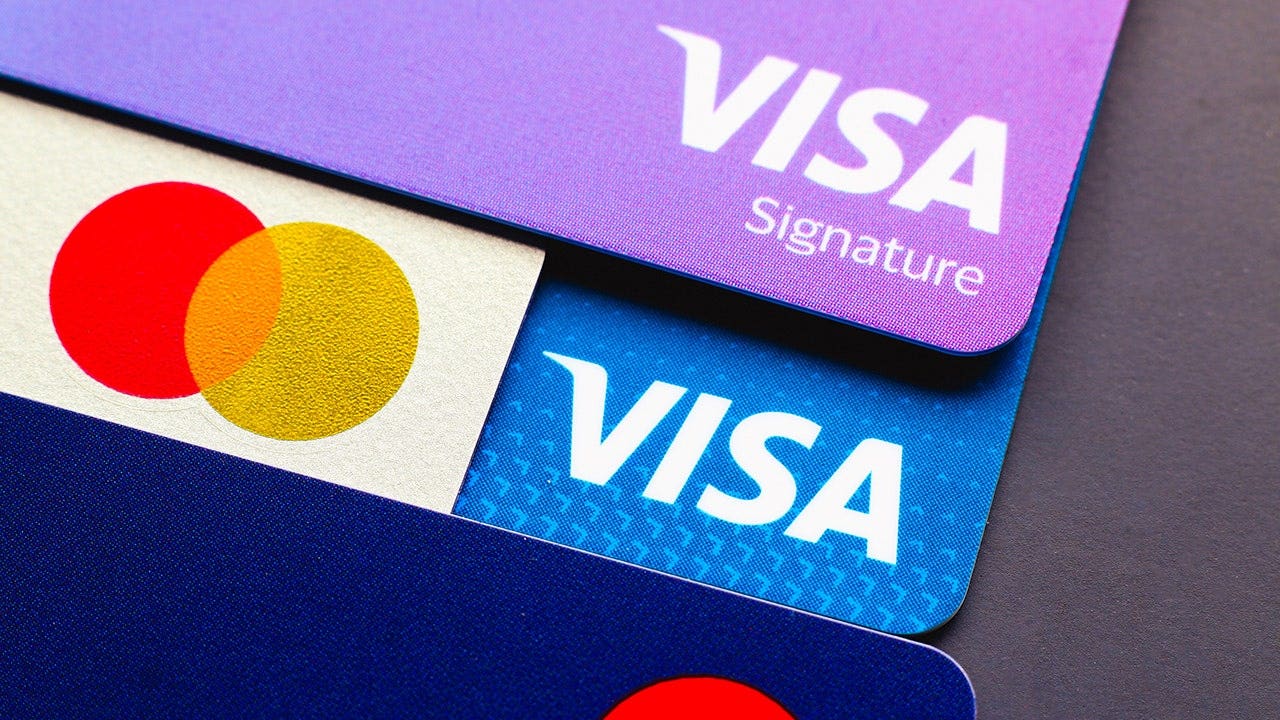
Visa, Mastercard and JPMorgan Chase are responding to a reported data leak involving third-party service providers that may have exposed customer contact information. (Photo Illustration by Thomas Fuller/SOPA Images/LightRocket via Getty Images)
How to protect yourself after the Visa, Mastercard and JPMorgan data leak
You do not need to assume your account has been compromised. However, there are several practical steps I recommend taking to reduce your exposure to follow-up scams.
1. Watch for fake bank security alerts
Be cautious of unexpected emails or text messages claiming your Visa, Mastercard or JPMorgan Chase account needs immediate attention. Scammers may reference a real cyberattack to make their messages more convincing. They could also claim that your card will be suspended unless you verify your information. Don’t click links or open attachments in suspicious messages. Instead, open your bank’s official app or type its website address directly into your browser. You can also call the number printed on the back of your card. Using strong antivirus software can provide additional protection by helping detect malicious links and downloads before they cause damage. Get my picks for the best 2026 antivirus protection winners for your Windows, Mac, Android & iOS devices at CyberGuy.com
2. Never share a bank verification code
A scammer may call pretending to be from your bank’s fraud department. The caller might already know your name or email address and claim that a recent breach put your account at risk. The scammer may then ask you to read back a one-time verification code sent to your phone. That code could allow someone to access your account or approve an unauthorized transaction. Never share a verification code with someone who contacts you unexpectedly. Also, never transfer money to another account because a caller claims it will keep your funds safe. Legitimate bank representatives will not ask you to move your money to a supposedly safe account.
3. Turn on account alerts and review your transactions
Enable transaction notifications through your bank or credit card app. These alerts can help you spot unfamiliar purchases without waiting for your monthly statement. Check your recent activity and report anything suspicious immediately. Even though the companies have not reported a compromise of their payment networks, monitoring your accounts remains a useful security habit.
4. Strengthen your passwords and account security
Make sure your banking and primary email accounts use unique passwords. If you have reused passwords across accounts, replace them with strong alternatives. A password manager can help you generate and store them securely. Turn on multifactor authentication wherever available. If your bank supports passkeys or security keys, consider using them. An authenticator app is generally a stronger option than SMS codes, although it can still be vulnerable to certain phishing attacks. There is currently no verified evidence that passwords were exposed in this incident. These precautions can help protect your accounts against separate attacks. For more details, see our guide to whether bank text codes are enough to protect you.
5. Watch for official breach notifications
JPMorgan Chase says it will contact affected customers where appropriate and offer support, including complimentary credit monitoring. If you receive a breach notification, confirm that it came from your financial institution before clicking an enrollment link or sharing personal information. Credit monitoring can help you identify suspicious changes to your credit reports. However, it cannot stop someone from sending phishing emails or impersonating your bank. You should also be suspicious of anyone demanding payment to activate complimentary protection offered after a breach.
6. Consider a credit freeze if sensitive information was exposed
A credit freeze makes it harder for criminals to open new credit accounts in your name. You can place one for free through Equifax, Experian and TransUnion. You must contact each credit bureau separately. A freeze does not affect your credit score, and you can temporarily lift it when you need to apply for credit. If only your name and email address were exposed, a freeze may not be necessary because of this incident alone. However, it can provide broader protection, especially if a breach involves more sensitive identifiers such as a Social Security number.
7. Reduce the personal information scammers can find about you
An exposed email address becomes more useful to scammers when they can connect it with other personal details found online. Consider removing unnecessary information from public profiles and checking what data broker websites have collected about you. A personal data removal service can also help request the removal of information from participating people-search sites. These services cannot erase information already stolen in a cyberattack. However, reducing the amount of personal information publicly available may make it harder for criminals to build convincing profiles for targeted scams. You should also use your phone’s spam filtering features and reputable antivirus software to help block suspicious messages or malicious downloads. Get a free scan to find out if your personal information is already out on the web: Cyberguy.com
8. Know what to do if you already responded to a suspicious message
If you clicked a suspicious banking link or shared personal information, take action quickly. What you do next depends on what happened.
- Change your password. If you entered it on a suspicious website, update it immediately through your bank’s official app or website. Change it anywhere else you’ve used the same password.
- Contact your bank. Shared a verification code with someone? Call your bank’s fraud department right away and explain what happened.
- Protect your payment information. If you shared card details or spotted an unfamiliar transaction, ask your bank whether your card should be locked or replaced.
- Scan your device. Downloaded a suspicious file? Stop opening it and run a security scan using strong antivirus software.
- Report suspicious texts. Use your phone’s spam reporting feature or forward the message to 7726 (SPAM).
You can also report suspected fraud through ReportFraud.ftc.gov.

A cyber extortion group says it stole customer information linked to Visa, Mastercard and JPMorgan Chase, raising concerns about phishing scams and data security. (Photo Illustration by Thomas Fuller/SOPA Images/LightRocket via Getty Images)
Kurt’s key takeaways
I’ve always believed that protecting your financial information requires knowing who has access to it. This latest incident shows how complicated that has become. You can do everything right with your bank account, yet an outside company handling your personal information could still experience a cyberattack. Most of us have little say in which vendors our financial institutions use, and we rarely know how much information those companies collect. I appreciate that Visa, Mastercard and JPMorgan Chase provided statements about the incident. It’s reassuring that payment services remain operational, but I’d like to see more transparency about the outside providers involved and exactly what customer information they were holding. Until we have those answers, I would pay close attention to unexpected messages claiming to be from a financial institution. If someone contacts you about a problem with your account, verify it yourself before taking action.
If your bank shares your personal information with outside companies, shouldn’t you have a right to know exactly who has it? And would a data leak like this make you reconsider which financial institutions you trust? Let us know by writing to us at Cyberguy.com
Sign up for my FREE CyberGuy Newsletter
- Get my best tech tips, urgent security alerts and exclusive deals delivered straight to your inbox.
- For simple, real-world ways to spot scams early and stay protected, visit CyberGuy.com – trusted by millions who watch CyberGuy on TV daily.
- Plus, you’ll get instant access to my Ultimate Scam Survival Guide free when you join.
CLICK HERE TO DOWNLOAD THE FOX NEWS APP
Copyright 2026 CyberGuy.com. All rights reserved.

