



NEWYou can now listen to Fox News articles!
President Donald Trump’s threat to “blow up” Oman if the Gulf kingdom didn’t “behave” has exposed a rare rupture with one of Washington’s most valuable Middle East partners — a country that has spent decades quietly serving as America’s backchannel to Iran.
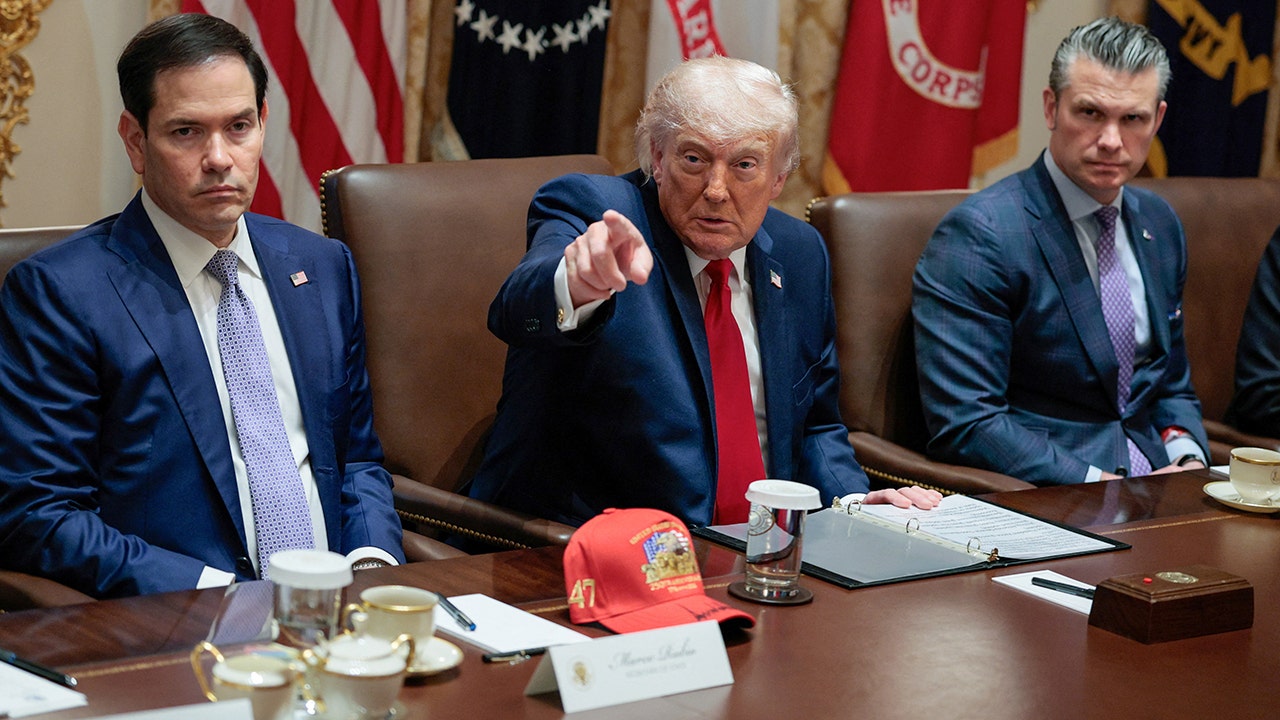
“The strait’s gotta be open to everybody,” the president said during a Cabinet meeting Wednesday. “It’s international waters. Nobody’s going to control it. We’re going to watch over it. We’ll watch over it, but nobody’s going to control it. That’s part of the negotiation that we have. They would like to control it; nobody’s going to control it. It’s international waters. And Oman will behave just like everybody else, or we’ll have to blow ’em up. They understand that. They’ll be fine.”
The remark came amid a dispute over the future of the Strait of Hormuz, the narrow waterway connecting the Persian Gulf to the Arabian Sea through which roughly a fifth of the world’s oil supply passes. The Trump administration has strongly opposed reported discussions involving Iran and Oman over a potential tolling system or joint management arrangement for the strait, arguing such a move would threaten freedom of navigation and give Tehran greater influence over one of the world’s most important shipping routes.
The comments reflected a broader dispute over how far Oman should go in its efforts to engage Iran as the two countries discuss proposals related to the future management of the Strait of Hormuz, one of the world’s most important shipping routes.
STRAIT OF HORMUZ TOLL WOULD SET ‘DANGEROUS PRECEDENT,’ UN SHIPPING AGENCY WARNS
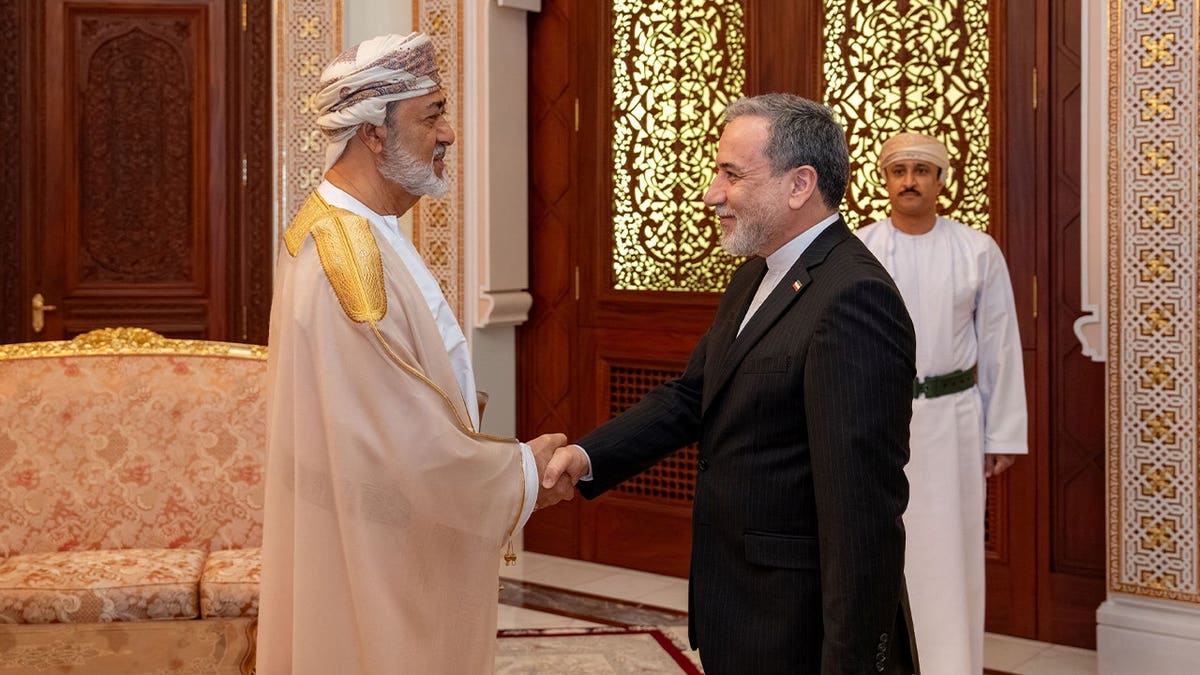
Iranian Foreign Minister Abbas Araqchi meets Sultan of Oman Haitham bin Tariq Al Said at Al Baraka Palace in Muscat, Oman, April 26, 2026. (Oman News Agency/Handout via Reuters)
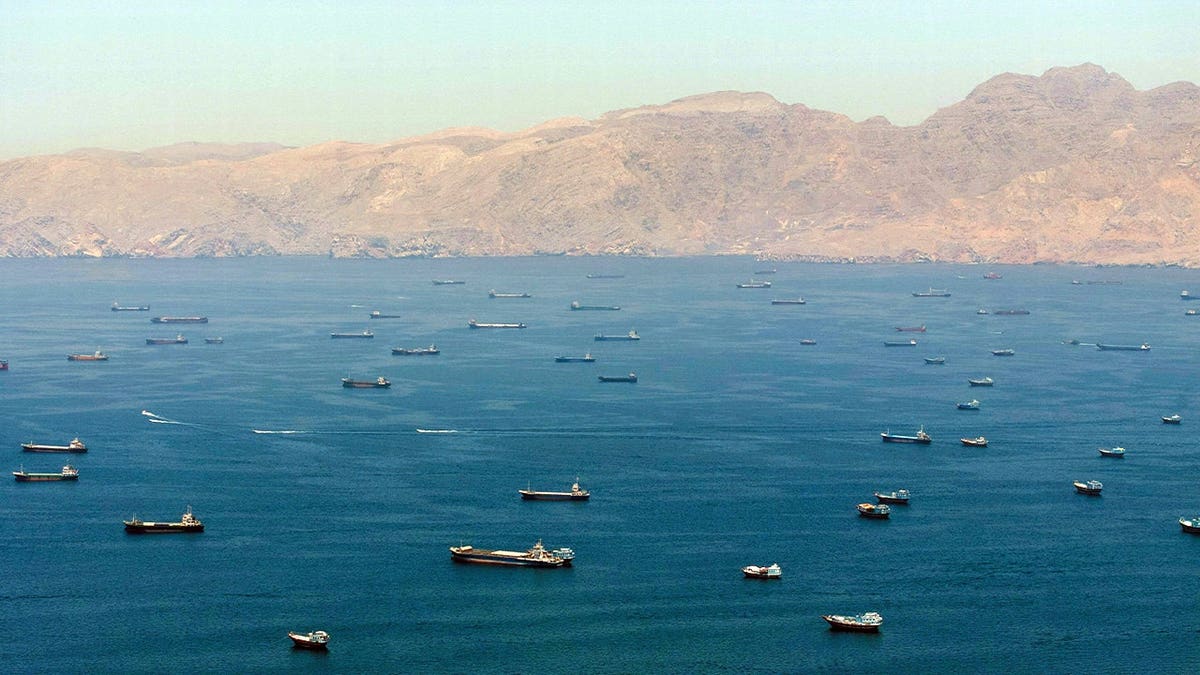
A drone view shows vessels anchored at the Strait of Hormuz, as seen from Musandam, Oman, May 25, 2026. (Stringer TPX IMAGES OF THE DAY via Reuters)
The Omani embassy and the White House could not be reached for comment on the underlying tensions or negotiations on the Strait of Hormuz.
Situated on the southeastern edge of the Arabian Peninsula, Oman occupies the southern side of the Strait of Hormuz and has long pursued a foreign policy distinct from many of its Gulf neighbors.
While maintaining close security ties with the U.S., Muscat also has preserved relations with Iran, allowing it to serve as one of the region’s key intermediaries. Oman helped facilitate secret U.S.–Iran talks that paved the way for nuclear negotiations, has repeatedly served as a diplomatic channel between Washington and Tehran and has played a role in negotiations involving Yemen’s Iran-backed Houthi rebels.
“Oman’s role as the Switzerland of the Middle East has advanced U.S. interests,” April Alley, a senior fellow at The Washington Institute, told Fox News Digital.
“They have facilitated numerous rounds of talks between U.S. and Iranians,” she said. “They were also able to broker a truce between the US and the Houthis in the Red Sea. Their neutrality allows them to be quiet facilitators when adversaries are ready to talk.”
Oman’s value to Washington historically has stemmed from its ability to maintain communication channels with actors that many U.S. partners cannot or will not engage directly.
The Gulf kingdom has served as a go-between in negotiations involving the United States and Iran, supported diplomatic efforts related to Yemen and frequently positioned itself as a neutral intermediary during regional crises.
Yacoubian described that role as “indispensable” to previous diplomatic efforts.
“Oman has long played an important role as a quiet mediator, acting as a go-between for the United States and Iran in various negotiations including for the Obama-era JCPOA and more recently with the Trump administration and its efforts to negotiate with Iran prior to the 12-day war in June 2025,” she said.
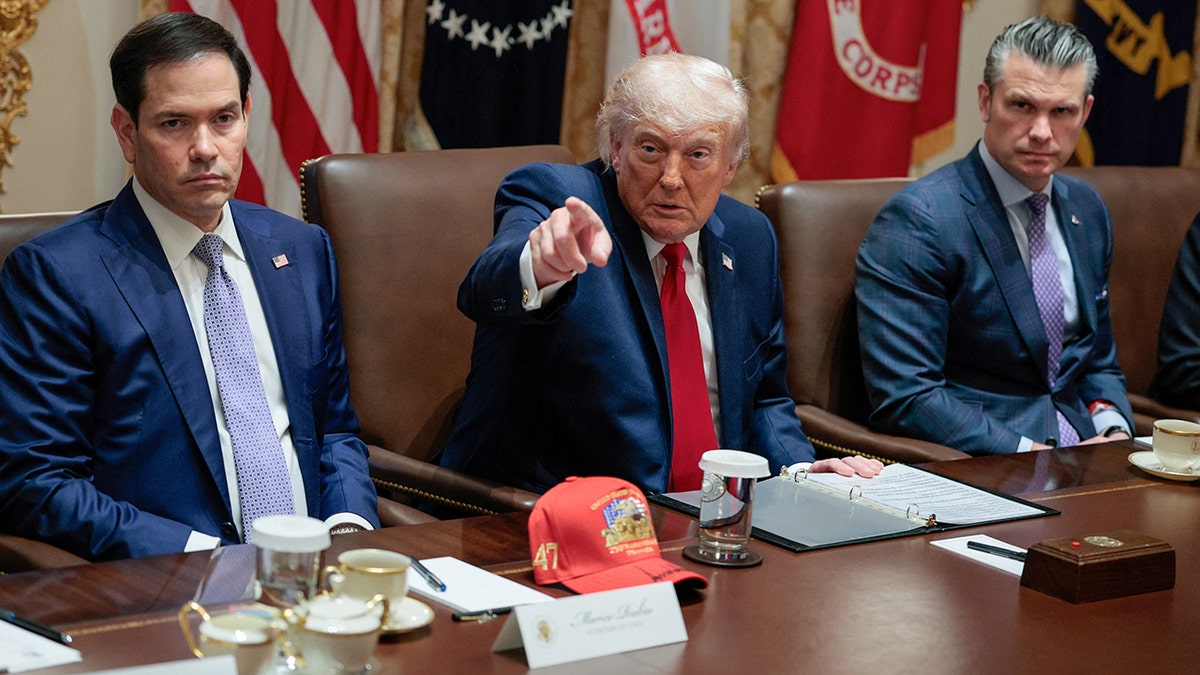
President Donald Trump attends a cabinet meeting with Secretary of State Marco Rubio and Defense Secretary Pete Hegseth in the Cabinet Room at the White House in Washington, D.C., on May 27, 2026. (Evan Vucci/Reuters)
A real dispute beneath the rhetoric
While Trump’s remarks drew attention, experts said they reflected a substantive disagreement over the future of the Strait of Hormuz rather than a purely rhetorical outburst.
“I think it was both,” Alley said when asked whether the remarks were simply an unusual threat directed at a longtime U.S. partner or reflected deeper concerns.
“Oman is an important defense partner, and the Trump administration has a record of working with them on mediation initiatives. The President has an unconventional style, but still this comment was shocking.”
“Beyond the shock value, I think it reflects clear frustration on the part of the administration with the Omani approach to the Strait,” she said. “The President is signaling that Oman has gone too far in discussions with Iran on options for opening the Strait that could give Iran administrative control and interfere with freedom of navigation.”
The administration’s concerns center on reports that Iran and Oman have discussed arrangements involving tolls, fees or joint administration of the strategic waterway.
“The administration is right to be concerned about tolls, fees, or joint management of the Strait,” Alley said. “All of these things are a recipe for Iran interfering with freedom of navigation in the long term and they could set a dangerous precedent for other international waterways.”
She warned that if Iran were able to exert administrative control over Hormuz, other Iran-backed groups could seek similar arrangements elsewhere.
“I could see the Houthis trying for the same in the Bab al-Mandeb,” she said.
Mona Yacoubian, senior adviser and director of the Middle East Program at the Center for Strategic and International Studies, similarly argued that any arrangement that financially benefits Iran through management of the strait would be cause for concern.
“If in fact under discussion, a joint management scheme that accrues monetary benefit to Iran, Oman, and possibly other GCC countries would be a justifiable cause for U.S. concern as this would undermine broader principles of freedom of navigation and set a worrying precedent globally,” she told Fox News Digital.
Yacoubian said Oman likely is attempting to serve as a bridge between Iran and Gulf Arab states amid concerns over future shipping disruptions in the strait.
“Oman is likely seeking to serve as a bridge between Iran and the Gulf Cooperation Council states,” she said.
But, Yacoubian added, “It is important to underscore that these types of threats are not well-received globally and contribute to an overall erosion of trust in the United States as a credible negotiator and leading global power.”
WHY GULF STATES AREN’T JOINING THE WAR AGAINST IRAN — DESPITE ATTACKS ON THEIR SOIL
Oman’s role has not been without controversy. Unlike many of its Gulf neighbors, Muscat has often sought to maintain relationships with rival regional powers even during periods of heightened tension.
Michael Rubin, a senior fellow at the Middle East Forum, argued that concerns about Muscat extend beyond the current dispute over the Strait of Hormuz.
“Oman often acts as Qatar-lite,” Rubin told Fox News Digital. “They like to mediate but, in the past at least, they appear to have turned blind eyes to terror finance and weapons smuggling.”
Rubin pointed to what he described as three longstanding concerns: alleged Iranian weapons smuggling through Oman to Yemen’s Houthi rebels, Oman’s hosting of Houthi leaders and what he characterized as financial incentives tied to disruptions in Red Sea shipping.
“It’s no secret that Oman has kind of chosen its own path, and sometimes split the difference between Iran and the rest of the Gulf in ways that have concerned U.S. policymakers,” Daniel Beinam, fellow of the Middle East Institute and former senior State Department official for Middle Eastern affairs, told Fox News Digital.
CLICK HERE TO DOWNLOAD THE FOX NEWS APP
Even so, Beinam emphasized the depth of the relationship between the two countries.
“For a century and a half, Oman has been a close partner to the United States,” he said.

