

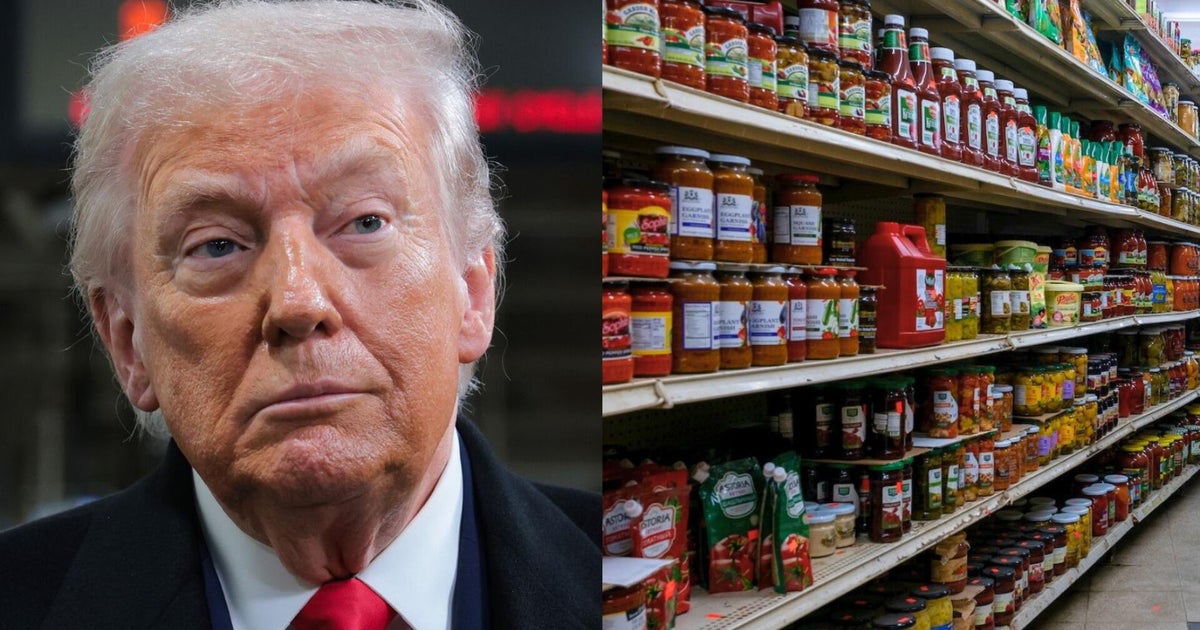
President Trump campaigned in 2024 on promises to lower Americans’ cost of living, vowing to push gasoline prices below $2 a gallon and to deliver 2% mortgage rates. Two years later, consumers face sharply higher costs for many of the necessities he pledged to make more affordable.
Less than a month before the midterm elections, the gap between Mr. Trump’s promises and the financial realities facing many Americans is fueling voter frustration over the economy. Although economic growth is solid and unemployment remains low, nine in 10 Americans say prices are the most important factor shaping their views of the economy, according to a recent CBS News poll.
The financial pressures affecting Americans predate Mr. Trump’s return to the White House last year. Consumers are reeling from the cumulative impact of five years of post-pandemic inflation, economists note. But his campaign promises raised hopes that he would lower consumer prices.
At the same time, some of Mr. Trump’s policies have exacerbated inflation. His tariff regime contributed about 2.9 percentage points to inflation through February, according to new research from the Federal Reserve Bank of New York. Without the tariffs, the price of goods would have declined, the researchers said.
Mr. Trump’s decision to attack Iran in February has also led to a drawn-out conflict that has disrupted oil shipments and sharply driven up the price of oil, gas and diesel.
“It’s undeniable that several of these supply shocks that the U.S. economy has been navigating through come from policy decisions made by the administration — namely, decisions to intervene in Iran and decisions to impose tariffs,” Greg Daco, chief economist at investment advisory firm EY-Parthenon, told CBS News.
Inflation in September is forecast to have risen at an annual rate of 3.6%, up from 3.4% in August, according to economists polled by FactSet — well above the Federal Reserve’s 2% annual target.
Ryan Bourne, an economist at the libertarian Cato Institute, said that consumers “judge the prices they’re paying against the prices they paid four or five years ago, and are still shocked by it.”
He added, “As a result of that, they think the economy’s doing very, very badly.”
The White House said that Mr. Trump’s agenda “stopped Biden’s inflation crisis” while creating jobs and economic growth. The administration’s policies “will continue to deliver economic wins over the next two years,” White House spokeswoman Taylor Rogers told CBS News.
“The President has delivered tangible wins for American families: He signed the largest working-class tax cuts in history, cut the cost of prescription drugs, added more than one million private-sector jobs, locked in nearly 20 trade deals that put American workers first and sent 401(k)s to record highs,” Rogers added.
The following charts show how U.S. costs have changed for expenses ranging from groceries to car insurance.
Groceries
“A vote for Trump means your groceries will be cheaper.” — Mr. Trump in a campaign speech in Pittsburgh on Nov. 4, 2024.
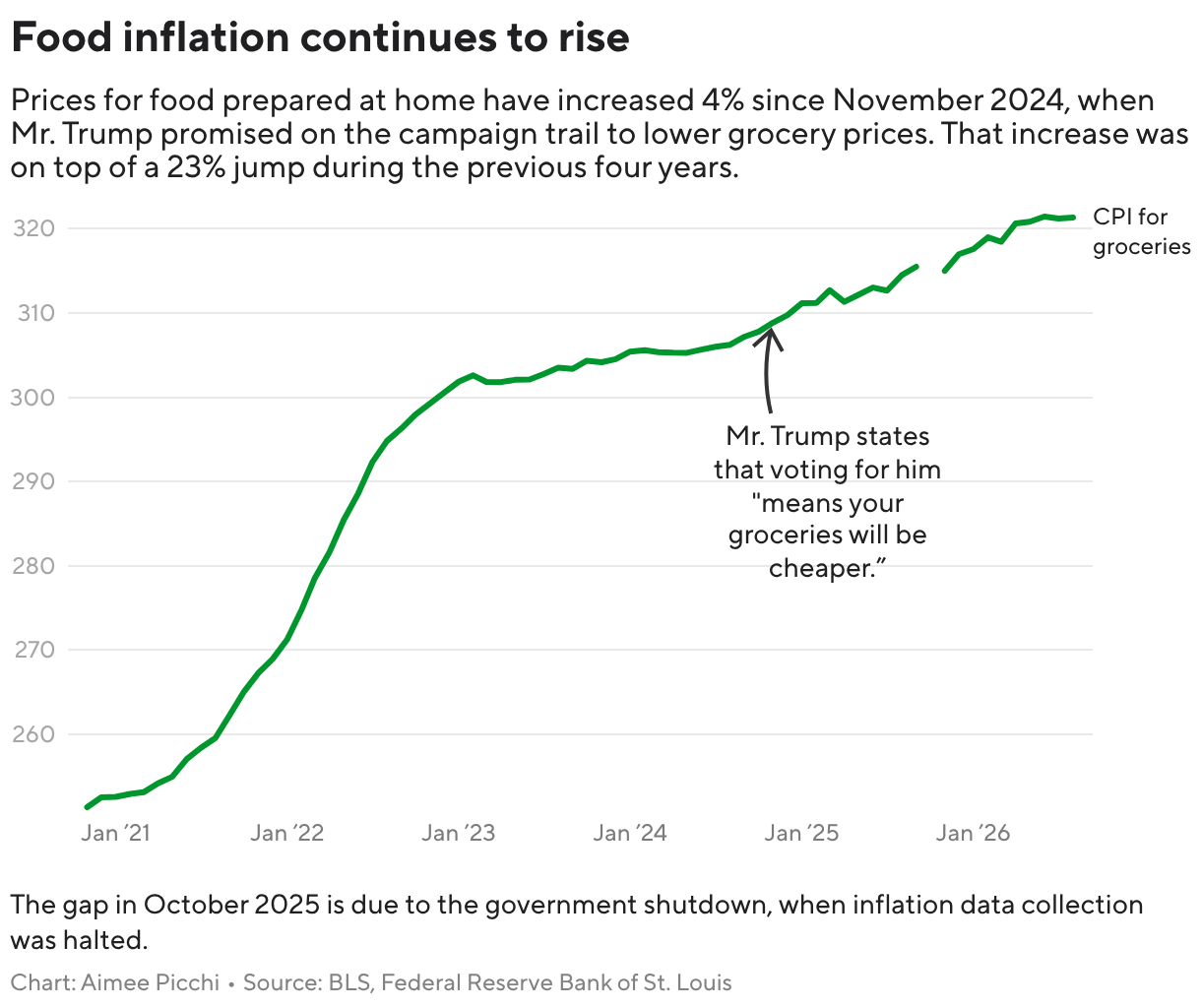
For consumers, each visit to the supermarket is a fresh reminder of inflation’s impact on food costs, which has continued to rise since Mr. Trump vowed to lower grocery prices.
The cost of food prepared at home has climbed 4% since November 2024, according to Consumer Price Index data, when Mr. Trump said a vote for him would lead to lower costs. That increase comes on top of a 23% jump in food prices during the prior four years. Because consumers tend to remember what they spent on groceries before the pandemic, they get a jolt each time they visit the supermarket, said Daco of EY-Parthenon.
“Whether it’s talking about gas prices or grocery prices or restaurant prices or travel prices, everybody talks about inflation,” he said. “The salience of prices is what is driving this downbeat consumer morale.”
Food costs are continuing to rise due to a number of factors, ranging from the elevated price of gas and diesel, which are needed to fuel farm equipment and ship items to stores, to the Trump administration’s tariffs, economists said.
Gasoline
“Energy is going to bring us back. That means we’re going down and getting gasoline below $2 a gallon, bring down the price of everything from electricity rates to groceries, airfares, and housing costs.” — Mr. Trump in a speech at the Economic Club of New York on Sept. 5, 2024.
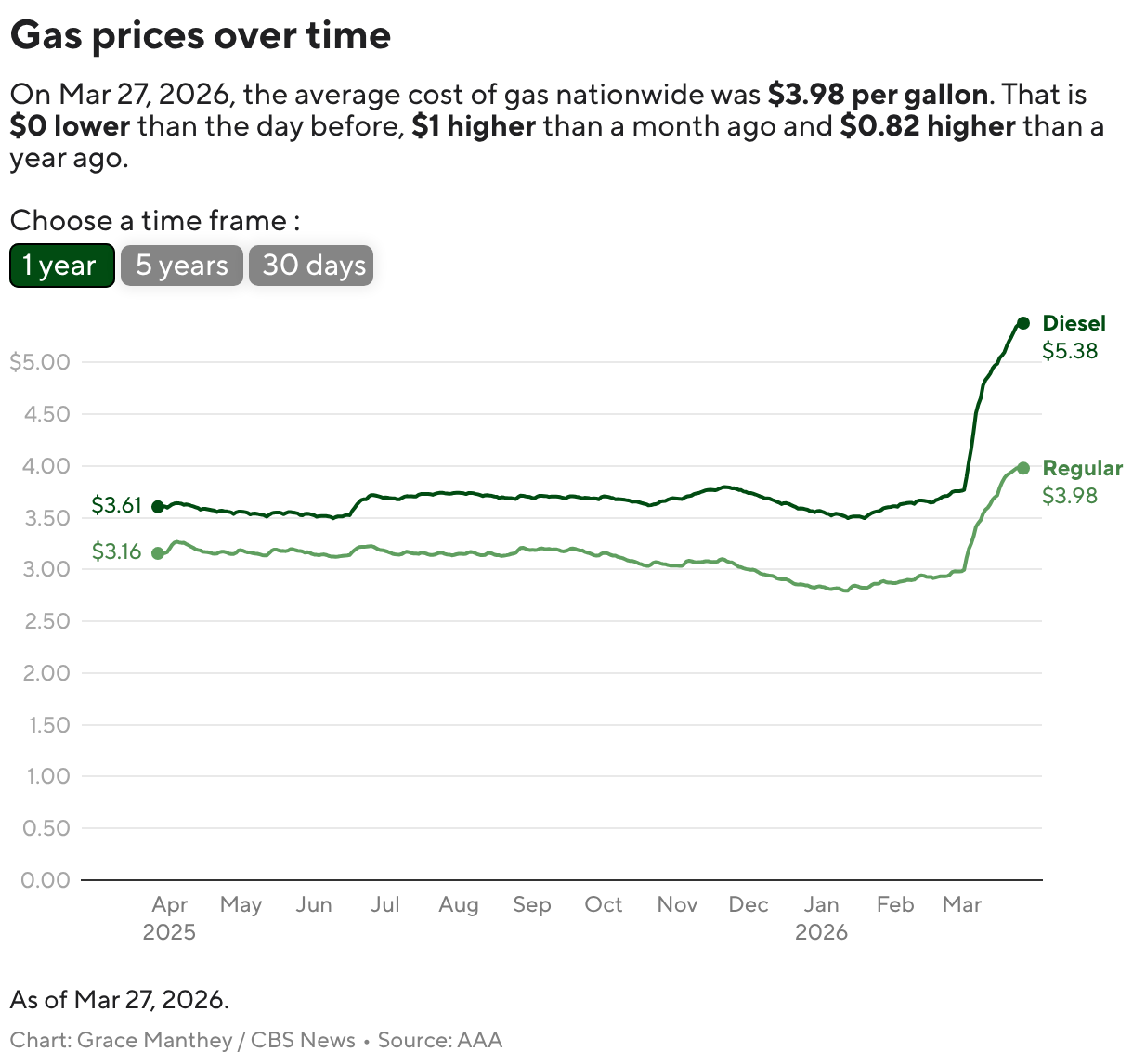
Gas prices have surged since the U.S. and Israel attacked Iran in late February. As of Oct. 9, the national average price for a gallon of gasoline was $4.37. That’s up 47% from $2.98 on Feb. 27, one day before the war began, according to CBS News data.
Diesel prices rose to a record high of $6.53 per gallon on Sept. 22 and now hover around $6.28. Diesel, which is widely used in the trucking, agriculture and construction sectors, is a factor in consumer prices for nearly every type of good, including groceries.
Gas prices tend to have an outsized impact on consumer sentiment, influencing their views on future inflation and the broader economy, according to research from the Federal Reserve Bank of San Francisco.
Energy and electricity
“By contrast, I’m announcing today that under my leadership, the United States will commit to the ambitious goal of slashing energy and electricity prices by half, at least half.” — Mr. Trump in a campaign speech in Asheville, North Carolina, on August 14, 2024.
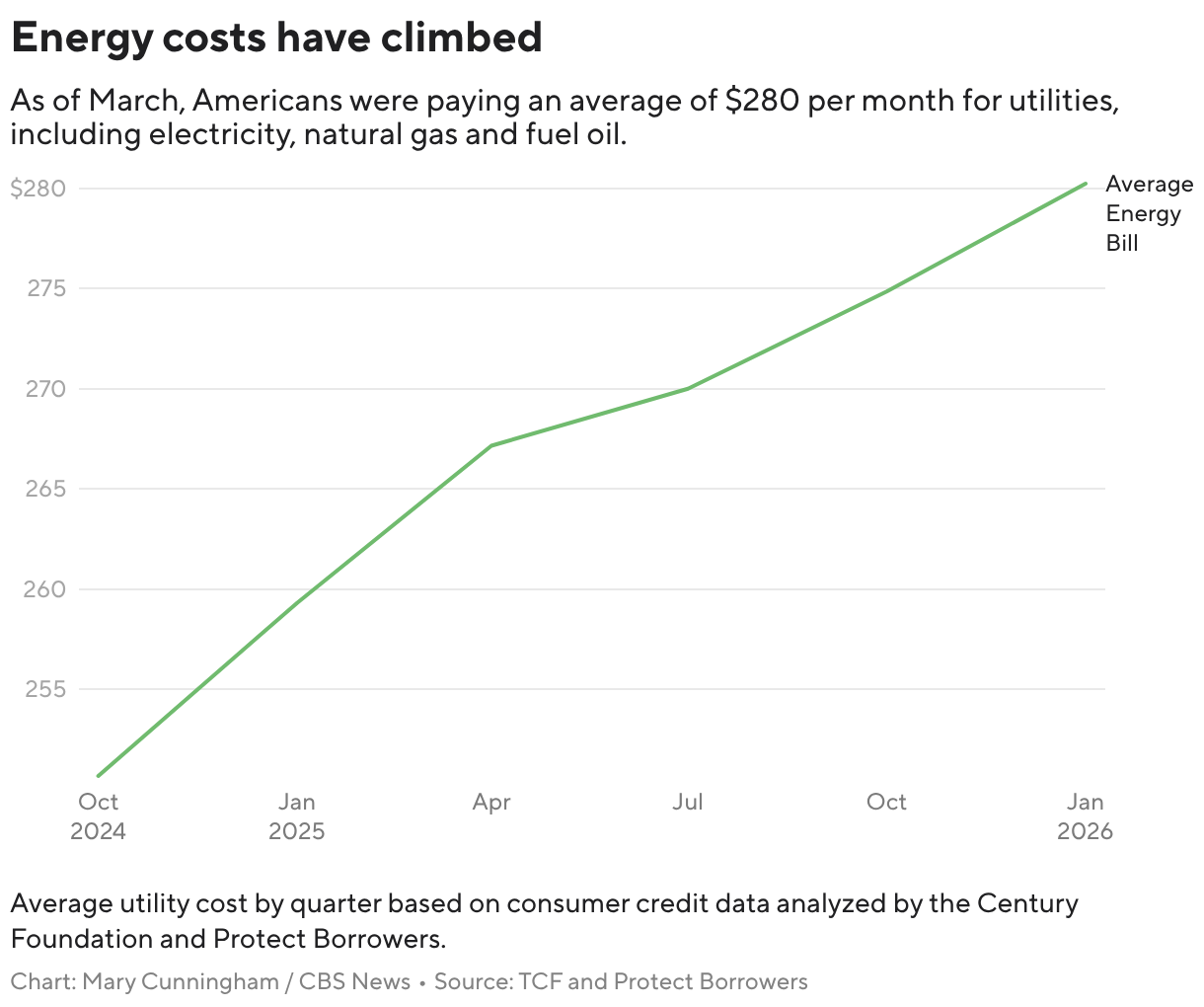
Consumers’ energy bills have continued to increase this year. Data from the Energy Information Administration (EIA) shows that average monthly residential electricity costs rose 12.5% between December 2024 and July of this year. Electricity bills are rising as utilities spend more to upgrade the nation’s aging power grid, and overall energy demand grows amid the data center buildout.
Natural gas is also growing more expensive. Average monthly residential prices for natural gas rose 106% between December 2024 and July 2025, according to the EIA. Energy Innovation, a nonpartisan policy and research firm, attributes the jump to geopolitical conflict, an increase in domestic exports, extreme weather linked to climate change and rising infrastructure costs.
A July report from advocacy groups The Century Foundation and Protect Borrowers found that the national average utility bill reached $280 per month in early 2026, up 12% since the end of 2024, just before Mr. Trump took office.
Many people could face higher energy prices this winter. Americans will spend an average of $1,030 to heat their homes between mid-November and mid-March 2027, according to the National Energy Assistance Directors Association, a policy organization. Homeowners who use heating oil will pay an average of $2,627, up 50% from last year, the group said.
Car insurance
“Car insurance is up 70% to 100%, and you can’t get it. … But prices will come down. You just watch, they’ll come down, and they’ll come down fast.” — Mr. Trump in a campaign speech in Asheville, North Carolina, on August 14, 2024.
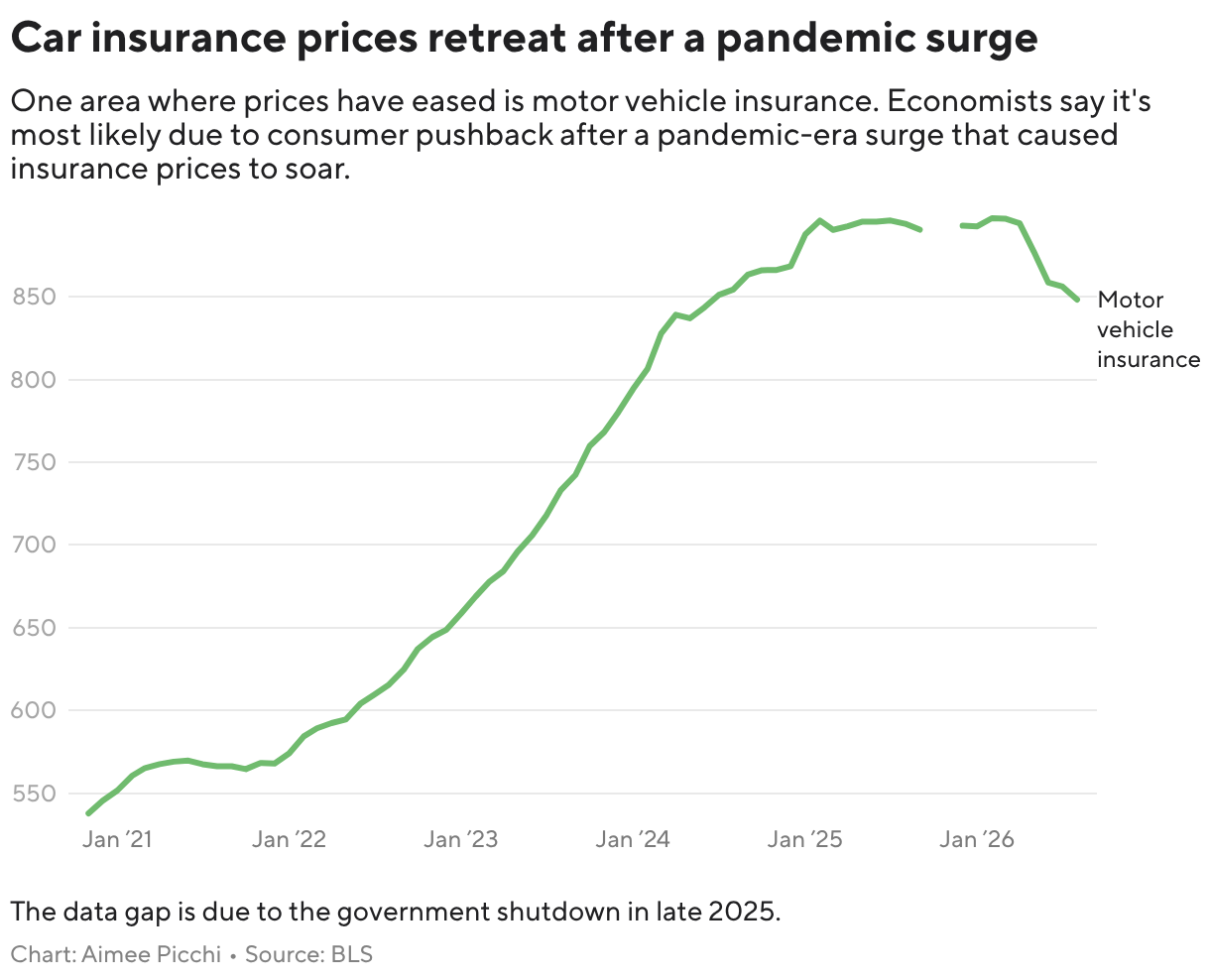
Car insurance costs are one area where consumers are seeing some modest relief. Data shows motorists are paying 5.5% less for vehicle coverage since premiums hit a recent high in February.
Still, insurance prices have soared in recent years along with the cost of both new and used vehicles. Yelena Shulyatyeva, senior U.S. economist for The Conference Board, a nonprofit that represents businesses, attributed the recent dip in premiums to increased industry competition, rather than public policy actions.
“Some of the deceleration was a result of a pushback from consumers, rather than some legislative or other action,” Shulyatyeva told CBS News.
Housing and mortgage costs
“We will drive down the rates so you will be able to pay 2% again, and we will be able to finance or refinance your homes drastically at much lower costs.” — Mr. Trump at a campaign rally in Tucson, Arizona, on Sept. 12, 2024.
Mortgage rates were climbing from pandemic-era lows for several years before President Trump returned to office in January of 2025. The average rate on a conventional 30-year mortgage now stands at 7.28%, up from 7.04% when Mr. Trump took office, according to Freddie Mac.
But home loan rates have been volatile, briefly dipping below 5% in February before climbing amid surging government bond yields, rising inflation and geopolitical tensions.
Borrowing costs are just one side of the struggle: Home buyers are also contending with high prices, keeping many on the sidelines as they wait for more affordable options. The median list price for a home in August was $408,333, up 4% from $392,967 since Mr. Trump took office, according to Zillow.
The gap between the income needed to afford a home, $126,487, and the U.S. median income, $86,490, is now the widest since 2005, according to the Federal Reserve Bank of Atlanta.
Credit card rates
“We’re going to put a temporary cap on credit card interest rates. We’re going to cap it around 10%. We can’t let them make 25% and 30%.” — Mr. Trump in a campaign speech in Uniondale, New York, on Sept. 18, 2024.
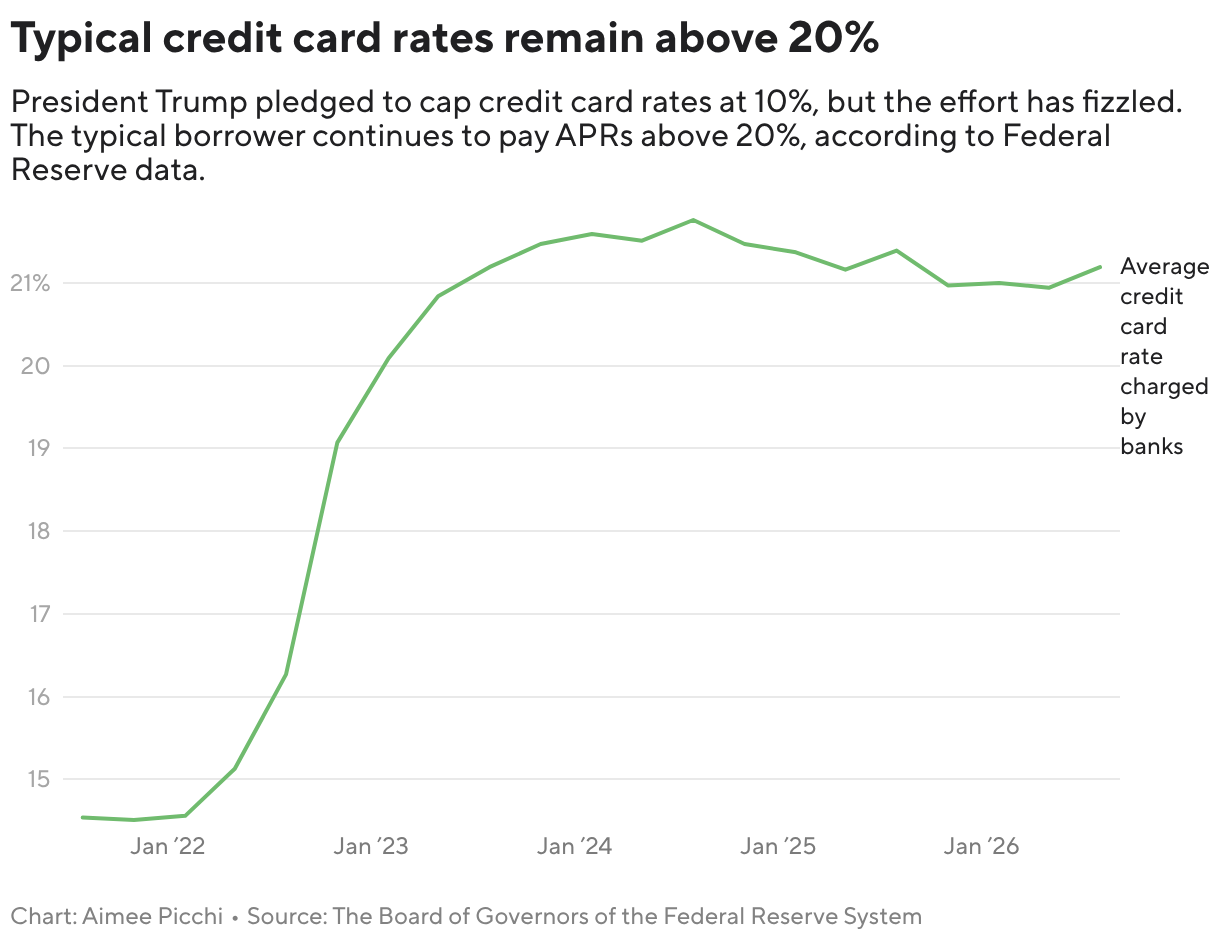
President Trump proposed capping credit card interest rates at 10% while campaigning, an issue he highlighted after taking office in 2025. But while the effort drew bipartisan support, the proposal fizzled.
Currently, the average credit card rate across all commercial bank accounts is 20.94%, down from 21.58% when Mr. Trump resumed office, according to Federal Reserve data. Credit experts said the rate-cap proposal would have hindered consumers’ access to credit.
“Obviously, we’d love for everyone to have low rates and be free from debt. But the unintended consequence of a 10% cap would be the loss of access to credit, because banks say they wouldn’t be profitable with it capped at that low rate,” Ted Rossman, principal consumer finance analyst at Money Management International, a nonprofit credit counseling firm, told CBS News.
Airfare
“We’re going [to] … bring down the price of everything from electricity rates to groceries, airfares and housing costs.” — Mr. Trump in a speech at the New York Economic Club on Sept. 5, 2024.
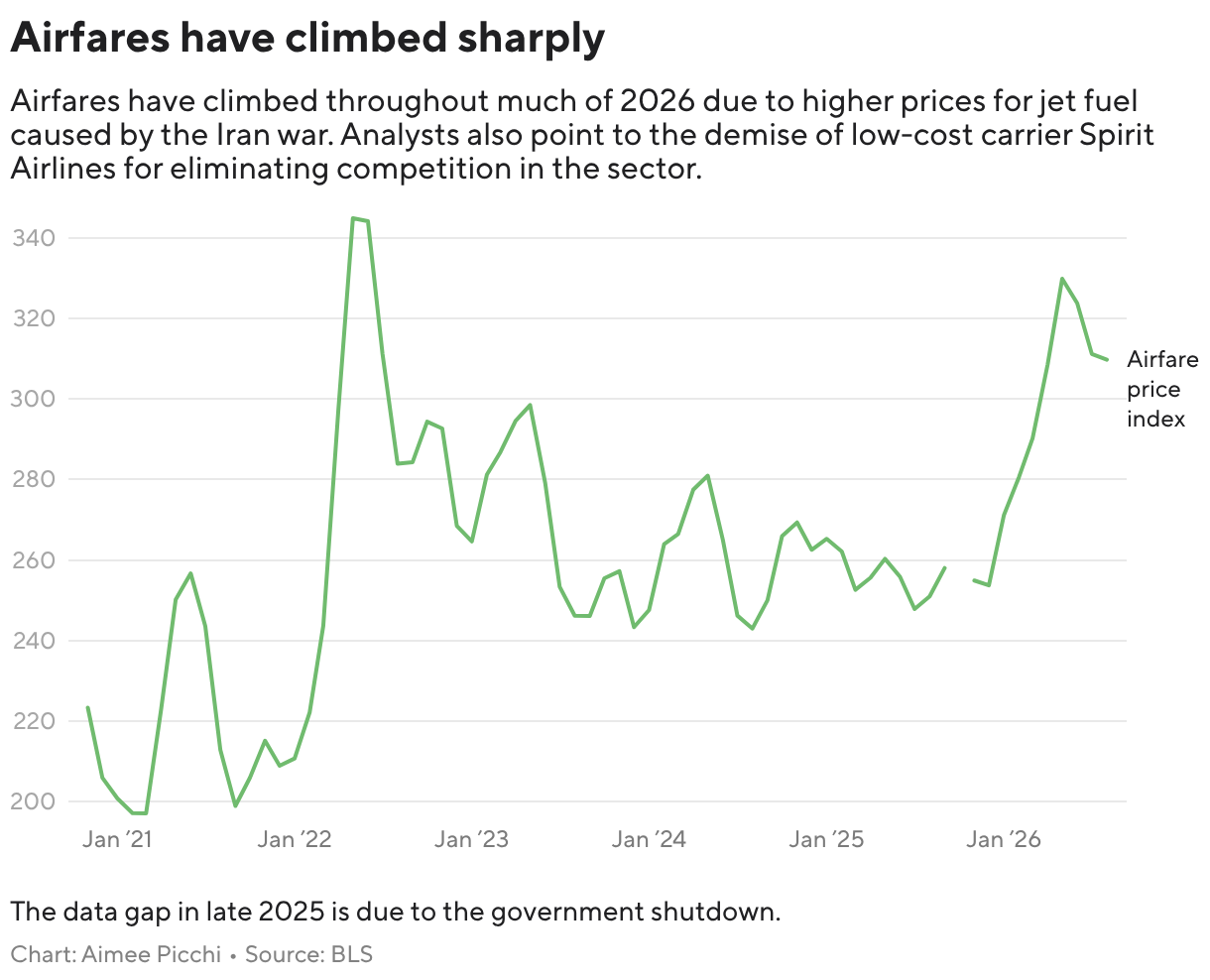
Along with promising to reduce energy prices, Mr. Trump pledged to lower airfare costs for travelers. In recent months, fares have eased slightly, although CPI data shows that they remain 17% higher than in January 2025.
The war in Iran has disrupted global oil supplies and raised jet fuel costs, which are the second- biggest expense for airlines after labor costs. Facing significantly larger fuel bills, carriers are raising prices to cover the added costs.
Jet fuel now costs $4.34 a gallon, up 85% from an average of $2.35 per gallon in January 2025, according to the Energy Information Administration. Aviation analysts also point to the May shutdown of budget carrier Spirit Airlines as another factor behind higher fares.
ACA health insurance
“I will make the ACA much, much, much better for far less money (or cost) to our greatest American citizens. …” — Mr. Trump in a Truth Social post on March 26, 2024.
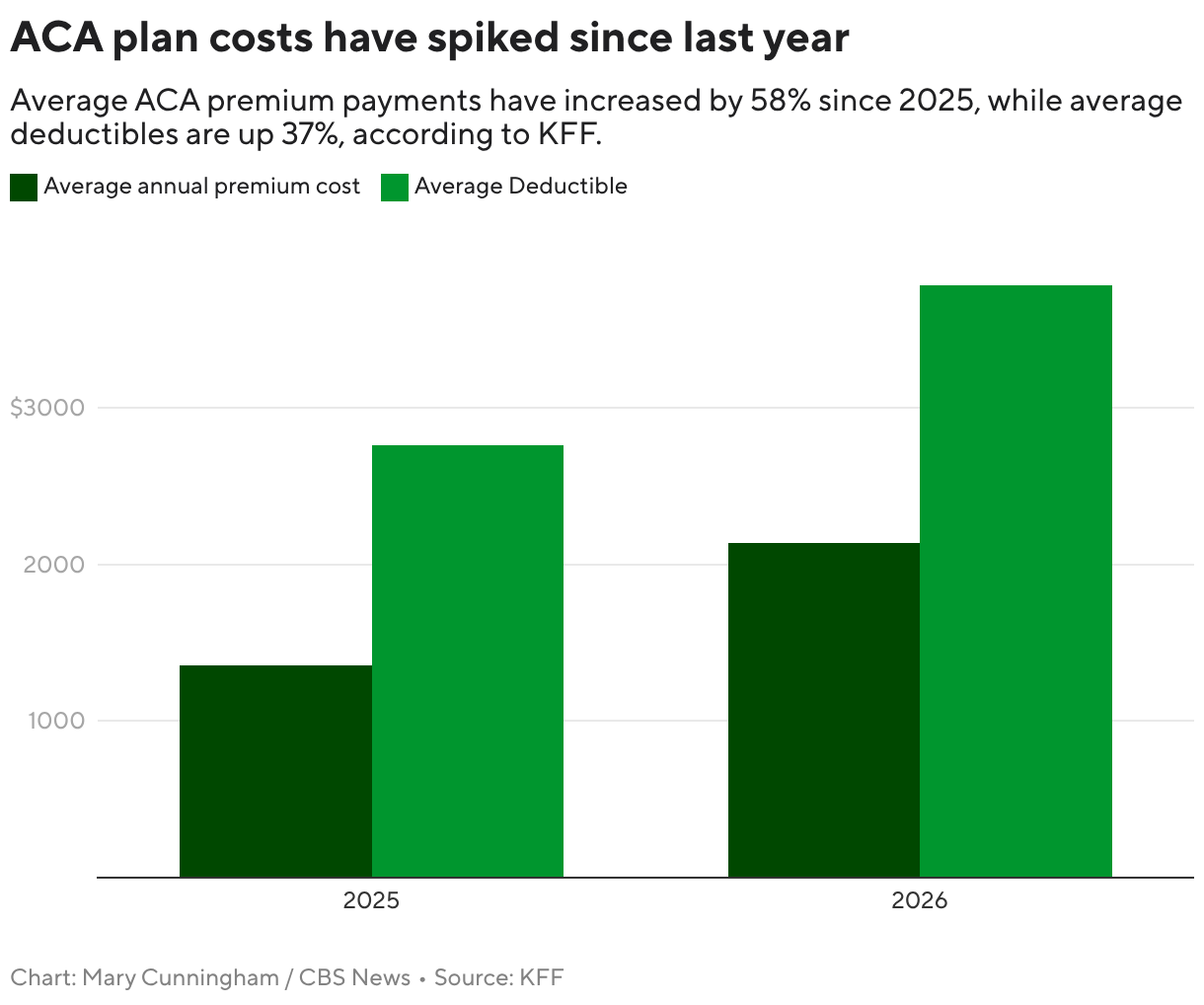
Millions of Americans with an Affordable Care Act health insurance plan face sharply higher costs than a year ago. Average monthly premiums have risen to $178, or $2,136 per year, up 58% from 2025, according to a May analysis from nonprofit health group KFF.
Obamacare plan deductibles have soared from an average of $1,027 per person to $3,786, up 37% over the same period, KFF found. Prices for ACA plans spiked after Congress allowed a tax subsidy designed to lower plan costs to expire at the end of last year.
In an effort to offer relief, the Trump administration began sending $500 checks in September to nearly 1 million ACA participants in 30 states.
Prescription drugs
“When reelected as president, I will continue my efforts to protect Americans from unaffordable drug prices …” — Mr. Trump in an interview with AARP Magazine on Oct. 2, 2024.
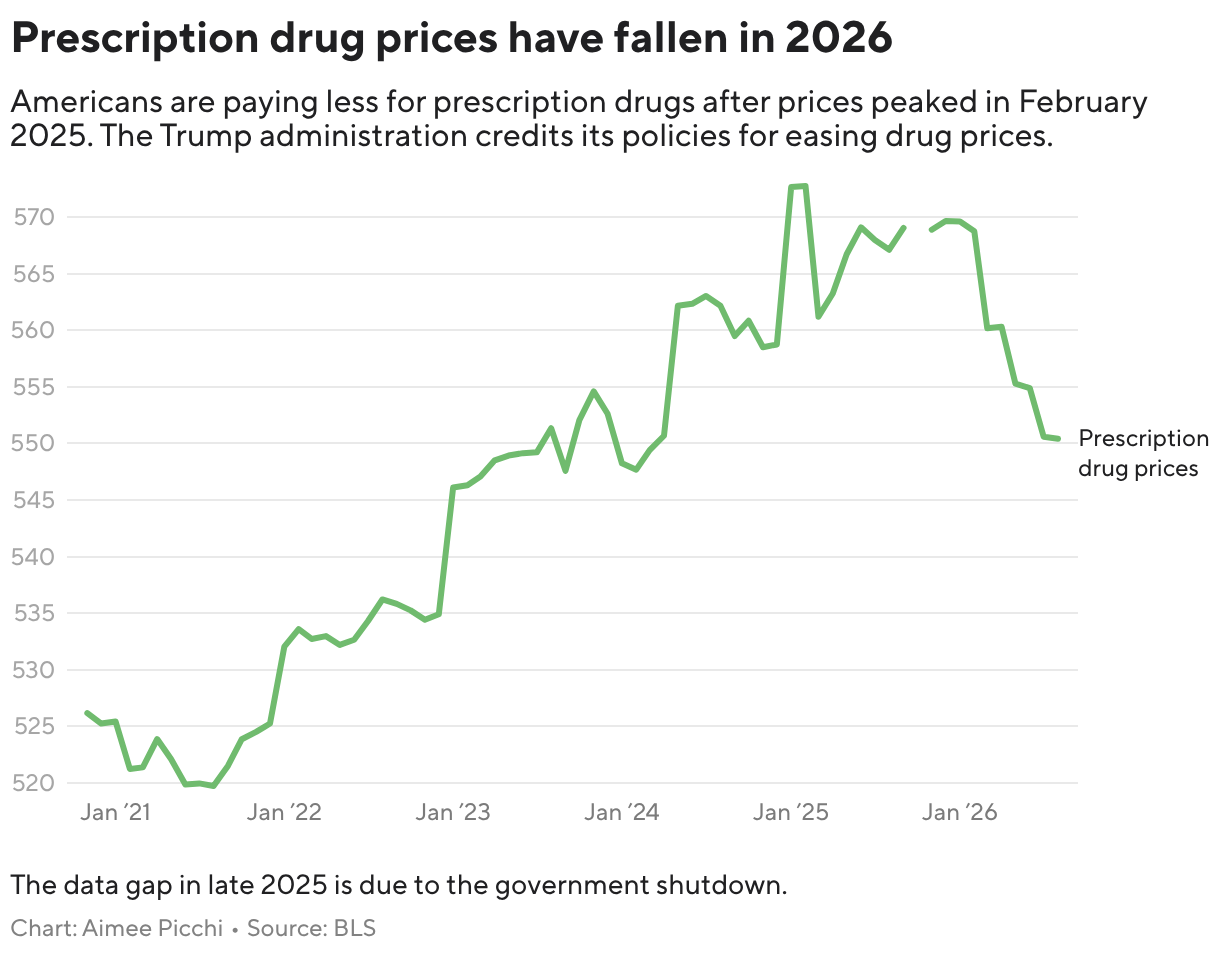
Prescription drug prices have dropped since Mr. Trump took office in his second term, falling 3.9% after peaking in February 2025, government data show.
Mr. Trump has credited his policies lowering drug costs, with the White House stating in August that the president “has delivered” on his campaign promise. The administration cited policies such as its “most favored nation” approach, which links U.S. drug prices to those paid in other developed nations.
Experts said that while the Trump administration’s policies have helped, other factors are also at play. For instance, manufacturers of GLP-1 weight-loss drugs are cutting their prices amid increased competition, while the nonpartisan Brookings Institution notes that more generic drugs are entering the marketplace, tempering healthcare costs.

