



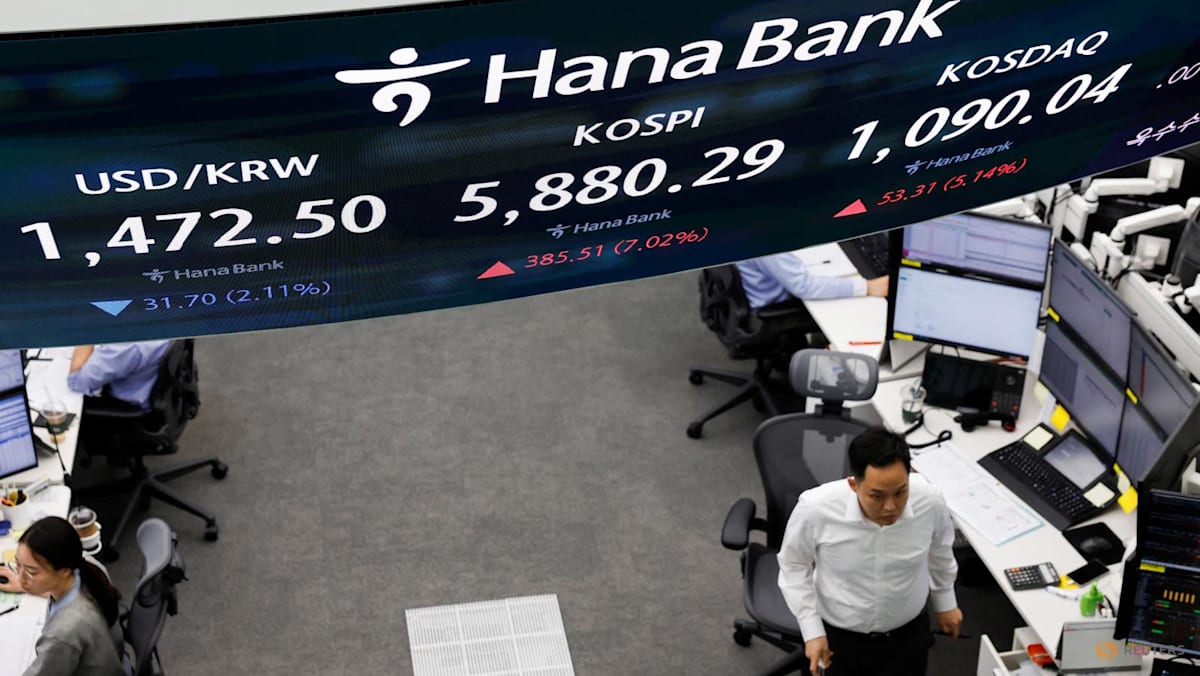
Investors were also cheering the decision of Israel and Lebanon to open direct talks after meeting in Washington, marking a rare diplomatic breakthrough between the two countries formally at war for decades.
Lebanon was drawn into the broader war when Hezbollah attacked Israel in support of Iran, its key ally, triggering an Israeli ground invasion.
Washington fears the Israel-Hezbollah conflict could unravel the US-Iran ceasefire.
“Continued pressure alongside hopes of diplomatic engagement … has helped push oil prices below US$100 and Treasury yields down, supporting equities and highlighting how sensitive markets remain to developments in the region,” wrote Fiona Cincotta at City Index.
“A credible diplomatic off-ramp could further boost risk appetite.”
Some observers warn that while the end of the war would be widely welcomed, there were big question marks over what a peace would look like, while crude production would take some time to get back up to capacity.
And on Tuesday, the International Monetary Fund said it had cut its 2026 global growth projection, warning that the world economy could be “thrown off course” by war.
On announcing a new forecast of 3.1 per cent expansion – down from its previous 3.3 per cent estimate – Fund chief economist Pierre-Olivier Gourinchas told AFP it was “planning to upgrade growth for 2026 to 3.4 per cent” if not for the war.
Still, National Australia Bank’s Taylor Nugent added: “Markets were looking past the physical disruption in the Strait to the prospect of talks, with risk assets supported, yields lower and the dollar losing another 0.3 per cent on the (dollar index).”
Charu Chanana, chief investment strategist at Saxo, said: “If diplomacy gets another opening, markets can recover confidence quickly.
“If conflict returns first, the next phase could prove broader and more dangerous than the one investors thought had already peaked.”

