



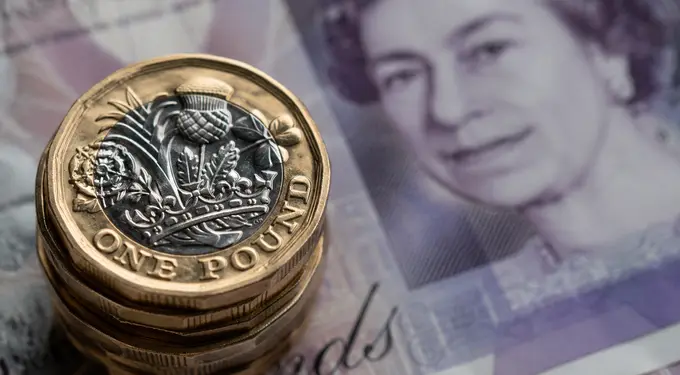
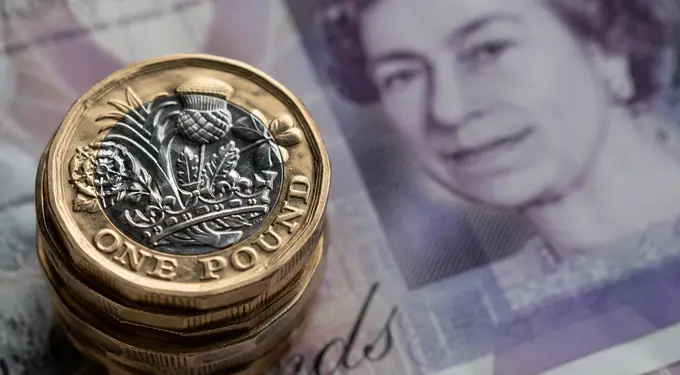
The British pound traded largely unchanged against the US dollar on Thursday as investors focused on developments surrounding the Iran war, while also assessing weaker-than-expected surveys of UK business activity.
Sterling was flat at $1.3437 against the dollar.
Against the euro, the pound rose 0.13% to 86.42 pence.
The broader currency market remained sensitive to geopolitical developments, particularly the ongoing disruption to global oil flows linked to tensions in the Middle East.
UK business activity weakens sharply
A survey released on Thursday showed British companies experienced their most widespread decline in activity in more than a year due to the economic fallout from the Iran war and political uncertainty in the UK.
Data company S&P Global said its preliminary UK Composite Purchasing Managers’ Index for May fell sharply to 48.5 from 52.6 in April.
The reading marked the first time the index dropped below the 50.0 threshold since April 2025.
It also came in well below the 51.6 median forecast in a Reuters poll.
A PMI reading below 50.0 indicates a contraction in business activity.
The weak survey overshadowed a series of stronger UK economic data releases in recent weeks, including robust first-quarter GDP figures and lower-than-expected inflation data.
Inflation data had raised hopes
Data released on Wednesday showed Britain’s consumer price inflation slowed to 2.8% in April from 3.3% in March.
The figure also came below economists’ expectations for a 3% reading.
The softer inflation print had initially fuelled hopes that the Bank of England could have room to cut interest rates later this year.
However, Thursday’s weak business activity data and rising geopolitical risks complicated the outlook for policymakers.
Henry Cook, senior economist at MUFG Bank, said the latest developments had changed the narrative surrounding the UK economy.
Cook said the current environment was being shaped by the ongoing closure of the Strait of Hormuz, which has disrupted global oil flows and pushed energy prices higher.
Iran war complicates BoE outlook
According to Cook, rising energy costs linked to the Iran conflict have altered expectations for both economic growth and monetary policy.
He added, “That’s a different world,” he said, pointing to the impact of surging oil prices on inflation expectations and central bank policy planning.
In April, the Bank of England left interest rates unchanged while evaluating the potential economic consequences of the US-Israeli war on Iran.
One of the risks identified by policymakers was the possibility that inflationary pressures from higher energy prices could require a forceful increase in borrowing costs.
Despite those concerns, money market pricing currently indicates an 86% probability that the Bank of England will leave rates unchanged at its next policy meeting on June 18.
The post Sterling holds firm despite sharp drop in UK business activity appeared first on Invezz

