



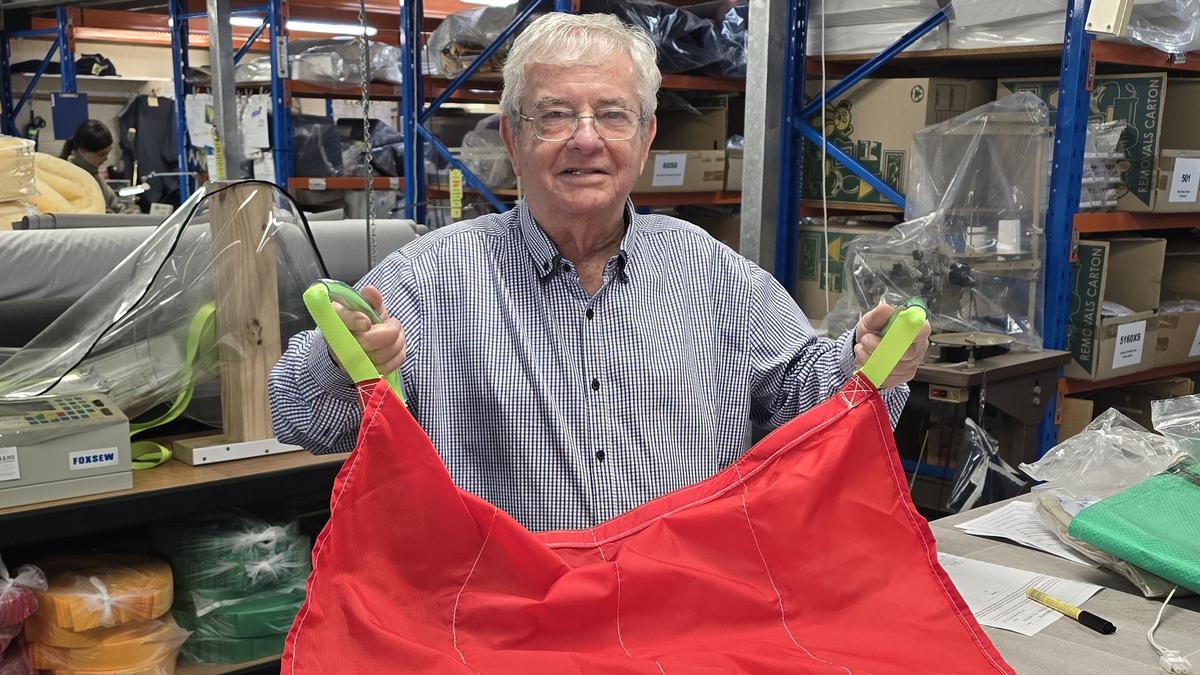
The many responses to Emma Kelly’s excellent story, Accessibility Innovations Take Off (May 3, 2026) include one from Pelican Manufacturing’s John Bromberger:
“We are a local company in Osborne Park, not far from your office at the West Australian newspaper. We make many items in Perth for hospitals, nursing homes and handicapped people.
“About 20 years ago Virgin Australia ask me to design the Aero Transfer Slider, to help passengers get into a seat. After a while Virgin then asked for the Slide board — Aero Transfer — for transferring to a plane seat. They can use either product separately or together depending on the ability of the person needing help.
“Over the years they have been using these products, and continue using them today. They are affordable and small enough to store in the plane, so they are available if a normally mobile person needs assistance getting out of a seat after a flight.”
This response is why I now find myself at Pelican’s Osborne Park premises with John. I register my surprise at the sheer scale of the operation.
“Originally it was the home garage and kitchen table,” he laughs.
That was back in the late 1980s. Now the award-winning company designs, makes, and distributes quality disability, medical, and mobility aids not just for Australia but globally. Its main markets include hospitals, aged-care facilities and home care environments with the aim of supporting patient independence, reducing risk of injuries, and improving quality of life through standardised products and tailor-made equipment.
Anything that facilitates accessibility and ease of travel for those living with physical disabilities clearly falls within this purview. So it wasn’t much of a leap for John when Virgin first contacted him via a manual handling trainer from the Eastern States.

“We get requests from all around the country asking if we can make this or that,” he says. “So I went to Perth Airport, jumped on one of Virgin’s planes, and came up with these sliders.
“They’re much easier than using hoists.”
The Aero Transfer Slider is made from tough, lightweight webbing and fabric, and costs $88. Designed for two carers to slide a passenger from a wheelchair in the aircraft aisle into their seat, it can also be used for transferring wheelchair users in and out of vehicles, or indeed into and out of any chair.
The Slide Board — Aero Transfer ($170) looks rather like a large plastic chopping board. Do not be fooled by its simplicity. The poly-plastic is self-lubricating — perfect for transfers. This and additional qualities such as keeping its shape — it bends under heavy weight but does not snap — and being unaffected by humidity, make it superior to wooden slide boards.
Whereas the passenger should be sitting on the Aero Transfer Slider before transfer, two carers slide as much of the Slide Board under the passenger’s bottom as is practicable before making the transfer. Both products can be used together to facilitate ease of use when the gap between wheelchair and seat is larger.
Following this travel-specific conversation, John gives me an extensive tour. I also get to meet a lot of the staff, whose enthusiasm and friendliness is equalled only by John’s obvious passion and inventiveness.
But the company’s name? Apparently it comes from the fact John and his wife live near Jackadder Lake — much favoured by pelicans. The bird is also a symbol for caring.
pelicanmanufacturing.com.au


