

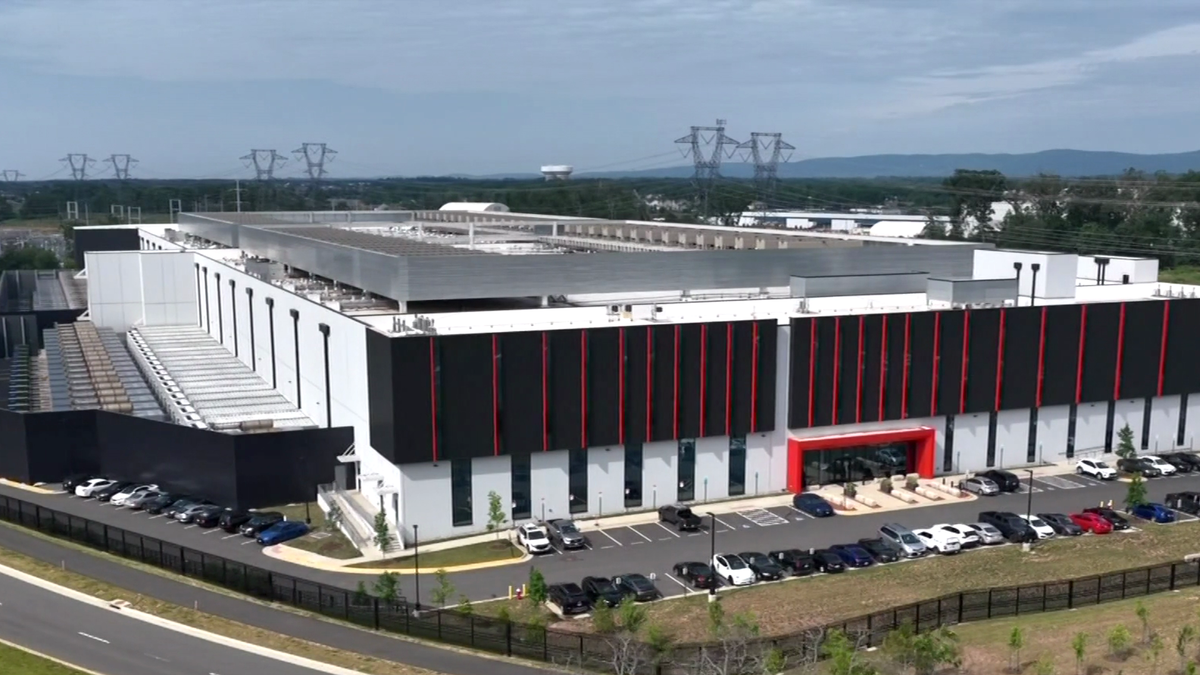
The Reserve Bank has delivered a stark warning that Australia’s artificial intelligence building boom will push interest rates higher.
Assistant Reserve Bank Governor Sarah Hunter told a banking conference in Sydney that AI investment will drive up inflation and interest rates globally in the near term, dealing another blow to struggling mortgage holders already reeling from five rate hikes this year.
WATCH THE ABOVE VIDEO: AI boom to keep interest rates higher
Hunter revealed to the UBS Australasia conference that data centre investment in Australia has increased tenfold in three years, at a time when global savings are shrinking.
She said AI investment could hit two per cent of Australia’s GDP, putting enormous pressure on both the government and opposition to outline spending cuts.
“The increase in demand for investment, potentially at the same time as global savings are falling, could push up the neutral rate of interest,” Hunter said.
“Given this is happening globally, they’ll be competing for scarce savings, pushing up interest rates.”
What does this mean for inflation?
Hunter said the effect is likely to vary over time.
“In the near term, the positive shock to aggregate demand set against the economy’s current supply capacity will put some upward pressure on inflation,” she said.
“Surging global AI-related investment has contributed to capacity pressures in supply chains for AI-enabling products such as semiconductors.
“These upstream cost pressures are passing through to the prices of some downstream goods in advanced economies.”
Prime Minister Anthony Albanese acknowledged the pressure on Australian families.
“My government accepts completely, that there are pressures on Australian families. We accept that as well, that we need to find savings in the budget.”

Opposition Leader Angus Taylor promised to “reduce the federal regulatory burden by 25 per cent over our first term in government”, which he said “equates to $40 billion a year savings for businesses”.
Unity has been a hallmark of the Albanese Government’s first four and a half years, but cracks are now starting to show.
The bleak economic outlook has intensified pressure on Treasurer Jim Chalmers, with media reports of colleagues speculating about his future in the role, and Environment Minister Murray Watt calling for an end to the leaking.
“There’s all sorts of people making all sorts of comments [about the Treasury],” he said.
“My view is that whether you’re a member of the government as a backbencher or as a minister, your responsibility is to work together.”

