


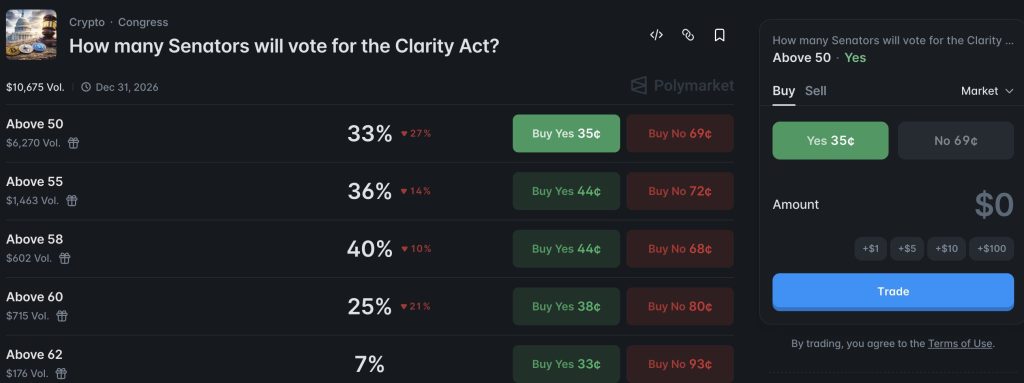
The outlook for the Digital Asset Market Act remains unsettled as the bill moves through the Senate process. CryptoNews reported that Polymarket CLARITY Act odds priced in a 60-plus Senate vote at 25%.
That market signal sits alongside broader industry optimism, but neither replaces the legislative record or establishes how the Senate will act.

The official record for H.R. 3633 shows that the House passed the Digital Asset Market CLARITY Act on July 17, 2025, by a vote of 294-134.
The bill is now listed as having passed the House, while the Senate Banking, Housing, and Urban Affairs Committee is listed among the committees associated with the measure.
Polymarket CLARITY Act Odds: The Senate Record
Congress.gov identifies the Senate’s latest action as an August 8, 2026, cloture motion on the motion to proceed to the measure. The record documents that procedural step, but it does not show Senate passage. It also does not establish the timing or result of a future Senate vote.
That distinction is important when assessing commentary about the bill. A market price, an industry forecast, and a congressional action can each describe a different part of the legislative picture.
The official bill page remains the clearest source for the measure’s formal status: it has passed the House and has not yet reached the next completed status in the congressional tracker.
Check out the CLARITY Act Markets on Kalshi and Claim $25 For Free
What the Bill Would Do for the Markets
According to the Congressional Research Service summary published on Congress.gov, the bill would establish a regulatory framework for digital commodities. The legislation defines digital commodities as digital assets whose value derives from a blockchain.
The measure would generally assign the Commodity Futures Trading Commission responsibility for regulating digital commodity transactions, including digital commodity exchanges, brokers, and dealers.
It also sets conditions for trading a digital commodity on an exchange. In summary, a blockchain may need to be mature or have achieved decentralized control as defined by the bill, or an issuer may need to file specified reports.
The bill would also establish requirements involving trade monitoring, recordkeeping, and the commingling of customer assets. Its provisions address securities registration exemptions for certain digital commodities on mature blockchains, subject to annual-sales limits and other requirements described in the legislation.
The summary further states that the Securities and Exchange Commission would retain jurisdiction over specified digital commodity activities and transactions conducted by certain brokers and dealers on alternative trading systems and by national securities exchanges. Digital commodity exchanges, brokers and dealers would be subject to the Bank Secrecy Act for anti-money-laundering and related purposes.
Competing Views of the Bill’s Prospects
Coverage of the legislation has highlighted differing expectations about whether it can attract the Senate support needed to advance. A Yahoo Finance report described debate over the bill’s ethics provisions and noted that industry figures held different views on its prospects.
Those assessments are separate from the bill’s official status. The congressional record currently documents House passage, Senate committee involvement, and the cloture motion on the motion to proceed. It does not resolve whether the Senate will take a further vote or whether the bill will become law.
Make Your Prediction Count With $25 For Free on Kalshi
The post Polymarket CLARITY Act Odds: Senate Path Remains Uncertain After Cloture Step appeared first on Cryptonews.

