

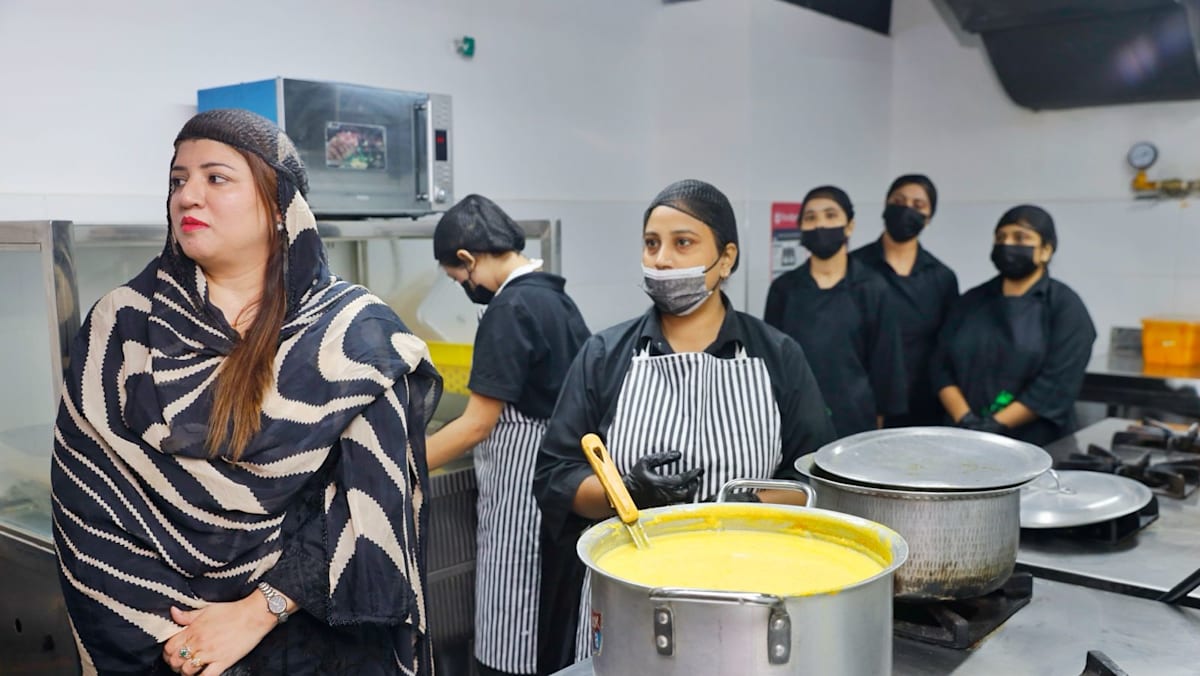
Like many Pakistani women her age, Rauf now has more time to pursue paid work as her children grow more independent, while continuing to care for ageing parents.
“If you see the life cycle of a woman, it is only at a later stage, when her children grow up or her relationship is stable, that she can work. Before that, she is not allowed to work or does not have the time to do so,” said Iqbal.
Even then, household responsibilities can limit how much time women devote to their businesses.
Iqbal describes this as a “time tax”, where childcare and family emergencies often take precedence over work, disrupting businesses that women have worked single-handedly to establish.
Digital platforms help women overcome some of the cultural and mobility barriers to employment, but earning an income does not necessarily mean having control over it, said Iqbal.
“At the grassroots level, there is no control,” she said, citing women whose businesses generate 2 million to 3 million Pakistani rupees in monthly revenue but who have to hide some earnings from their husbands so that they can support their mothers.
TAPPING INTO AN UNTAPPED MARKET
The push to bring more Pakistani women into the digital economy is not new.
In 2017, JazzCash partnered with Unilever and development organisations to train women from the consumer goods company’s Guddi Baaji network – who sold products in rural communities – as mobile banking agents.
The government has also been pushing to digitise financial services.
Its flagship Benazir Income Support Programme – which provides cash assistance to low-income women – has moved towards disbursing all payments to its 10 million beneficiaries through mobile wallets this year.

