


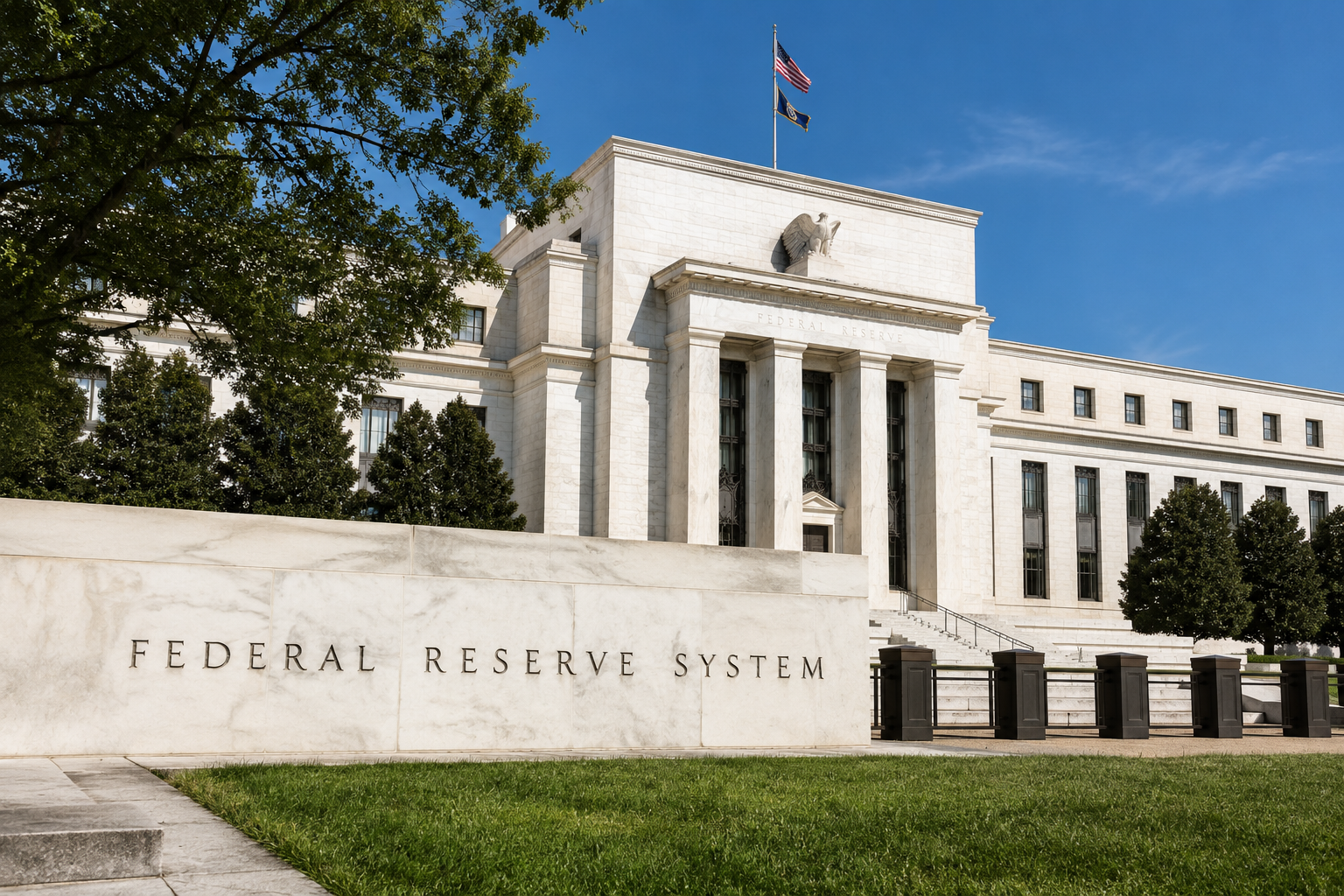
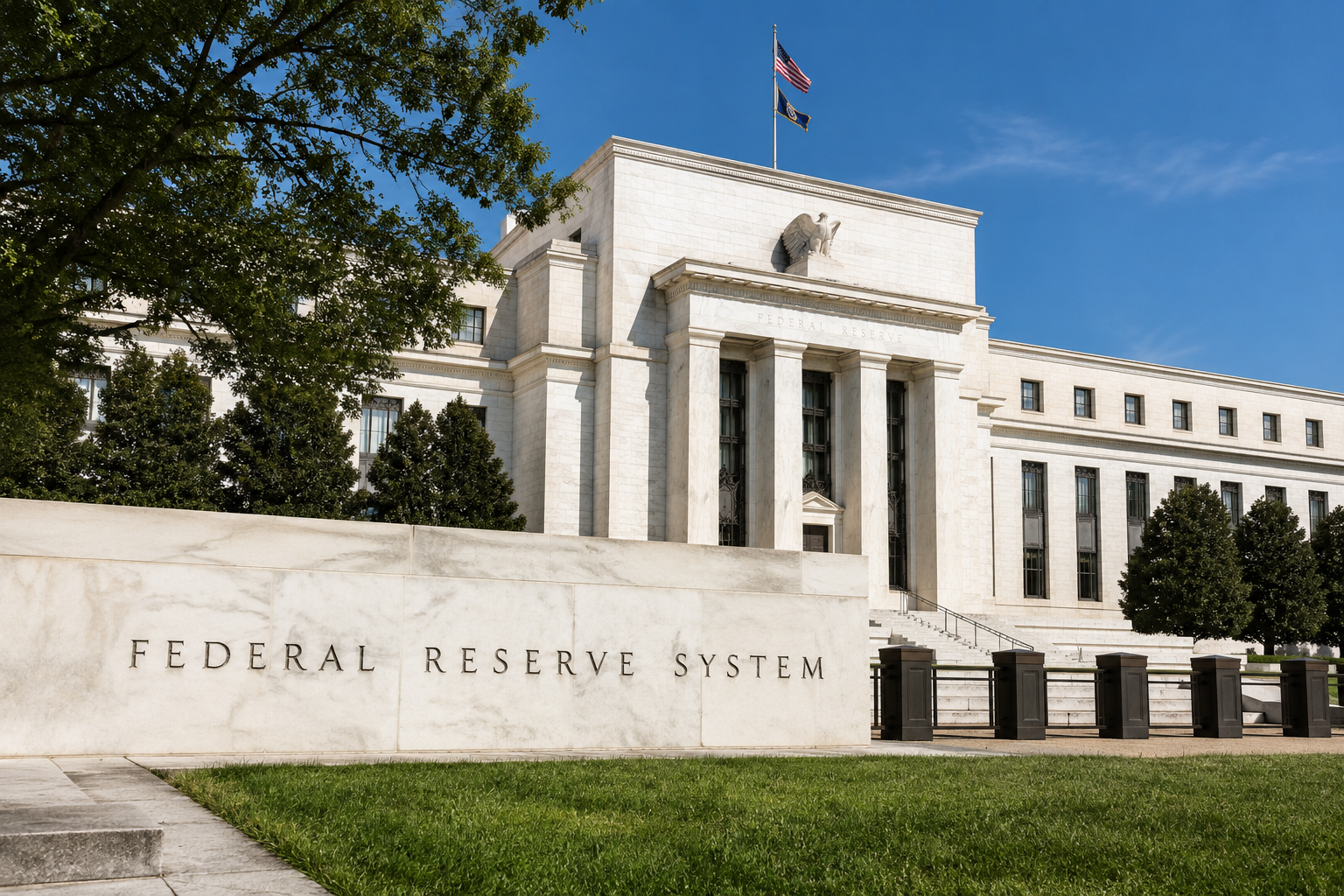
The Federal Reserve’s June policy meeting will mark a closely watched milestone for financial markets as newly installed Chair Kevin Warsh presides over his first Federal Open Market Committee (FOMC) gathering.
The two-day meeting, scheduled for June 16-17, comes at a time when expectations for lower borrowing costs have largely evaporated amid persistent inflation pressures and a labour market that continues to show resilience.
When President Donald Trump nominated Warsh to lead the central bank earlier this year, investors largely debated when interest-rate cuts would begin.
Six months later, the conversation has shifted dramatically, with markets increasingly questioning whether rates could remain elevated for an extended period.
The outcome of next week’s meeting is widely expected to be a hold, while according to CME FedWatch data, roughly two-thirds of traders now expect at least one rate increase before the end of 2026.
However, investors are likely to focus less on the rate decision itself and more on what Warsh says about inflation, growth, and the future direction of monetary policy.
Inflation remains the central challenge
The economic backdrop confronting Warsh is considerably more complicated than many anticipated at the start of the year.
The Personal Consumption Expenditures Price Index, the Fed’s preferred inflation measure, rose 0.4% in April and was up 3.8% from a year earlier.
Core PCE, which excludes food and energy prices, stood at 3.3% annually.
While core inflation has moderated from previous peaks, it remains well above the Fed’s 2% target.
Recent increases in oil prices have added to concerns that inflation could remain stubbornly elevated, particularly as geopolitical tensions continue to influence energy markets.
JP Morgan Wealth Management said the inflation backdrop leaves little room for immediate policy easing.
“After all, cutting rates when inflation is running nearly 2 percentage points above the 2% target may be hard to justify. And if the conflict in Iran keeps energy costs elevated, that makes the case for lower rates even harder,” the firm said.
Producer prices have also accelerated in recent months, reinforcing concerns that businesses continue to face rising input costs that could eventually filter through to consumers.
Labour market offers little justification for easing
The strength of the labor market has further reduced the urgency for lower rates.
Employers added 172,000 jobs in May, exceeding economists’ expectations, while the unemployment rate remained unchanged at 4.3%.
Commerzbank noted that the Fed’s second mandate of maximum employment currently offers little support for rate cuts.
The bank pointed out that unemployment has stabilized near levels policymakers view as consistent with long-term equilibrium, while job creation has remained solid.
“Since the inflation rate is well above the Fed’s 2% target and is actually moving further away from it, a rate cut would only be justified if the Fed were to completely miss its second goal of full employment,” Commerzbank said.
The brokerage noted that unemployment reached 4.6% last autumn, prompting the Fed to deliver three rate cuts.
Since then, however, labor-market conditions have improved considerably.
Although wage pressures have moderated, Commerzbank argued that employment conditions currently do not justify easier monetary policy.
Warsh’s approach to inflation risk
Warsh enters office with a distinct challenge.
As a private citizen and Fed chair nominee during 2025, he frequently argued that advances in artificial intelligence could boost productivity and create conditions that support lower interest rates.
Yet during his confirmation hearing in April, he acknowledged that inflation remains a pressing concern for households and businesses.
“This inflation risk is still something that’s being talked about around kitchen tables and boardrooms,” Warsh said.
He has also emphasized the importance of distinguishing between temporary price shocks and underlying inflation trends.
“What I’m most interested in is what’s the underlying inflation rate, not what’s the one time change in prices because of a change in geopolitics or change in beef, but what’s the underlying generalized change in prices in the economy?” Warsh said during the hearing.
His approach suggests that while he may be reluctant to react aggressively to temporary spikes in oil prices, he is unlikely to support immediate rate cuts while core inflation remains elevated.
Warsh’s decision to be under intense political scrutiny
Warsh’s first meeting also comes under the shadow of political expectations.
Trump selected Warsh after repeatedly criticizing former Fed Chair Jerome Powell for refusing to lower rates more aggressively.
Although Trump has recently stated that Warsh should be free to make independent decisions, he has also reiterated that he sees little reason for higher interest rates.
Commerzbank outlined two possible paths for the new Fed chair.
One option would be for Warsh to vote in favor of a rate cut immediately, aligning himself with Trump’s preferences but risking isolation if other policymakers oppose easing.
“Warsh has two options for pushing through monetary easing. He could vote for a rate cut himself. This would secure Trump’s approval. However, he would likely be the only one to do so and would clearly be outvoted,” Commerzbank said.
“This would be a highly unusual situation for a Fed chair, one that could undermine his authority,” it said.
The second scenario involves Warsh maintaining current policy while gradually building support for future easing.
“We consider the latter scenario more likely and, as far as Warsh’s goals are concerned, more promising,” the bank said.
What will markets be looking for
For investors, the biggest focus may be Warsh’s communication style rather than the policy decision itself.
The Fed is expected to release updated economic projections alongside its interest-rate announcement, offering fresh guidance on inflation, growth and future rate expectations.
Even if policymakers leave interest rates unchanged, investors will closely scrutinize the Fed’s language for clues on inflation, employment and the future policy path, as any shift could influence market expectations and bond yields.
“Trying to understand the reaction function of this new administration at the Fed is going to be key,” said Marvin Loh, senior global macro strategist at State Street in a Reuters report.
“If we get that type of a hawkish hold, if you will, I think that that would kind of surprise the market.”
Investors are also watching whether Warsh signals plans to reduce the Fed’s $6.7 trillion balance sheet more aggressively or alter how the central bank communicates policy guidance.
Recent market volatility underscores the significance of the meeting.
The S&P 500 and Nasdaq have both retreated from recent highs, while the Cboe Volatility Index has climbed to its highest levels in two months.
“As we’ve seen at times in the past, it can be a bit of a challenge for a newer Fed chief to get the message right, to stick the landing,” said Jim Baird, chief investment officer at Plante Moran Financial Advisors in a Reuters report.
“The market is watching and parsing every word that’s said.”
The post No rate cut likely at Warsh's first Fed meeting, but here's what markets will watch appeared first on Invezz

