


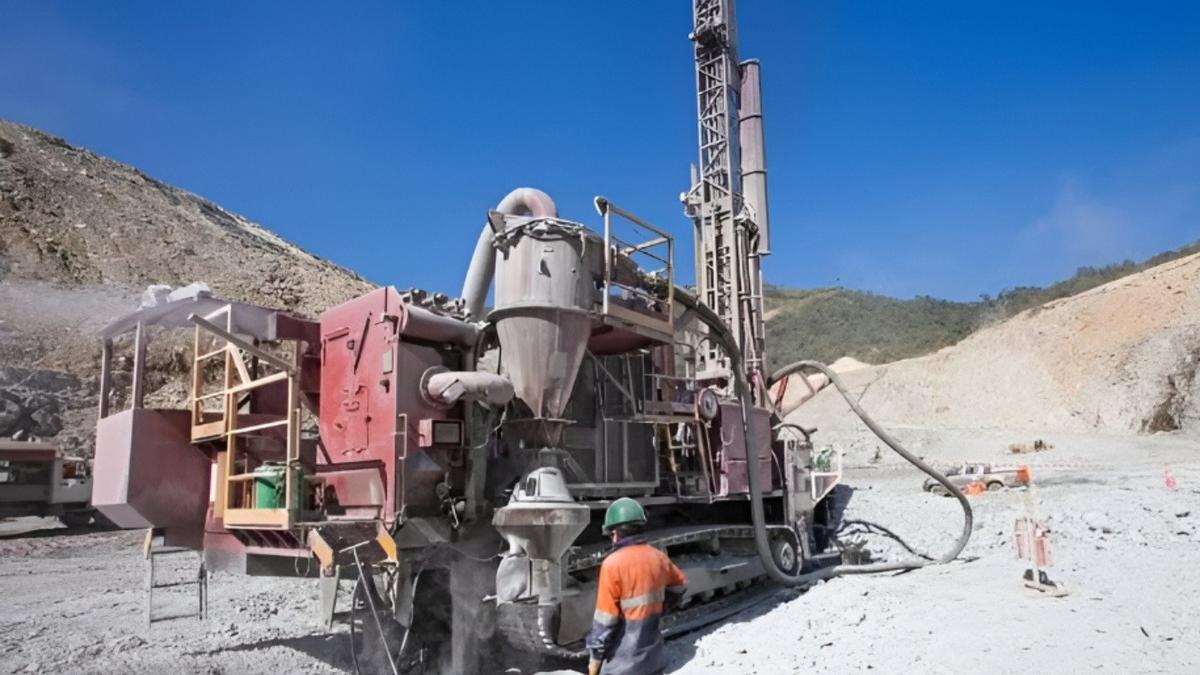
Kalamazoo Resources has delivered spectacular results from drilling at its Mt Olympus deposit, part of the company’s 1.44-million-ounce Ashburton gold project in Western Australia’s Pilbara region.
The standout interval landed 20 metres grading a stunning 19 grams per tonne (g/t) gold from just two metres below surface, while a second hit clocked a hefty 43 metres running 3.8g/t gold from surface, featuring a richer slice of 30m at 4.8g/t gold.
The exceptional near-surface findings were backed by a raft of other impressive results from the company’s now-completed resource definition drilling program. Highlights from other holes included a deeper 69-metre intercept going at 3.0g/t gold from 149m, which also delivered a solid section of 26m grading 5.2g/t gold. Additional strikes of 30m at an eye-catching 5.7g/t gold from 193m and 44m at 3.5g/t gold from a shallow 15m continued to bring home the bacon.
The latest assays come from a recently completed 72-hole, 13,726m drill-out designed to increase the geological confidence of the existing Mt Olympus resource. Assays have now been received from 62 of the 72 holes.
Notably, the drilling intersected gold mineralisation both within and outside the current resource model, with some intervals extending beyond the resource envelope yet remaining within the conceptual pit shell from the project’s scoping study.
The company says the recent drilling has successfully increased drill density to a tight 20m-by-20m spacing across key areas, with the program aimed at converting existing inferred resources to the higher-confidence indicated category. Kalamazoo says the latest results have confirmed the continuity of high-grade feeder structures that extend upwards into the shallower reaches of the deposit while maintaining impressive grades.
Management says the latest batch included eight new gold intersections exceeding 50 gram-metres, a key industry metric calculated by multiplying grade by intercept width, bringing the campaign’s total to an impressive 33 such intercepts.
The timing of the impressive hits appears spot on, with gold trading around A$6200, keeping the spotlight firmly on explorers delivering high-grade, near-surface ounces in tier-one jurisdictions. The Pilbara itself remains a hot address for gold explorers, with Northern Star’s massive 13 million-ounce Hemi deposit 290 kilometres to the north and Black Cat Syndicate’s Paulsens gold project, a one-million-ounce producer, 190 kilometres to the northwest, stoking market appetite for new discoveries in the region.
The combination of exceptional near-surface grades, broad mineralised intervals and increasing geological confidence further strengthens Mt Olympus as the foundation asset for potentially long-life Ashburton gold operations. These results will be incorporated into the updated Mineral Resource Estimate and ongoing Pre-Feasibility Study.
The Ashburton gold project, 35km south-east of Paraburdoo, already showcases a global resource across four orebodies of 16.19 million tonnes grading 2.8g/t gold for a hefty 1.436 million ounces. The company’s Mt Olympus deposit is the star of the show, contributing 1.07 million ounces alongside its 210,000-ounce Peake, 121,000-ounce Zeus and 32,000-ounce Waugh deposits. Recent tenement applications have also expanded Kalamazoo’s 100 per cent-controlled ground in the region from 327 square kilometres to a district-scale 519 sq km.
With all assays from the resource definition program now in the lab, an updated mineral resource estimate for Mt Olympus is on track for the final quarter of the calendar year. The data will also feed directly into a prefeasibility study, slated for completion by April next year.
While that desktop work continues, the rods are still turning. An underground growth drilling program is underway under the current conceptual pit at Mt Olympus targeting extensions beneath and down-plunge, while another rig is testing resource growth potential at the nearby high-grade Peake deposit. Further drilling will also target the intersection of the main host rocks within the Zoe Fault, which the company has identified as a key target for the discovery of higher-grade mineralisation.
With a major resource already in the bag and the drill bit delivering some eye-catching high-grade gold near surface, Kalamazoo appears to be building a solid case for a return to production at Ashburton. As the pivotal resource update and prefeasibility study draw closer, all eyes will likely be on how these rich, shallow hits could sweeten the project’s economics.
Is your ASX-listed company doing something interesting? Contact: matt.birney@wanews.com.au

