



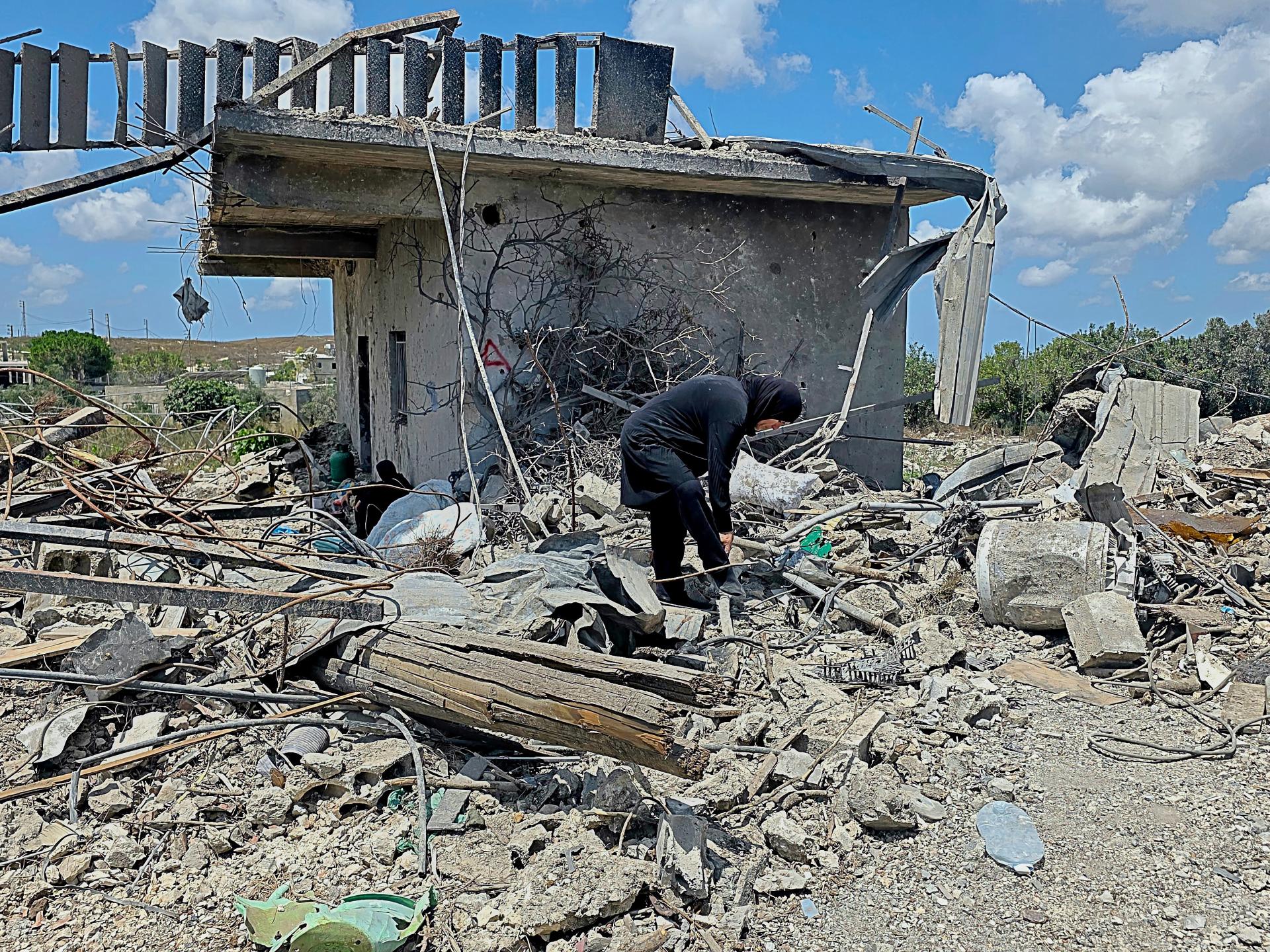
Israel is violating agreements by shelling ‘pilot villages’, Lebanon’s army asserts.
Published On 26 Jul 2026
The Lebanese army has accused Israel of obstructing its efforts to take over control of security in southern Lebanon.
The Lebanese military said in a statement on Sunday that the Israeli army was continuing to conduct shelling and clearance operations, preventing Lebanese troops from fully taking over villages as agreed.
Recommended Stories
list of 4 itemsend of list
The Lebanese army on Tuesday deployed troops to the first of three “pilot zone” villages. The move for local forces to take over security follows the signing last month of a United States-backed agreement that should see the phased withdrawal of the Israeli army from southern Lebanon.
“The continuation of these assaults hinders the completion of the army’s deployment … and prevents the return of residents to their villages and towns,” the Lebanese army said in its statement.
Three villages, or “pilot zones”, were chosen for the first phase of the Israeli withdrawals – Zawtar al-Gharbiya, Froun and Srifa. However, concerns over the lack of a clear exit schedule from Israel have persisted.
Parts of western Zawtar, Tibnit and Nabatieh al-Fawqa were still seeing Israeli gunfire even as civilians returned home, the Lebanese military said on Sunday.
Israel was bulldozing, shelling and conducting combing operations with machine guns in Nabatieh, Hdda, Kunin, Bint Jbeil, Nabi Ibel al-Saqi, Khiam, al-Mansouri and Bayt al-Siyad as well as Majdal Zoun in Tyre, it added.
A water project in the town of Markaba was also blown up while olive trees and swathes of farmland were razed on the outskirts of the town of Aitaroun.
Reporting from Zawtar al-Gharbiya, Al Jazeera’s Zeina Khodr said displaced residents had returned to homes of rubble.
The Israeli army had withdrawn to the edge of the village but was conditioning further movement on the dismantling of Hezbollah, she said.
Israel has occupied locations across southern Lebanon for months, insisting its presence is necessary to fight Hezbollah.
The Iran-backed armed group has rejected the US-brokered deal, demanding Israel’s unconditional exit.
Lebanese President Joseph Aoun visited US President Donald Trump in Washington, DC, last week in a bid to persuade him to pressure Israel into complying with their agreement.
Fighting erupted once again in Lebanon in March after Hezbollah fired rockets at Israel in response to the US-Israel war on Iran and their killing of Iranian Supreme Leader Ali Khamenei.
At least 4,330 people have been killed while 37 Israeli soldiers and four Israeli civilians have died in the latest round of violence.

