



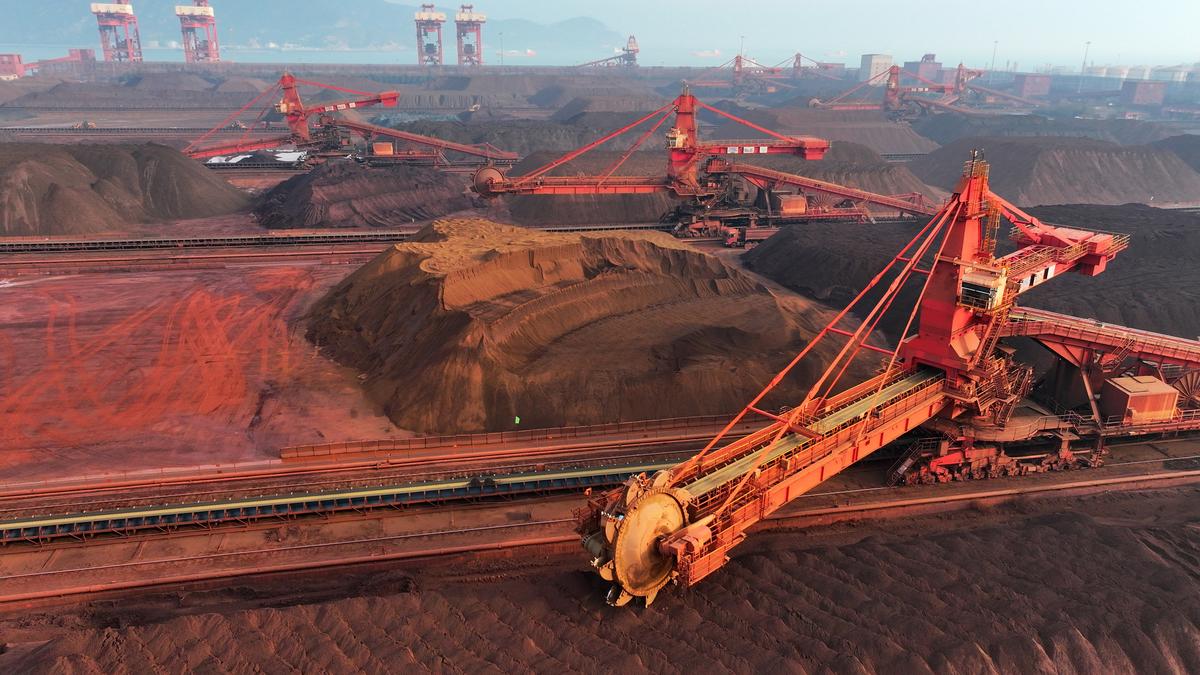
WA’s iron ore giants have begun lobbying Canberra as they seek Federal Government intervention to help fend off an increasingly bullish Chinese procurer of the powerhouse commodity that is the backbone of the Australian economy.
China Mineral Resources Group was set up in 2022 to consolidate the majority of purchasing power of the Middle Kingdom’s steel mills and shave down the huge profit margins that Pilbara producers have reaped for years.
BHP, the world’s biggest miner, was caught up in a tense nine-month stand-off with the state-backed group, which last year banned steel mills from purchasing its Jimblebar Fines blend as it sought better terms, including price discounts and settling more sales in Chinese renminbi rather than US dollars.
That skirmish ended in late April, but the Big Australian’s WA iron ore boss Tim Day only two weeks ago foreshadowed another round of bruising negotiations next year.
Mr Day conceded that recent contract negotiations over Pilbara iron ore sales were “tough”.
“It’s been a tough nine months for the renegotiation of the contract, but we’re through it now, which is the good part. But it will be [tough] again next year,” Mr Day said.
“That concept of renegotiating and getting more complex will just continue from here on.
“Now, what does that kind of mean for Australia’s iron ore industry . . . you will see over time that this will continue to play out that way, and the power and the size of China just has that impact.”
BHP, like all of WA’s iron ore producers, sells the vast majority of its output to Chinese steel mills.
Just this week, CMRG instructed some steel mills to ask questions about Fortescue’s new low-grade product — Fortescue Fine — as negotiations over a long-term supply contract with the Andrew Forrest-controlled miner hit a rough patch.
But media reports suggest the iron ore majors have had enough and are now asking Canberra to back them in Bejing.
The Australian Financial Review, quoting sources within the miners, said they had been pushing the Government to set conditions on iron ore exports, such as nominating the currency for sales, that could influence the market.
The lobbying comes at a time when the Federal Government is also looking to break China’s stranglehold on the global market for critical minerals by investing heavily in local mining venture and building a national stockpile of commodities deemed essential to the energy transition and defence technology.

