



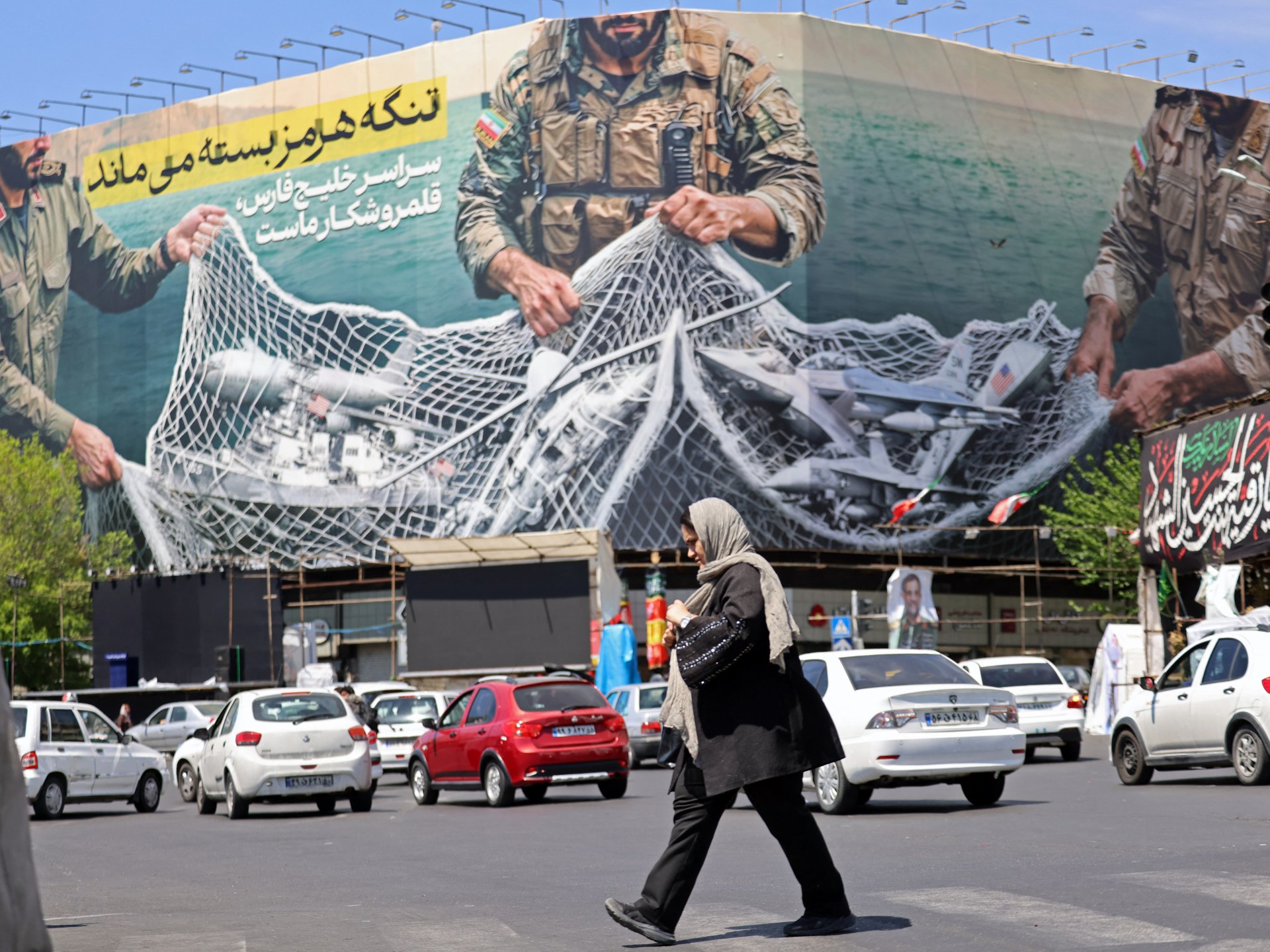
Tehran is ‘fully prepared’ for US to resume hostilities at any moment, says Iran’s parliament speaker Ghalibaf.
Iran and the United States have made progress in negotiations but are still a long way from a deal, according to Iran’s parliament speaker and chief negotiator – amplifying concerns about a possible return to war when their ceasefire is set to expire on Wednesday.
In a nationally televised address on Saturday night, Mohammad Bagher Ghalibaf said that despite “progress” with the US, “many gaps and some fundamental points remain… we are still far from the final discussion”.
Recommended Stories
list of 3 itemsend of list
On Sunday, Iran’s President, Masoud Pezeshkian, said that US President Donald Trump cannot justify depriving Tehran of what he called its ‘nuclear rights’.
“Trump says Iran cannot make use of its nuclear rights, but doesn’t say for what crime. Who is he to deprive a nation of its rights?” Pezeshkian was quoted as saying by the Iranian Student News Agency.
The future of Iran’s nuclear programme and the Strait of Hormuz are key sticking points in the negotiations.
The latest comments from the political leadership came after Iran’s Islamic Revolutionary Guard Corps (IRGC) reimposed restrictions on the Strait of Hormuz, less than 24 hours after reopening it. The reversal, it said, was due to the continuing naval blockade of Iranian ports by the US.
Ghalibaf, one of Iran’s top negotiators, called Washington’s blockade “ignorant” and “foolish”, saying Tehran would not allow others to transit the strait if its own ships were blocked.
He also said Iranian forces are “fully prepared” for the US to resume hostilities at any moment.
Al Jazeera’s Tohid Asadi, reporting from Tehran, said Iranian officials are using the strait, through which 20 percent of globally traded oil normally transits, “as a pressure point” in negotiations, calling it perhaps the “most important bargaining chip”.
‘Start dropping bombs again’
Mediators have been pushing for a second round of US-Iran peace talks, after a first round in Islamabad ended on April 12 with no deal. The White House had said another round would likely be held in Islamabad. But Iran’s deputy foreign minister said on Saturday that no date could be set before the two sides agree on a “framework of understanding”, accusing Washington of maintaining a “maximalist” stance.
Donald Trump gave a series of mixed remarks on Saturday, saying Iran “got a little cute” on the Strait of Hormuz and that the US would not be “blackmailed”. The president added that US and Iranian officials remained in contact and negotiations were “working out really well”.
Earlier in the day, Trump said the US would “have to start dropping bombs again” if no deal was reached by Wednesday, when the ceasefire is due to end.
Al Jazeera’s John Holman, reporting from Washington, DC, said Trump was likely trying to frame the latest setback in the Strait of Hormuz as “a bump in the road rather than anything definitive”.
“What we don’t have so far is whether there’s going to be a second round in the negotiations, as was thought just a day or two ago,” said Holman.
Abbas Aslani, a senior fellow at the Centre for Middle East Strategic Studies in Tehran, said Iran is facing a “dual track” of negotiations and pressure from the US.
“The first track was negotiations, but Iran has been saying that if the US is genuinely seeking an agreement, why are they engaging in a naval blockade, why are they adding sanctions, and why are they intensifying their military presence in the region?” he asked.
“There are no signs of extension of these agreements, and nobody’s talking about extending this ceasefire,” he told Al Jazeera.

