



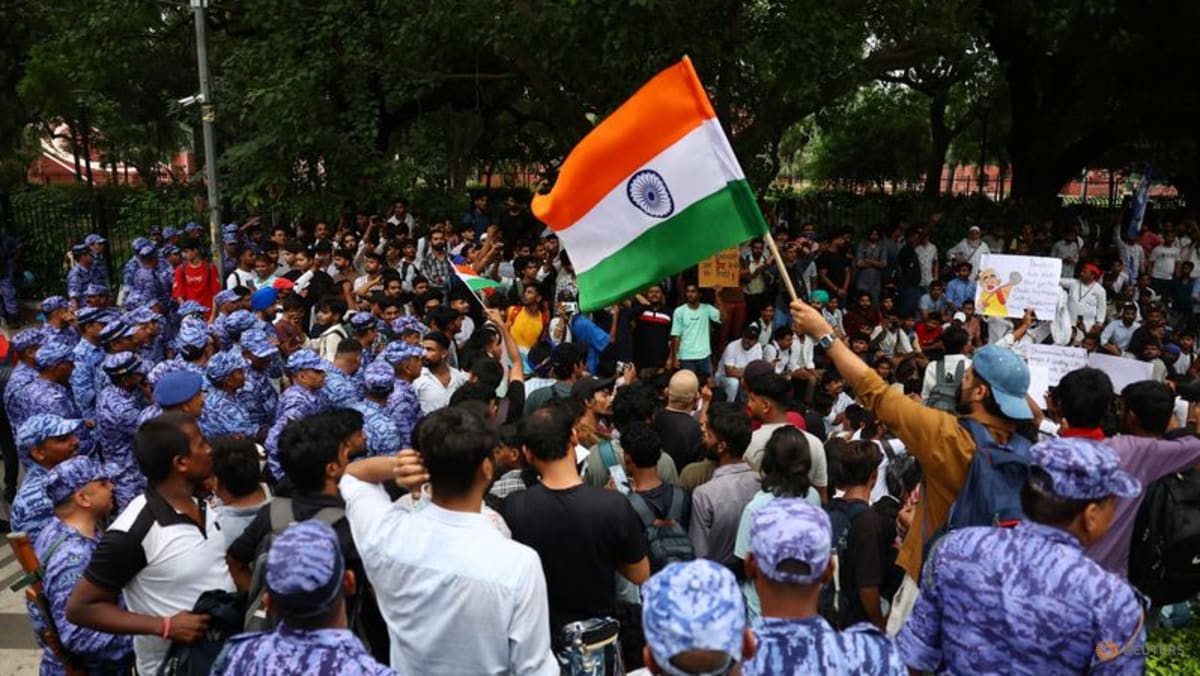
ACTIVIST SETS TERMS TO END HIS FAST
The CJP initially drew support largely online, amassing 22 million followers on Instagram within days before broadening its appeal and drawing the support of some opposition parties.
CJP founder Abhijeet Dipke and his supporters began a sit-in last month seeking the resignation of Pradhan. They were joined by Wangchuk on Jun 28 who launched an indefinite hunger strike at the site.
In a handwritten note from hospital posted on his X account on Monday, Wangchuk said he would end his fast if the government takes accountability for recent failures in the education system and for paper leaks, or if CJP protesters are allowed to reach parliament and lawmakers assure them that the issues would be taken up in the chambers.
He said he would also end the fast if lawmakers and leaders of various parties meet him in hospital and give him the same assurances since his health does not allow him to march on parliament.
The rise of the CJP reflects frustrations among young Indians over issues like high youth unemployment and frequent examination paper leaks, analysts say.
Unemployment in 2025 stood at 3.1 per cent among those aged 15 and above, government data shows, but in the bracket from 15 to 29 it was much higher, at 9.9 per cent, and higher in urban areas, at 13.6 per cent, than the 8.3 per cent figure in rural regions.

