

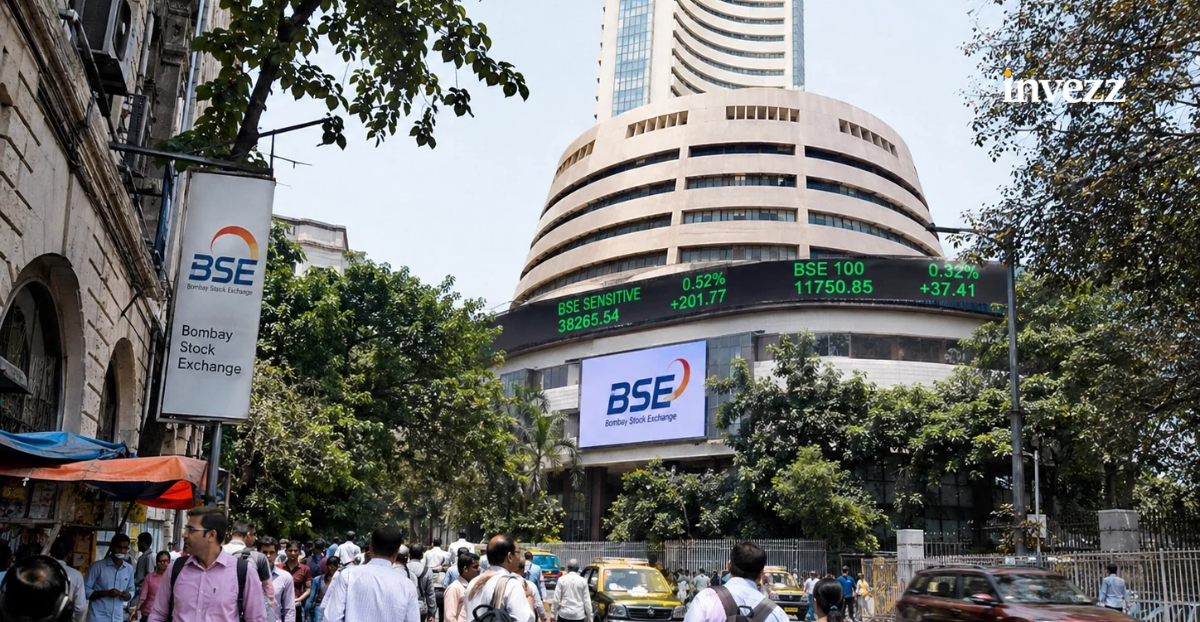
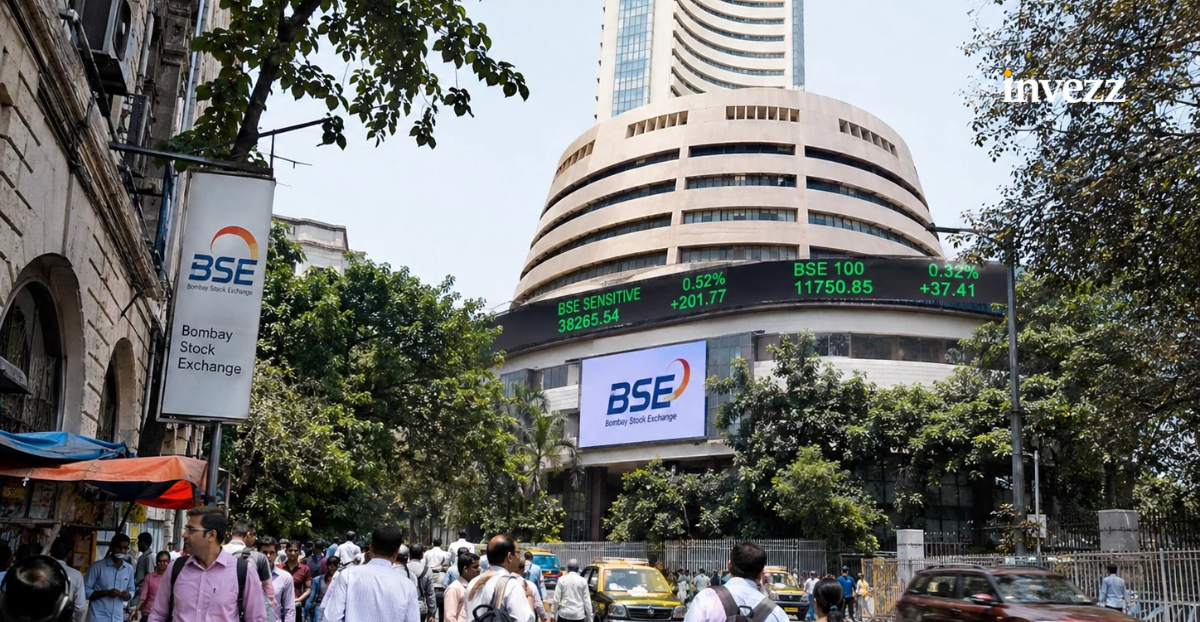
For much of 2026, as artificial intelligence fuelled stock market rallies in the US and parts of Asia, particularly Taiwan and South Korea, India’s equity market found itself in the shadows.
With relatively little direct exposure to AI hardware and semiconductors, Indian stocks struggled to attract the same investor enthusiasm.
The US war with Iran compounded the pressure.
Rising oil prices heightened concerns over inflation and the impact on corporate profit margins, while the rupee came under pressure.
As one of the world’s largest crude oil importers, India was particularly vulnerable to the energy shock.
Between January and October, foreign institutional investors (FIIs) withdrew more than $30 billion from Indian equities, according to data from Kotak Neo, as investors channelled money into markets with greater exposure to the AI value chain.
The Nifty 50 fell 3,093.45 points, or 11.83%, in 2026 through October 30.
However, November has brought a dramatic reversal in sentiment.
As the global AI trade began to lose momentum amid concerns that spending could outstrip the revenue and profits it ultimately generates, India emerged as a relative safe haven.
Fears of slower data centre construction in the US, following a Democratic sweep of Congress, and expectations of higher interest rates also weighed on technology stocks.
Foreign investors have poured more than $15 billion into Indian shares so far in November, marking the largest monthly inflow on record.
This follows more than $60 billion in net selling between September 2024 and October 2026.
The Nifty 50 has surged 12.5% this month, although it remains down about 2% for the year.
Why foreign investors are returning to India
A combination of lower oil prices, improving corporate earnings and a shift in global investment preferences has helped revive interest in Indian equities.
“Firstly, we saw a cool-off in crude oil prices, they came down from hovering over $100 to between $90 and $100. Secondly- earnings revival. The Q2 corporate earnings were good. Finally, India has come to be seen as a hedge against the global AI trade led by US and other Asian markets. As the euphoria there cooled, in the reallocation, India seems to be a convenient long term story and this is why FIIs have started to allocate towards India again,” Kranthi Bathini, equity strategist at WealthMills, told Invezz.
Indian companies delivered their strongest earnings growth in 12 quarters in Q2FY27, reflecting a broad-based recovery in corporate profitability.
The country had slipped down investors’ rankings as subdued economic expansion and a weak rupee weighed on earnings growth.
However, a resilient economy and a stabilising currency have also helped improve earnings in dollar terms this year.
The shift is also reflected in the investment decisions of global asset managers.
Aberdeen has increased its exposure to two large Indian asset managers over the past three months, citing improved valuations and earnings growth, Reuters reported.
India has “a combination of OK valuations and earnings growth coming back – that’s a reasonable setup,” said Isaac Thong, Aberdeen’s senior investment director for Asian equities, Reuters reported.
Ashmore and Artemis Fund Managers have also increased their exposure to India.
For the first time since January, investors overweight India outnumbered those underweight, according to a Bank of America survey conducted this month.
Why the revival is unlikely to be smooth
The revival, however, has already encountered some resistance.
Indian shares paused their four-week winning streak on Friday as investors booked profits following a sharp rally.
A renewed rise in crude oil prices also tempered sentiment ahead of the Reserve Bank of India’s monetary policy decision next week.
Both the Nifty 50 and the Sensex fell by more than 1% on Friday.
The benchmarks lost about 0.7% each over the week, following a nearly 15% surge in the preceding four weeks.
Brent crude futures rose 5% over the week to around $97 a barrel, as attacks on tankers in the Strait of Hormuz and Saudi energy infrastructure heightened concerns about oil exports from the conflict-hit region.
Meanwhile, sentiment towards technology stocks stabilised elsewhere.
South Korea’s Kospi gained more than 4% on Friday, while the Nasdaq was up 1.2% and the S&P 500 traded nearly 1% higher at the time of writing.
“Indian equities took a breather after a strong four-week rally, as higher crude prices, a weaker rupee and rising domestic bond yields prompted profit booking in index heavyweights,” said Vinod Nair, head of research at Geojit Investments.
“Renewed Middle East tensions pushed Brent higher, raising concerns over supply and domestic inflation. At the same time, a revival in Asian AI stocks could divert some flows away from India, which had benefited from its relatively domestic-oriented growth profile amid crowded global AI trades,” he said.
The concern is that India’s recent gains may not yet represent a durable shift in foreign investor sentiment.
Some of the inflows could instead reflect a temporary reallocation of capital away from technology-heavy markets.
Sustaining the recovery will require further improvement in domestic economic and corporate fundamentals.
Crude price, earnings, and RBI policy will determine whether the rally lasts
According to Bathini, a decisive cooling in crude oil prices will be crucial for the Nifty 50 to sustain its gains at current levels.
“We also need to see how the RBI monetary policy goes,” he said.
The Reserve Bank of India’s Monetary Policy Committee is scheduled to meet on December 2-4.
Market participants are expecting the central bank to raise the repo rate.
More importantly, Bathini stressed that the improvement in corporate earnings would need to continue to support the market.
“The macroeconomic data for India is good. Also, look at the auto sales figures, they are consistently rising. These are strong consumption figures that could ultimately translate into better earnings,” he said.
Nair, however, expects near-term consolidation, with Q3FY27 earnings growth likely to moderate and uncertainty surrounding proposed US tariffs continuing to weigh on sentiment.
“Nevertheless, strong foreign inflows and expectations of 7.7% Q2FY27 GDP growth continue to support a constructive medium-term outlook,” he said.
“From the near-term perspective, some consolidation should not come as a surprise after the magnitude and speed of the recent rally,” said Shrikant Chouhan, head of equity research at Kotak Neo.
JPMorgan forecasts Nifty 50 to reach 29,000 by 2027-end
Despite the near-term risks, JPMorgan has forecast the Nifty 50 to reach 29,000 by the end of 2027 in its base-case scenario, implying about 12% upside from Thursday’s close.
Its bull- and bear-case targets stand at 31,000 and 22,000, respectively, analysts led by Rajiv Batra said in a note.
The brokerage favours domestic cyclicals over exporters, citing lower oil prices and a firmer rupee.
It also sees scope for $100 billion in net foreign inflows if long-only investors return to benchmark weights, following about $15.5 billion in overseas buying so far in November.
“The earnings story is improving; the valuation story is less forgiving,” JPMorgan said.
The brokerage has forecast three consecutive 25-basis-point RBI rate hikes and flagged risks from potential US rate increases, weak monsoon rains, El Niño-linked food inflation, rural stress and fiscal consolidation.
JPMorgan is overweight on financials, industrials, healthcare and consumer discretionary stocks.
It has downgraded materials to underweight, including a two-notch downgrade of metals and mining, and retained its underweight rating on IT.
Bathini, meanwhile, favours defence, aerospace, power and nuclear power, as well as consumer-facing sectors, including automobiles.
The November rally has therefore improved India’s standing among global investors, but the recovery is not without vulnerabilities.
Whether the market can hold on to its gains will depend on the trajectory of crude oil, the RBI’s policy stance and, above all, whether earnings growth can justify the renewed investor interest.
The post Indian shares rallied in November as FIIs returned, but will the revival sustain? appeared first on Invezz

