

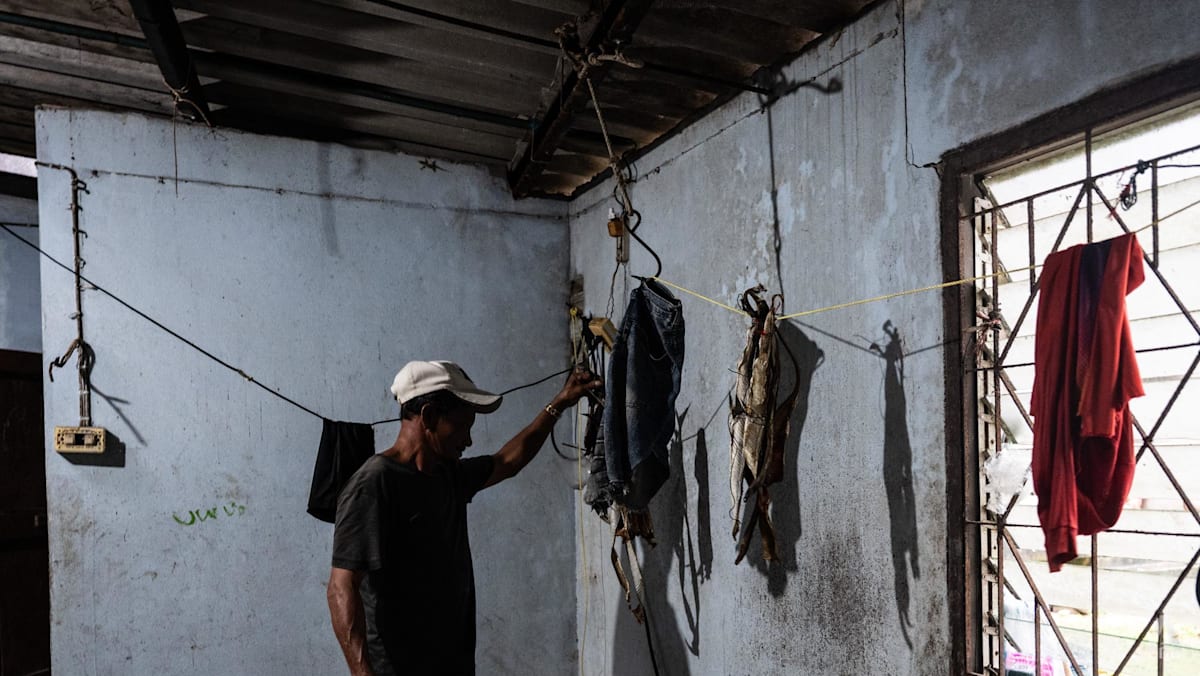
Ye Htet, a 29-year-old from Mon State, said this was the reason he fled Myanmar four years ago.
“I know people who were forced to become soldiers. I knew that if I stayed, sooner or later they would come for me,” said Ye Htet, who now works on a rubber plantation in southern Thailand.
He made the gruelling three-day trek through forests and mountains to reach the Thai border and, when he finally crossed into Thailand, he said he felt safe for the first time in years.
He believed he had escaped the shadow of the war, but those fears have returned as Bangkok deepens its engagement with Naypyidaw.
“I miss my home. I miss my family. No matter what, Thailand is not my country,” he said.
“But I cannot go back in the foreseeable future. For someone my age, if I return to Myanmar, I will become a soldier for sure,” he added.
“I don’t want to fight anyone. I don’t want to kill anyone. But if they make me a soldier, I will have no choice. I think I will die.”
As for the Rohingya, who have been described as the most persecuted minority in the world, refugees such as Sadek said he was grateful for Malaysia’s provision of a safe haven and hopes the country will not send back people who may face danger on their return.
“Myanmar is my country but it is not safe for us. We came here not to stay here forever, but to make preparations to return one day. Unfortunately, we cannot do that at the moment,” he said.
“I’m not sure what agreement they made, but I don’t believe Malaysia will send anyone whose life is in danger back to Myanmar,” he said.
“The Rohingya must be resettled to third countries where they can find a permanent home. Many have been here since the 1980s but are still in limbo,” he said, also questioning whether there was any urgency to resettle the Rohingya.
Hundreds of thousands of Rohingya fled Myanmar in 2017 following a military crackdown.
Many fled across the border to Bangladesh, where they recently rallied for safe return to Rakhine state in Myanmar and protested the dire conditions of refugee camps in Cox’s Bazar, where some have lived for nine years.
The Bangladeshi government has reportedly tried to begin repatriation at least twice previously. But none of the refugees were willing to return, citing security concerns in Myanmar, and Dhaka said it would not force anyone to go back.
In August, the Myanmar government said more than 300,000 people living in camps in Bangladesh are former residents of Rakhine state and that it will accept their return once security conditions improve, wire agencies reported.

