



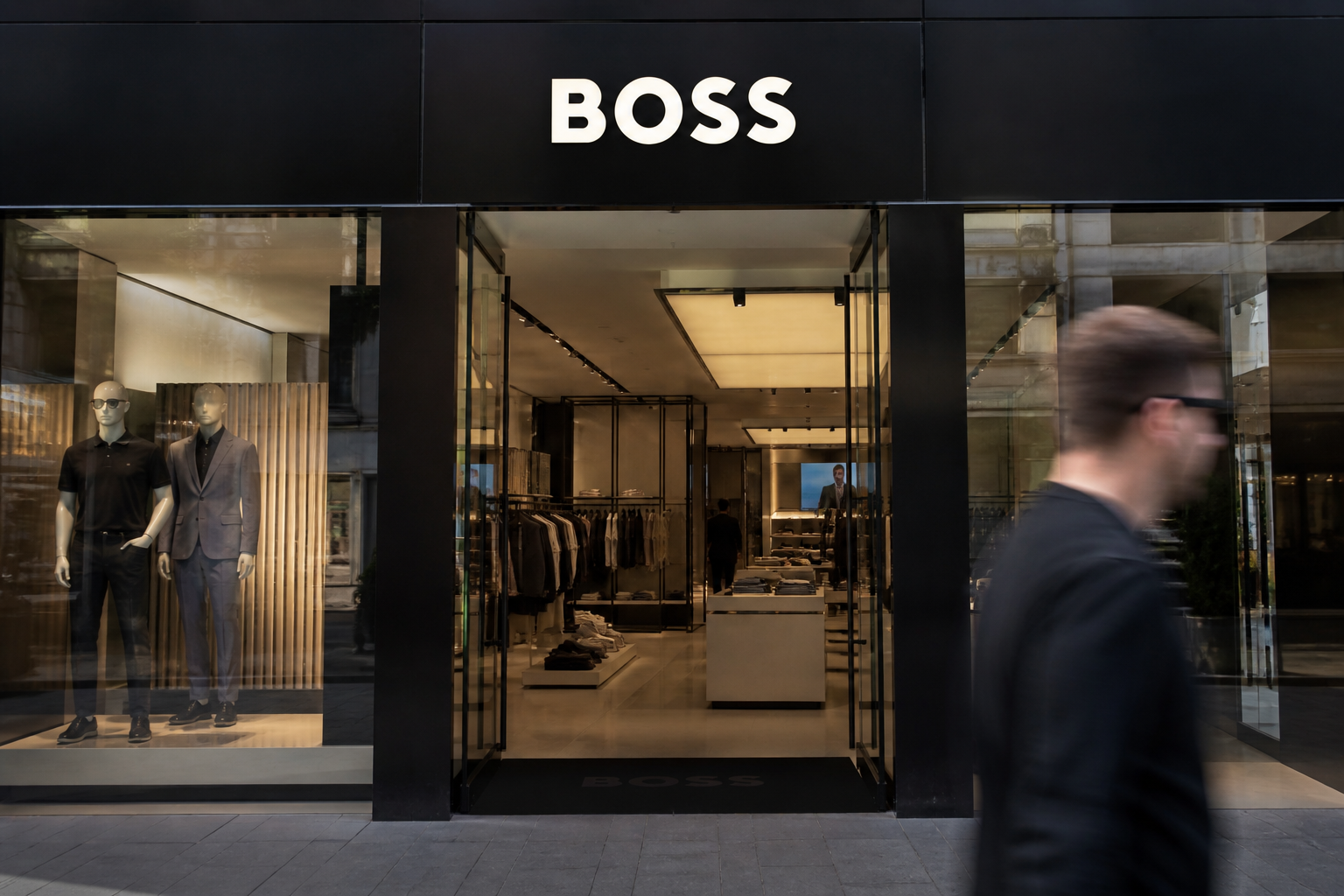
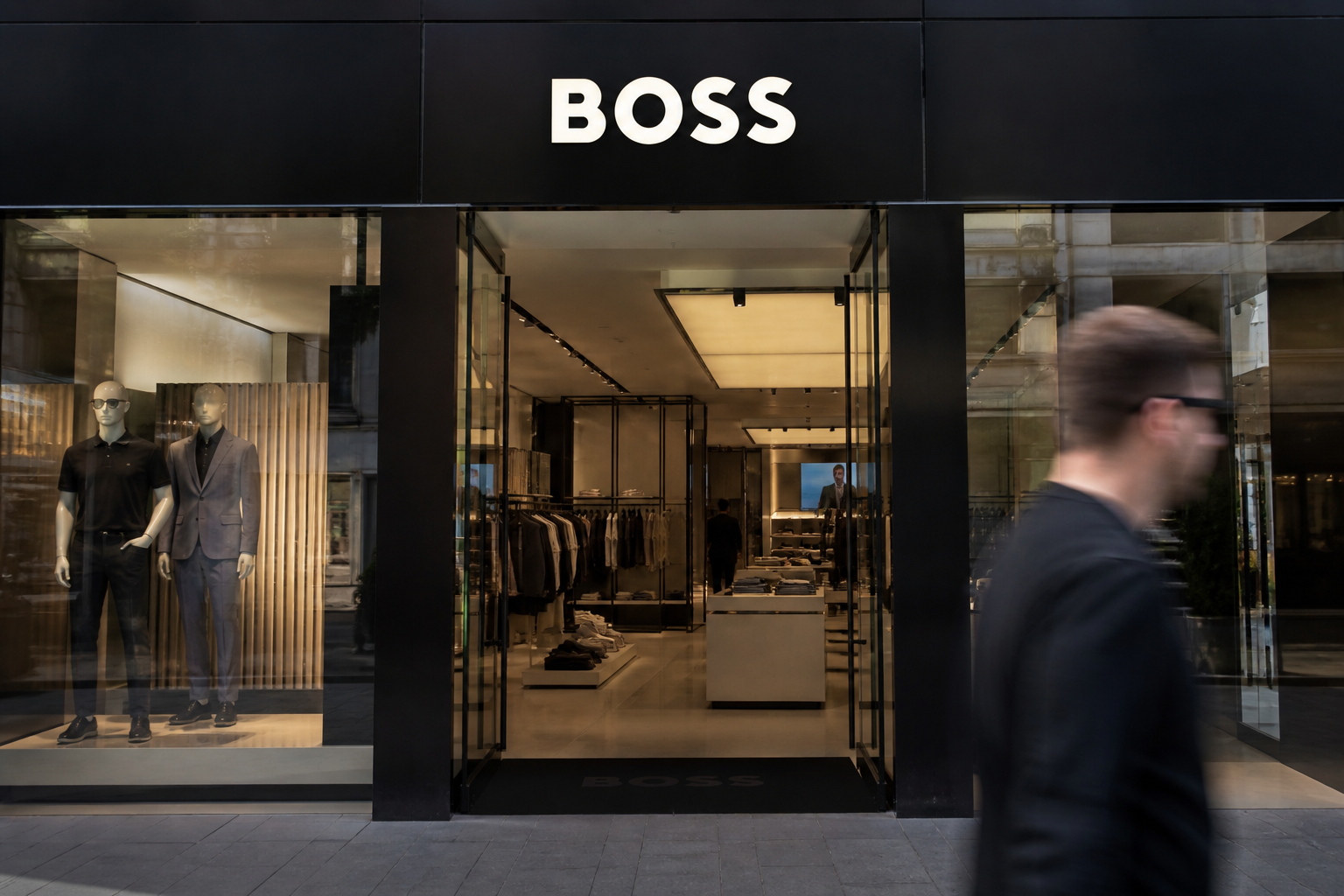
German fashion group Hugo Boss reported quarterly operating profit above analysts’ expectations, even as geopolitical tensions weighed on performance in key regions.
Shares in the company rose nearly 5% on Tuesday following the results.
Profit beats expectations despite annual decline
Hugo Boss said its first-quarter earnings before interest and taxes (EBIT) fell to 35 million euros ($41 million), down from 61 million euros in the same period last year.
Despite the year-on-year decline, the figure exceeded analysts’ average forecast of 30 million euros, based on a company-provided poll.
The stronger-than-expected performance offered some reassurance to investors amid a challenging macroeconomic backdrop.
Analysts at Deutsche Bank described the results as a “decent start to the year.”
CEO flags tougher market conditions
Chief Executive Daniel Grieder acknowledged the shifting market environment and pointed to geopolitical developments as a key concern.
“Following our successful finish to 2025, we entered the year with a clear roadmap.
However, the market environment has become more challenging over the course of the first quarter, caused by recent developments in the Middle East,” Grieder said in a statement.
The ongoing conflict in the region has disrupted global markets.
It has pushed oil prices higher and renewed concerns over inflation and economic growth.
The closure of the Strait of Hormuz has further intensified these risks.
Middle East weakness weighs on sales
Hugo Boss said the conflict has directly affected its regional performance.
The company reported a noticeable decline in store traffic in the Middle East since March.
At the same time, global consumer sentiment remained subdued throughout the quarter.
This combination had a negative impact of around 1% on group sales.
The update highlights how geopolitical instability continues to influence consumer behaviour and retail demand, particularly in sensitive markets.
Supply chain remains stable for now
Chief Financial Officer Yves Müller said the company has not yet experienced supply chain disruptions linked to the conflict.
“We source approximately 50% of our materials from Europe, which means we are actually quite flexible in terms of our supply chain,” Müller said during a press call.
He added that while some impact is expected over time, particularly on transport costs, the overall effect remains uncertain.
The company expects transport costs to remain manageable in 2026.
Tariff refund uncertainty persists
Müller also addressed questions around US import tariffs following a February 20 ruling by the US Supreme Court that struck down some duties.
He said it was too early to assess the financial implications or potential refunds for Hugo Boss.
“Let’s assume that for the portion of the duties that were unlawful, only to a part will be automatically refunded,” Müller said, as cited in a Reuters report.
The ruling has left uncertainty over how importers will be reimbursed.
This continues to cloud visibility for companies exposed to US trade policies.
The post Hugo Boss beats profit estimates despite Middle East market pressure appeared first on Invezz

