



Gary Ador Dionisio, also a political scientist and dean of the School of Diplomacy and Governance at De La Salle-College of Saint Benilde in Manila, argues that what is unfolding in Clark is not simply economic development with strategic overtones but “the emergence of an integrated strategy” – one in which “infrastructure, logistics, renewable energy and supply-chain resilience become pillars of national security”.
The deal would not only “provide economic security for the Philippines and train Filipinos in specialised industries, but also allow the country to leverage its skilled manpower”, he said, adding that it “reflects the growing convergence of economic development and strategic security in the Indo-Pacific”.
“Defence cooperation is increasingly being complemented by deeper economic engagement, with both no longer seen as separate tracks, but as mutually reinforcing pillars in strengthening long-term resilience and reinforcing the country’s strategic position” in a complex geostrategic landscape, Dionisio added.
SECURING TRADE ROUTES
For Germany, a country that for decades based its foreign policy on European solidarity and the transatlantic security alliance NATO, analysts say the Clark deal must be read against a backdrop of increasingly conditional US commitments and rising Chinese economic power.
“Like many European countries, Germany is seeking to diversify … in light of what it sees is happening with the United States and NATO,” Amador said.
Having closer ties to the Philippines allowed nations to monitor regional developments “from Taiwan to the South China Sea” and to leverage Manila’s position as Washington’s premier partner in Southeast Asia – serving both as a listening post and convergence point for Western responses to regional threats, he added.
Manhit cautioned against overdramatising Steinmeier’s visit, suggesting that it was less a diplomatic breakthrough than a natural culmination of sustained engagement, citing the signing of a defence cooperation pact last year, plus expanding trade and energy links.
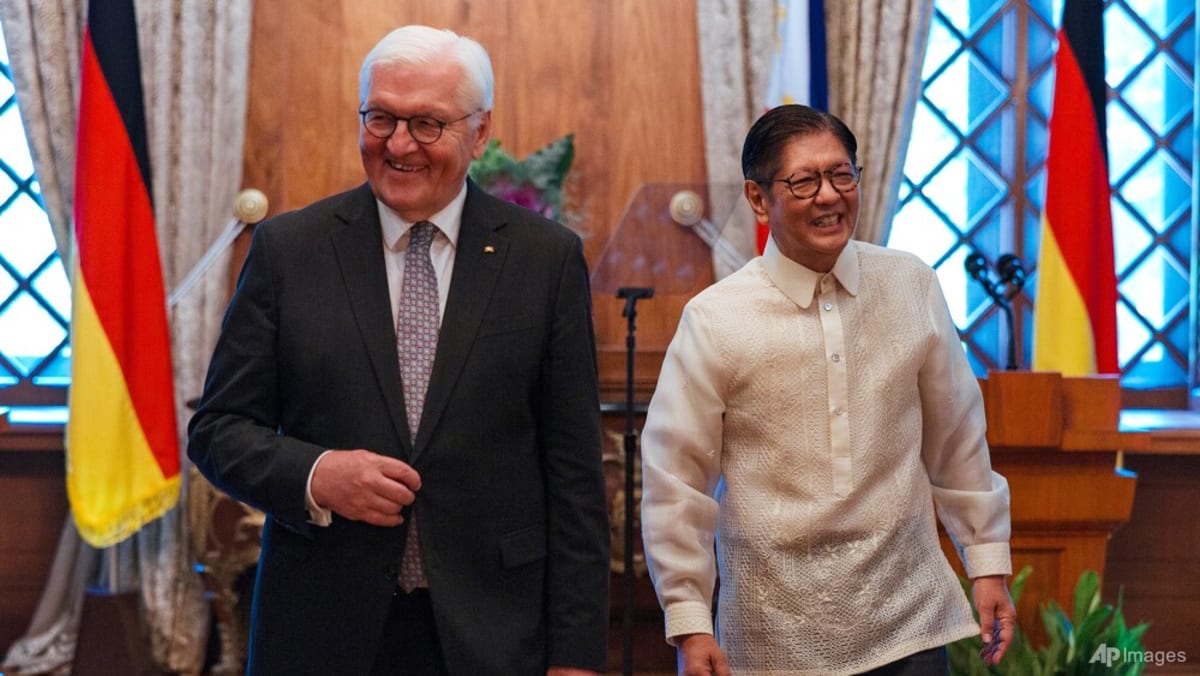
But the optics of a German president in Manila for the first time in 62 years, at a moment of high regional tensions, at a former American base that is fast becoming the logistics heart of a US-backed economic corridor, was a signal that registered clearly.
“Germany has a vested interest in preserving a rules-based international order, freedom of navigation and regional stability,” Dionisio said, adding that the Philippines occupied “a critical geopolitical position along key maritime routes” on which Germany’s export-oriented economy depended.

