



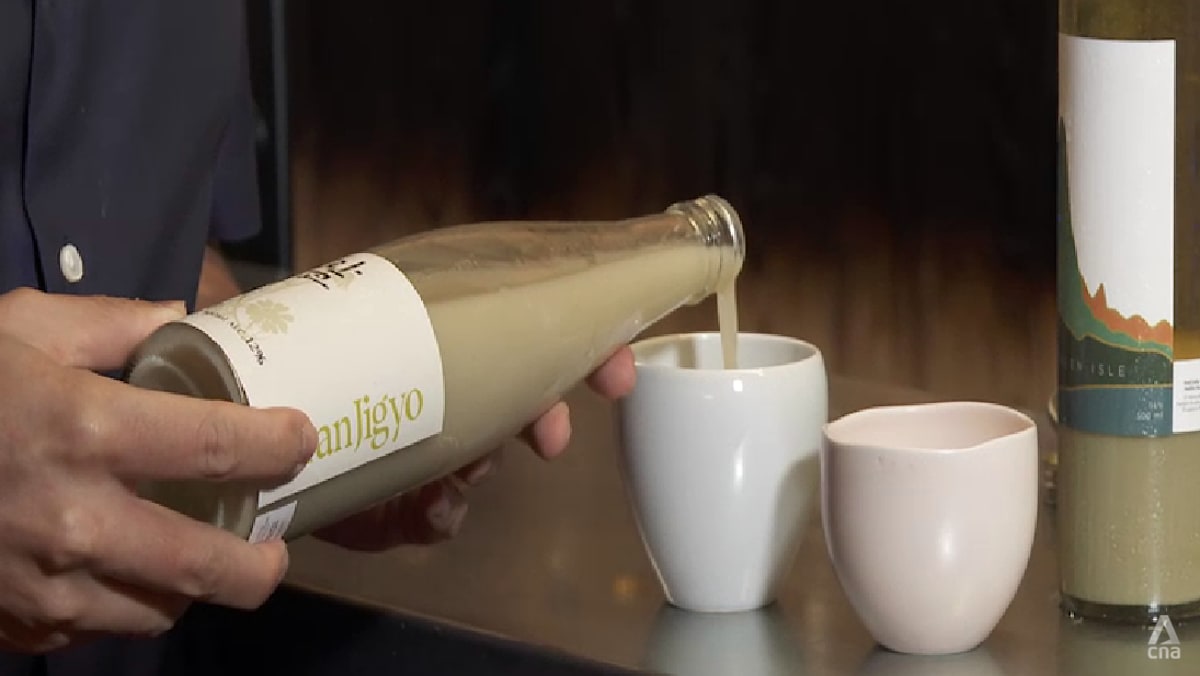
For some of the bar’s customers, it is still a first encounter.
“It’s quite flavourful,” said one patron. “It’s quite a unique taste and it doesn’t feel like I’m drinking alcohol.”
POP CULTURE DRIVES DEMAND
The rising curiosity is not accidental, said observers.
“South Korean dramas show a lot of drinking culture, not just as a transaction but as a social ritual,” said Dr Dayoung Kim, a senior lecturer in marketing at the National University of Singapore (NUS).
“So, specific brands and people drinking, it gets all exposed through those dramas and Singaporeans, Southeast Asians love watching those dramas. It gives legitimate access to that Korean drinking culture.”
The shift is also reflected in trade data. After dropping to a pandemic low of US$270 million in 2020, South Korea’s liquor exports rebounded to about US$326 million in 2023.
Singapore is playing a role in that recovery. South Korean alcohol exports to the country hit US$6.1 million in 2024, making it the eighth-largest global destination for South Korean spirits by value.
“Singapore is well known as a great testbed,” said Ms Bona Kim, managing partner at The Sool Company, which aims to promote South Korean traditional alcohol on the global stage.
“Once you get good recognition in Singapore, it’s easier to move to countries close to it like Malaysia, Indonesia or Vietnam – or even to Europe.”
NUS’ Dr Kim believes part of Singapore’s appeal lies in its openness.
“Their pallets are multicultural. Foundationally, Singaporean consumers grow up navigating Chinese, Malay, Indian, Western food and drinks all simultaneously,” she said.
“It’s also a travel hub, so a lot of people come and go. That builds a lower barrier to try new things.”

