



NEWYou can now listen to Fox News articles!
A federal appeals court has upheld a Texas law requiring public schools across the state to display the Ten Commandments—a major victory for religious freedom advocates who have long argued the biblical text is intertwined with America’s legal, moral, and historical heritage.
In a 9–8 ruling, the 17-member Fifth Circuit Court of Appeals held that Senate Bill 10, the law passed by Texas’ Republican-led legislature, does not violate either the Constitution’s Establishment Clause or the Free Exercise Clause.
“Because Plaintiffs fail to show that S.B. 10 substantially burdens their right to religious exercise, their Free Exercise claims must be dismissed,” the court’s majority opinion stated.
Tuesday’s ruling reverses a preliminary injunction issued by a federal judge in 2025, who had previously argued the law failed to demonstrate a historical tradition of public schools posting the Ten Commandments—a standard he claimed was necessary for the bill to withstand judicial precedent.
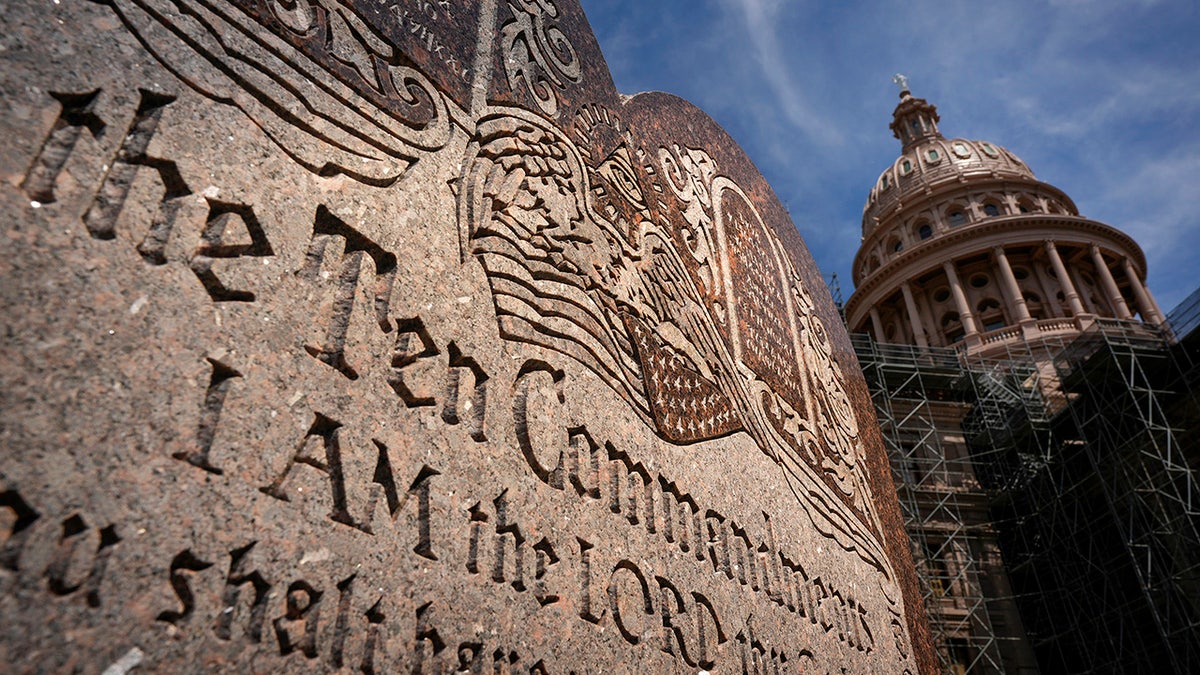
A federal appeals court ruling on Feb. 20 allows Louisiana’s Ten Commandments classroom mandate to proceed for now. (Jay Janner/Austin American-Statesman via Getty Images)
“This is one of the most important religious liberty victories for Texas in our glorious history,” said Jonathan Saenz, president and attorney for Texas Values, which defended the law. “Texas continues to lead the nation in defending both religious liberty and constitutional truth.”
“Today’s ruling confirms that our state can honor the moral heritage that undergirds our legal system without violating the First Amendment,” Saenz added. “This decision makes clear that acknowledging the historical foundations of our laws is not only permissible—it is fully consistent with the Constitution.”
Under state law, S.B. 10 requires that a “conspicuous” copy of the Ten Commandments be displayed in every classroom in every public school and open-enrollment charter school in Texas. The court ruled that it was not bound by Stone v. Graham, a 1980 U.S. Supreme Court case in which the justices struck down a Kentucky law requiring public schools to post religious texts in classrooms.
That case centered on a bill passed by Kentucky lawmakers that required hanging posters of the Ten Commandments. At the time, the High Court found the law violated the First Amendment because it lacked a secular purpose.
However, defense lawyers argued that Stone relied entirely on the “Lemon test,” specifically the provision requiring a law to have a “secular purpose.” Because the Supreme Court explicitly abandoned the Lemon test in its 2022 decision, Kennedy v. Bremerton School District, the Fifth Circuit majority concluded that the precedents derived from Lemon—including Stone—have been effectively abrogated.
FEDERAL JUDGE BLOCKS ARKANSAS TEN COMMANDMENTS LAW IN CERTAIN DISTRICTS
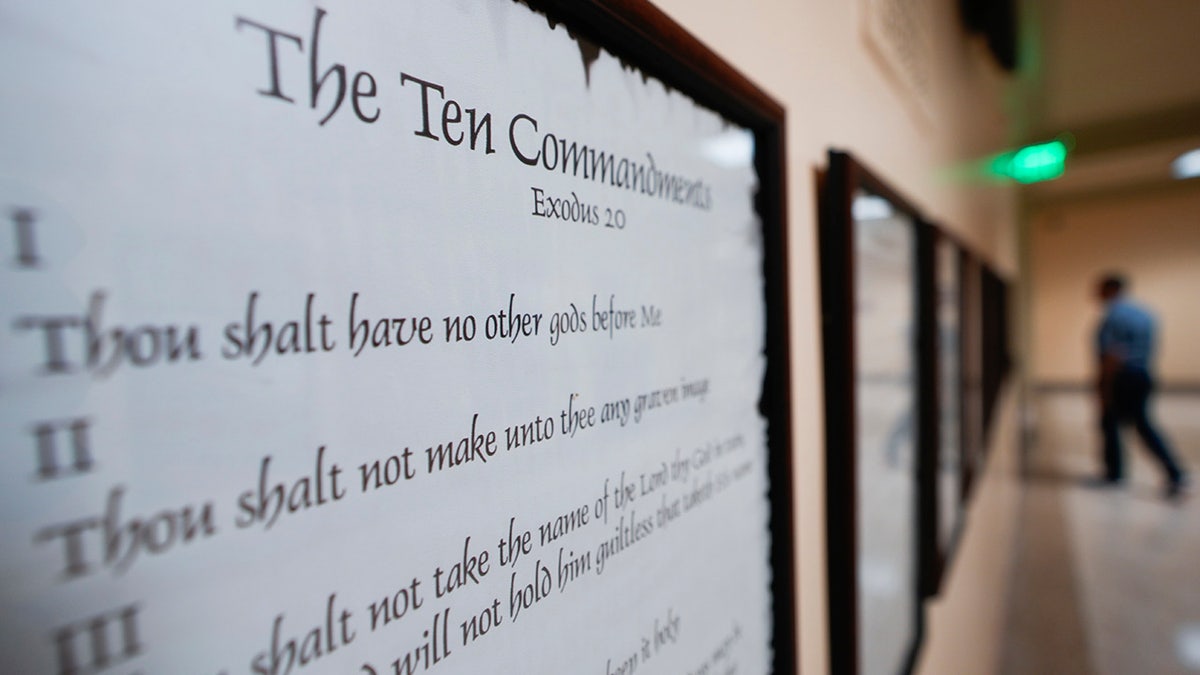
The Ten Commandments displayed on a wall inside a building. (John Bazemore/AP)
“[W]ith Lemon extracted, there is nothing left of Stone,” the majority wrote.
In a dissenting opinion, the minority argued that the Supreme Court has never explicitly overturned the Stone v. Graham ruling.
Several judges on the court issued their own statements supporting the law’s constitutionality. Judge James C. Ho, a Trump appointee, concurred with the majority, emphasizing that the court can “uphold Ten Commandments displays in public schools under the Constitution” because the law does not come “close to imposing either an establishment of religion or a prohibition on the free exercise thereof.” Judge Andrew S. Oldham also affirmed his support, stating: “I agree with the majority that the district court’s injunction must be reversed. I further agree that, if the case is justiciable, Texas’s Ten Commandments law does not violate the Constitution.”
The dissenting opinions centered on the religious freedoms of parents with theologies other than Christianity.
“The displays required by S.B. 10 threaten to ‘undermin[e] the religious beliefs that parents wish to instill in their children’ and ‘pressure’ students ‘to conform,’ and Defendants have not satisfied strict scrutiny,” the order states.
FEDERAL APPEALS COURT RULES LOUISIANA TEN COMMANDMENTS SCHOOL LAW IS UNCONSTITUTIONAL
Judge Leslie H. Southwick, a George W. Bush appointee, wrote that: “Religion, though, is a matter of the mind and the heart. Faith cannot flourish when it is forced.”
The lawsuit was originally brought by the American Civil Liberties Union (ACLU), the ACLU of Texas, Americans United for Separation of Church and State, and the Freedom From Religion Foundation on behalf of a multifaith group of families. These plaintiffs argued that the Texas law imposes a religious preference on their children in violation of the First Amendment.
Fox News Digital has reached out to Texas Gov. Greg Abbott, State Attorney General Ken Paxton, and the ACLU for further comment.
In a joint statement, the ACLU and other plaintiffs condemned Tuesday’s ruling and announced plans to appeal.
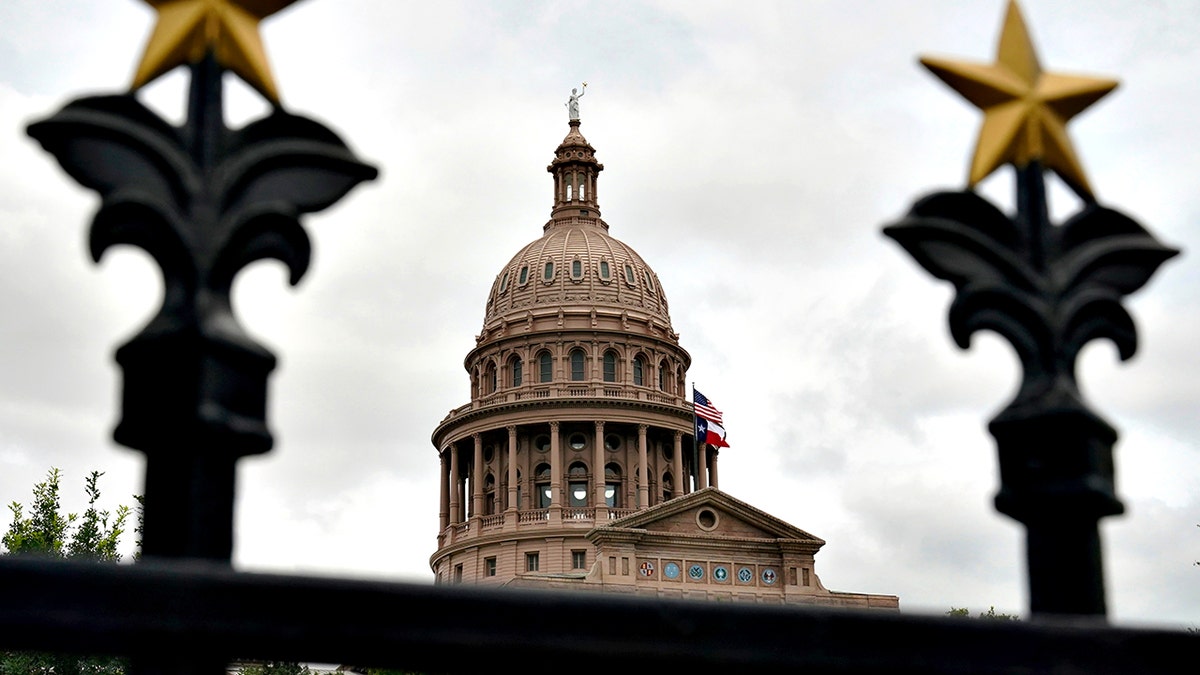
FILE – The State Capitol is seen in Austin, Texas, on June 1, 2021. (AP Photo/Eric Gay, File) (AP Photo/Eric Gay, File)
“We are extremely disappointed in today’s decision. The Court’s ruling goes against fundamental First Amendment principles and binding U.S. Supreme Court authority,” the statement read. “The First Amendment safeguards the separation of church and state, and the freedom of families to choose how, when, and if to provide their children with religious instruction. This decision tramples those rights. We anticipate asking the Supreme Court to reverse this decision.”
Kentucky Attorney General Russell Coleman also praised the ruling, noting that the Ten Commandments are “foundational to our legal system and can be displayed in classrooms. We led a 19-state coalition to support Texas’ law and American history!”

