



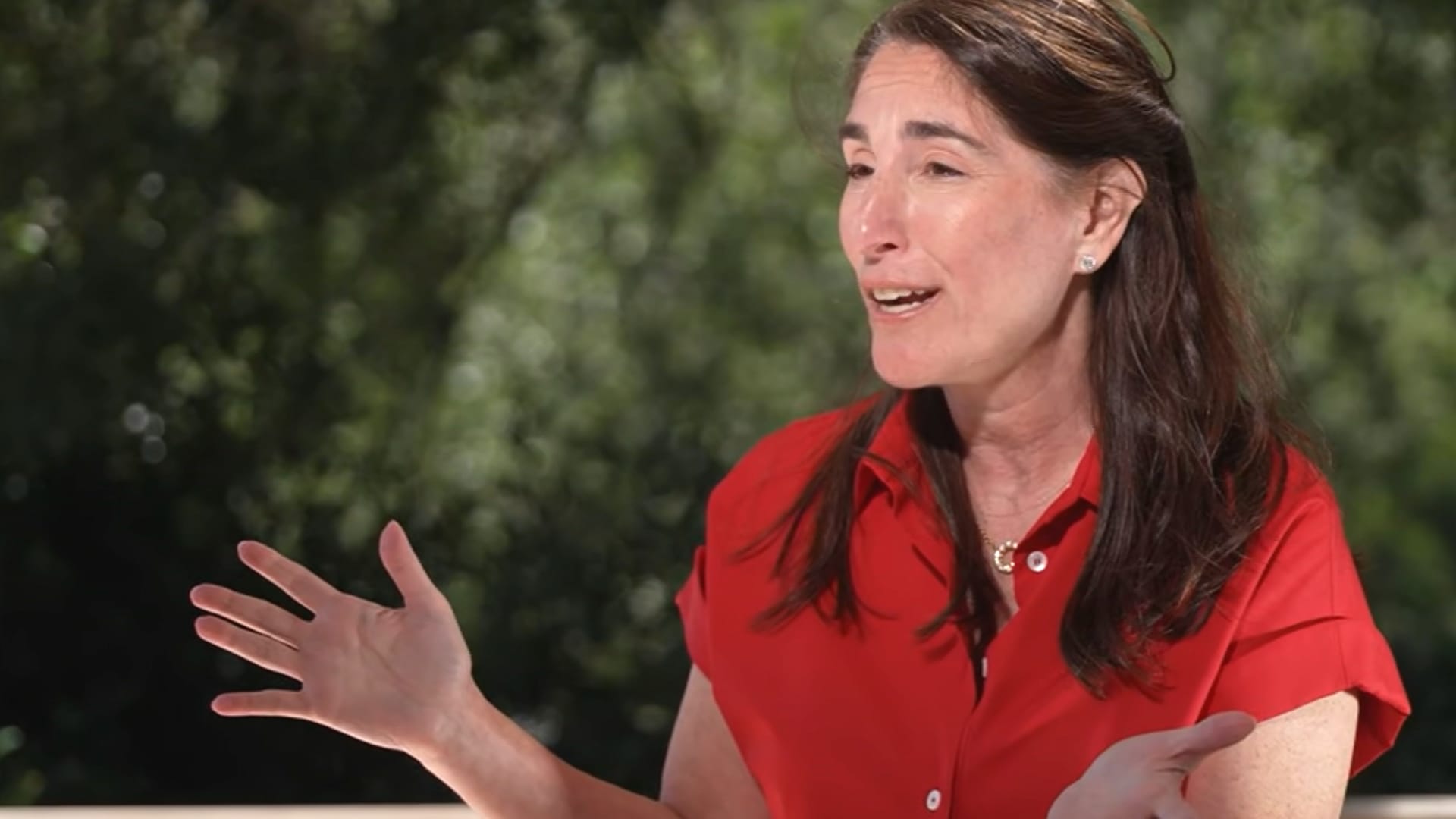

Cleveland Federal Reserve President Beth Hammack said Tuesday that “insatiable” demand for artificial intelligence infrastructure could be a source for inflation.
Should that and other pressures continue to keep prices elevated, that could drive the need for higher benchmark interest rates, the central bank policymaker said in a CNBC interview.
“We’ve got inflation that’s too high, and it’s been too high for the past five years,” Hammack told CNBC’s Sara Eisen on the sidelines of the European Central Bank Conference in Sintra, Portugal. “When I look at policy, if that continues, it may mean that we need higher interest rates to bring inflation back down to target.”
Hammack honed in on AI spending, particularly citing a manufacturer in her district involved in electric switching for data centers.
“What they say is that the demand is insatiable, that these companies — these hyper scalers — will pay almost any price for those inputs, and they need things built yesterday,” she said. “When I look broadly, particularly around large companies, I’m not seeing a lot of restraint in the economy. I’m not hearing from these businesses that interest rates or credit spreads are a reason why they’re holding back from investment and growth.”
Federal Reserve Bank of Cleveland president and CEO, Beth Hammack speaking with CNBC from Sintra, Portugal on June 30th, 2026.
CNBC
Hammack did couch her outlook, saying “the could be impacts in both directions.”
The notion that AI could be fueling inflation runs against a key assertion from Fed Chairman Kevin Warsh, who believes that productivity gains from the technology will decrease the cost of labor and ultimately prove to be disinflationary.
At the same time, Warsh, in his first news conference as head of the central bank, expressed firm commitment to bringing down inflation, something Hammack also emphasized.
“If inflation continues to persist at these elevated levels and I don’t see any restraint from policy, we may need to raise rates to bring that policy restraint in and to bring inflation back down,” she said.
Hammack is a voting participant this year on the rate-setting Federal Open Market Committee. The panel earlier this month voted again to keep its key overnight interest rate steady but penciled in a quarter percentage point increase this year, consistent with market expectations.

