

Call it the “avoidance” election, with many on each side more motivated by trying to prevent or stop things than by what they’ll gain.
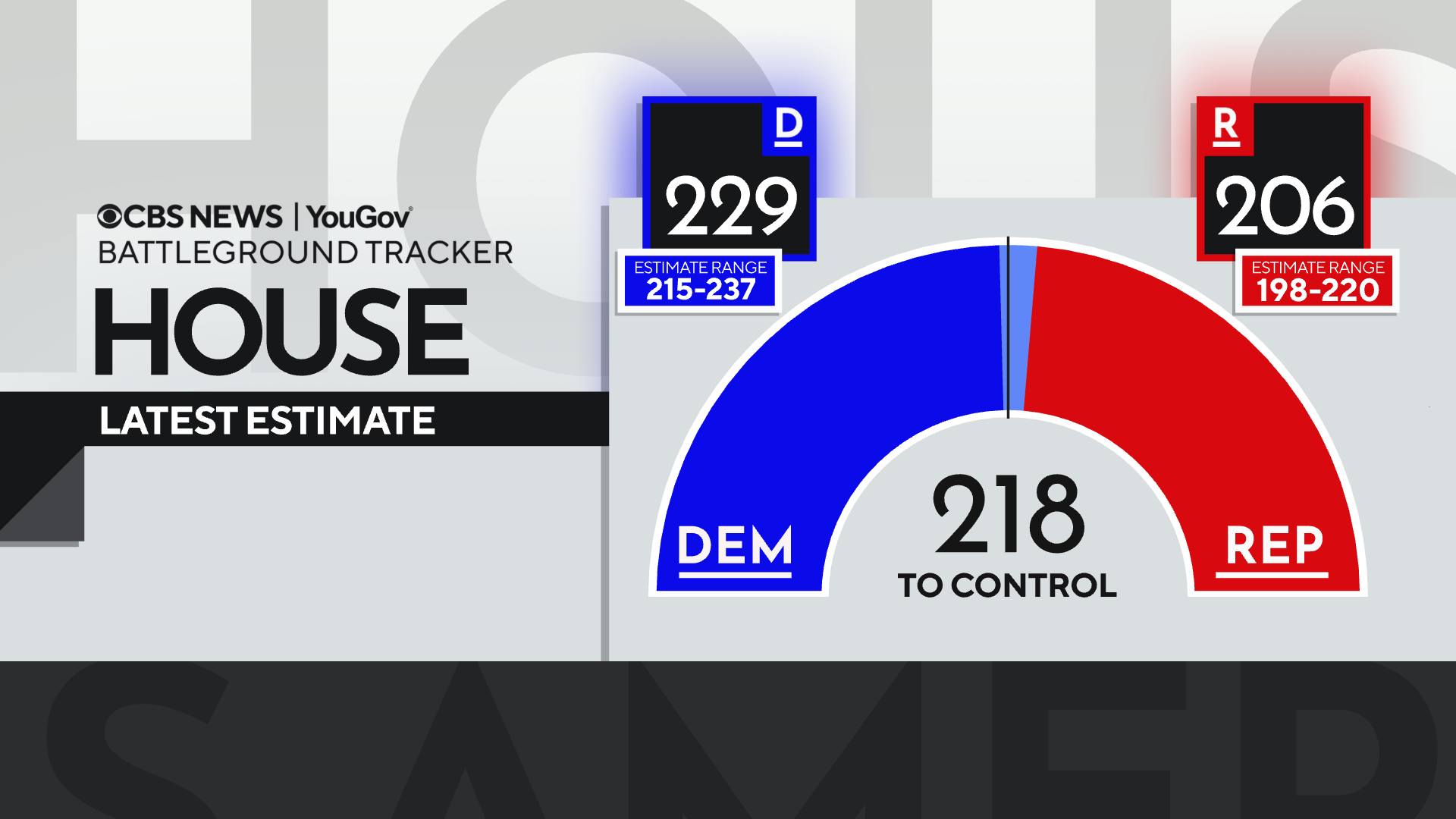
Against a backdrop of continued concern about inflation and the economy, Democrats maintain their lead in a bid for a House majority. They’re currently on pace for 229 seats in our CBS News House model estimate, which translates voters’ congressional preferences into seats.
The potential range of outcomes could reach into the 230s in our model, but Republicans do still have a very narrow path to hold the majority, too.
While that Democratic lead has been durable over recent weeks, it hasn’t expanded, either.
In other words, there isn’t a growing wave, at least not as of today.
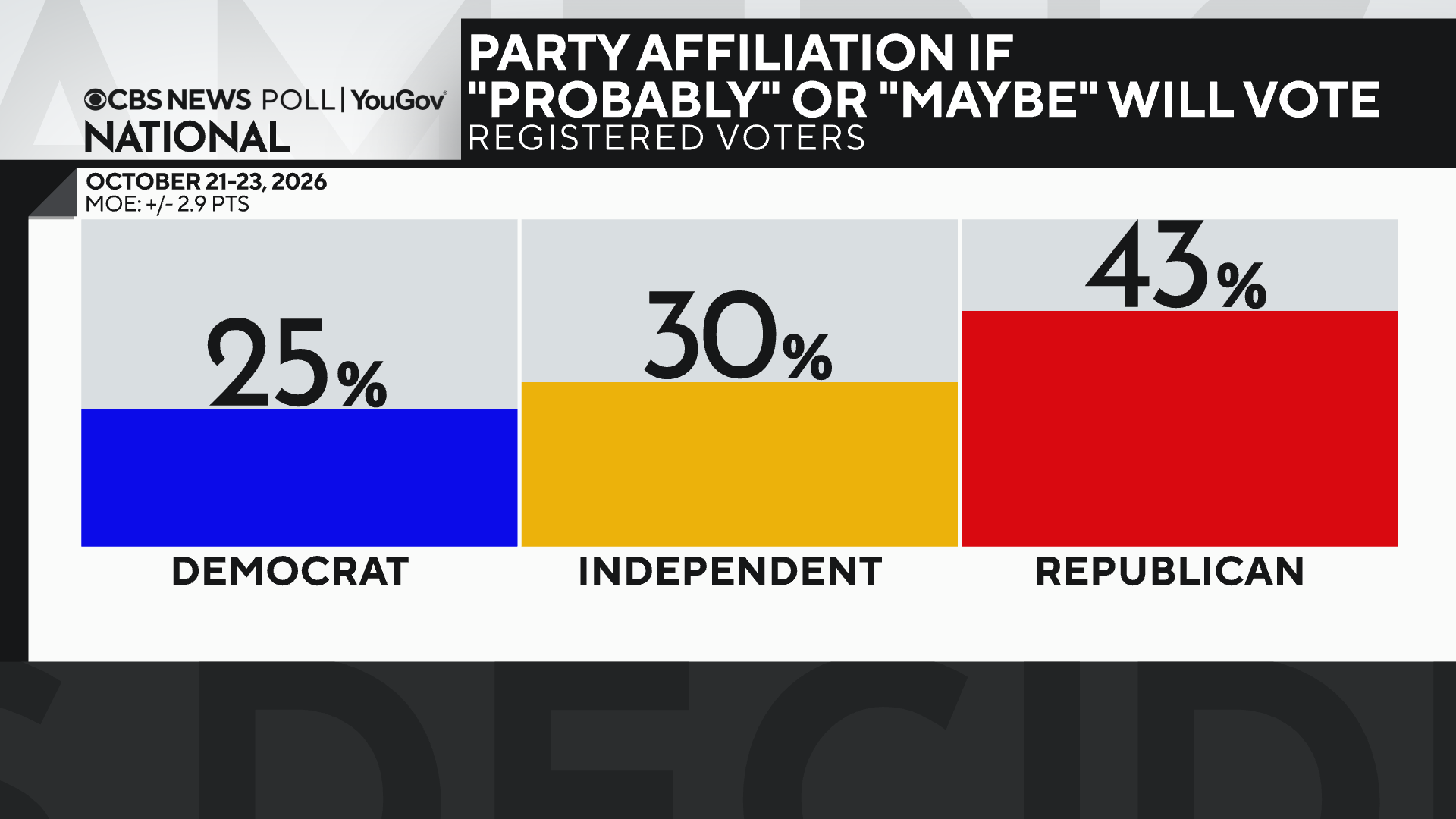
If anything, the still undecided or uncertain voters tend to profile as more Republican.
Whether they decide to show up is perhaps the key question of 2026.
Either way, voters describe a dynamic in which they’re more motivated in opposition to things they think might happen. For instance:
More think gas prices will go up if Republicans win than if Democrats do.
(Though they don’t think Democrats will make gas prices go down.)
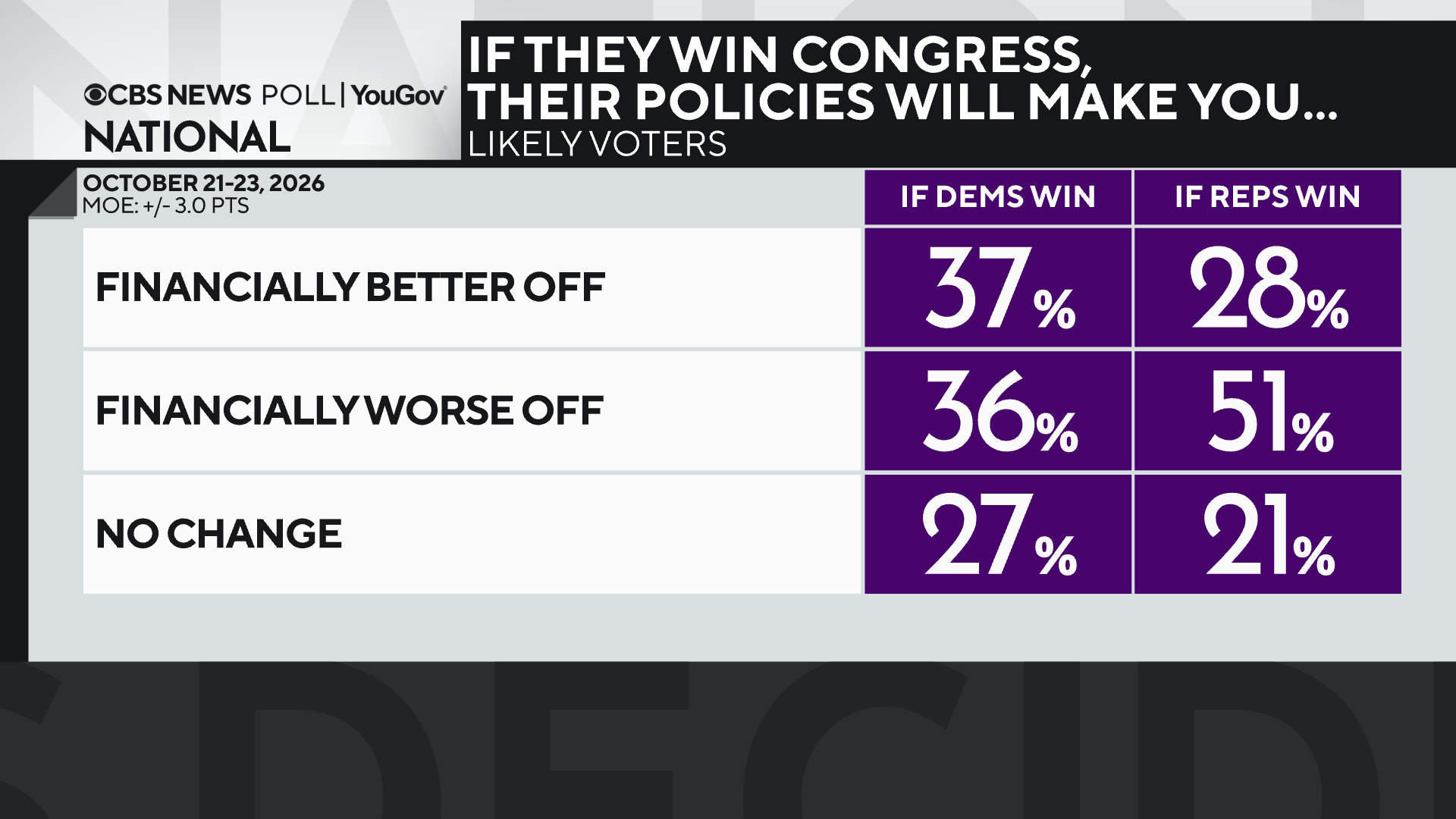
Most voters don’t think Democrats have a plan and won’t make people financially better off, either…But more voters think they’ll be worse off if Republicans win.
The president remains a central factor. It would be a high number voting either to support or oppose a president in a midterm if this sentiment holds through Election Day.
Most of the Democrats’ voters are trying to oppose either President Trump or Republicans, even more than to help Democrats.
(Whether that rationale ultimately limits Democrats’ gains or not is another key question.)
But he’s motivating for most Republicans, especially MAGA.
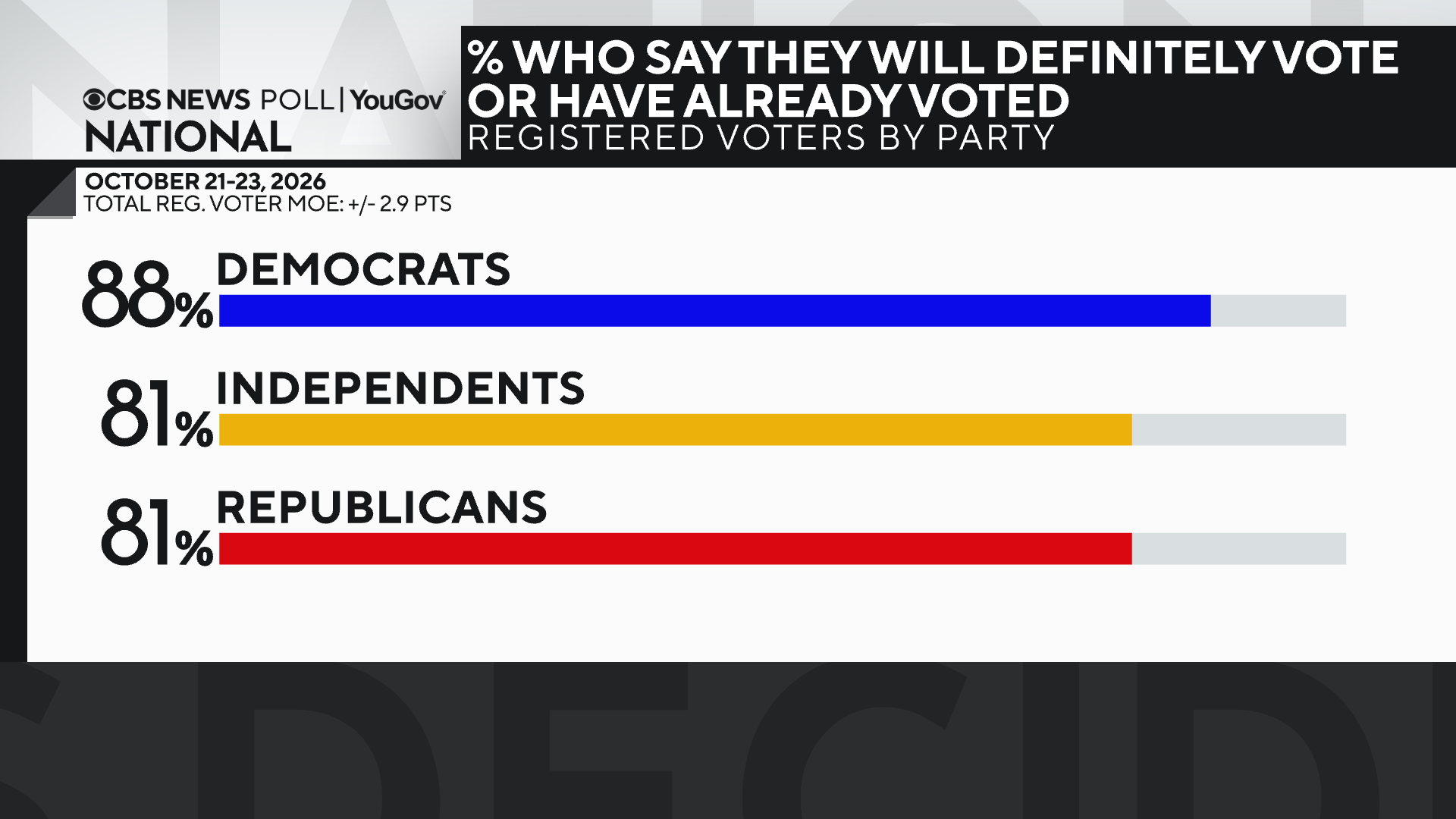
Some of this lead is attributed to more Democrats saying they’ll either definitely vote, or have already voted early.
But this is not over: The voters who describe themselves as only “probably” or “maybe” going to vote are more Republican. If they become motivated, this can all change.
So, what happens if either party wins?
Few voters think gas prices will go down no matter who wins.
But the GOP is now relatively more associated in voters’ minds with rising gas prices: More think they’ll go up if Republicans win than if Democrats do.
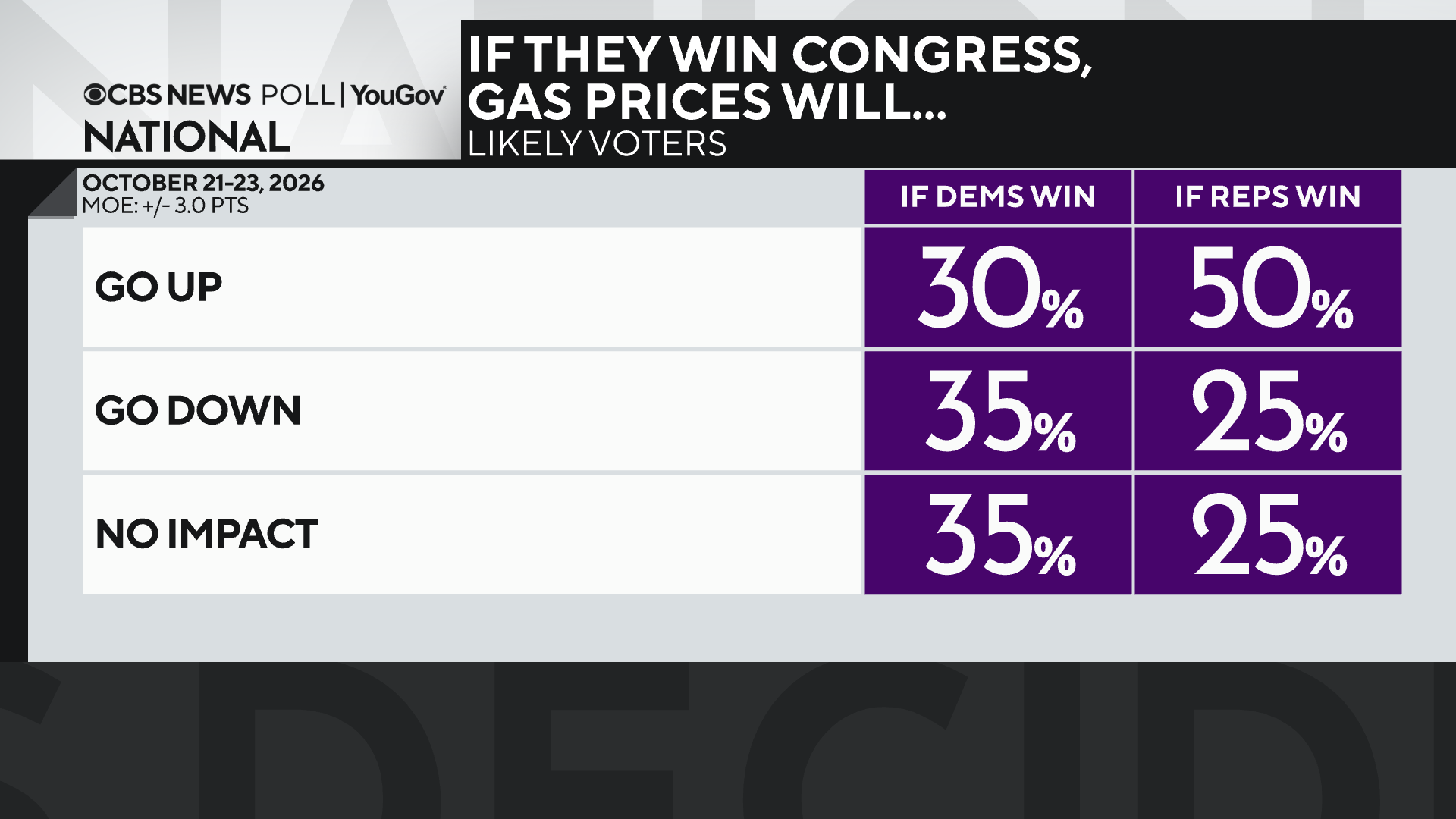
Most voters don’t think they’ll be better off financially, no matter who wins. That cynicism does permeate the electorate.
But as a choice, relatively more think they’ll do better with Democrats.
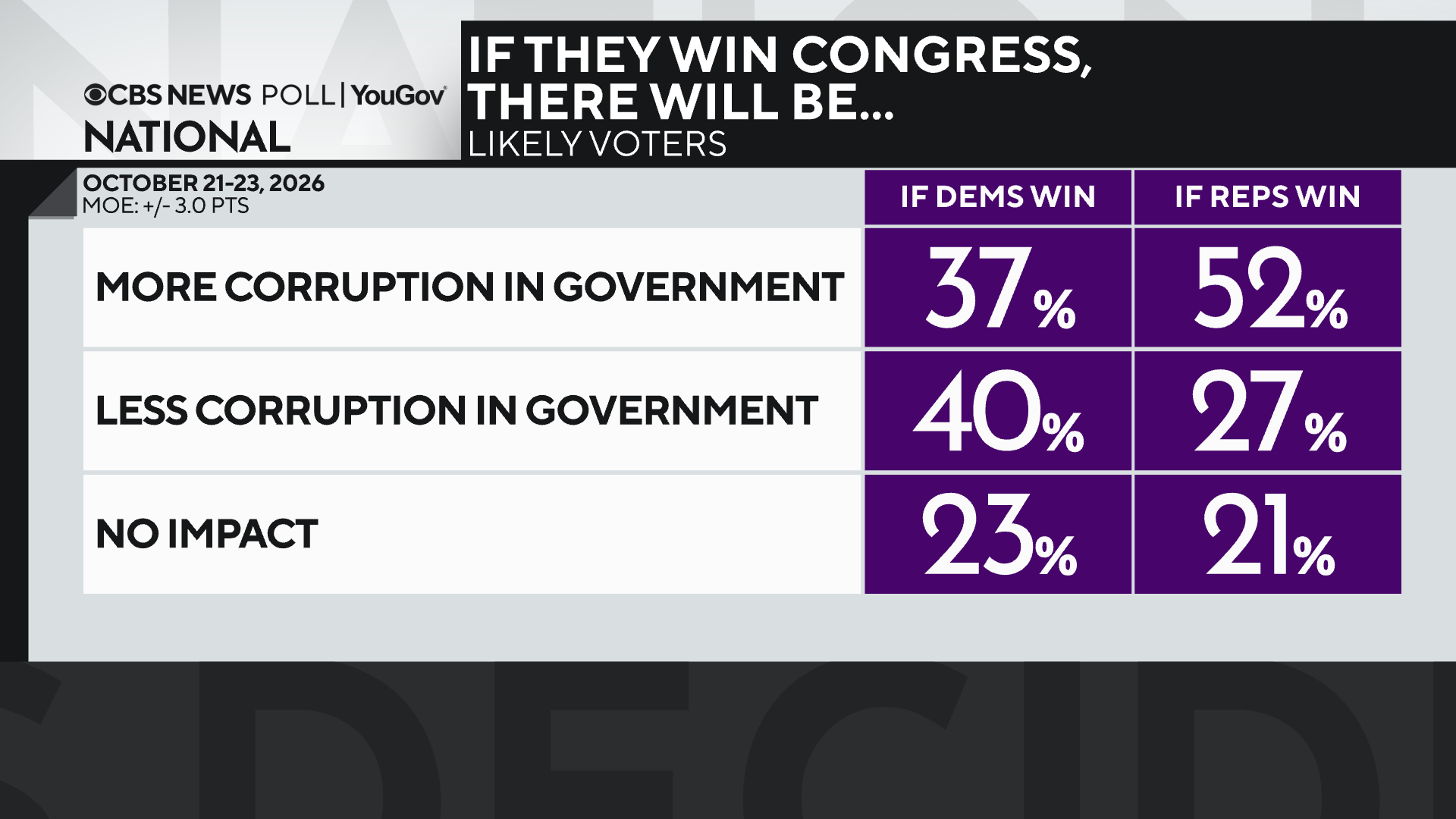
Most voters think there will be more corruption in government if Republicans maintain control of Congress.
Both Democrats and Republicans — at about similar large majorities — see government corruption as a factor in their votes.
The Trump factor: A motivator for both sides, but more so for Democrats
Mr. Trump looms large over the midterms, particularly for Democrats. More than seven in 10 voting for Democrats say their vote for Congress is to oppose him.
Mr. Trump is also a factor for those backing Republicans. Most say their vote is to support him, but to a lesser extent than Democrats are voting to oppose him.
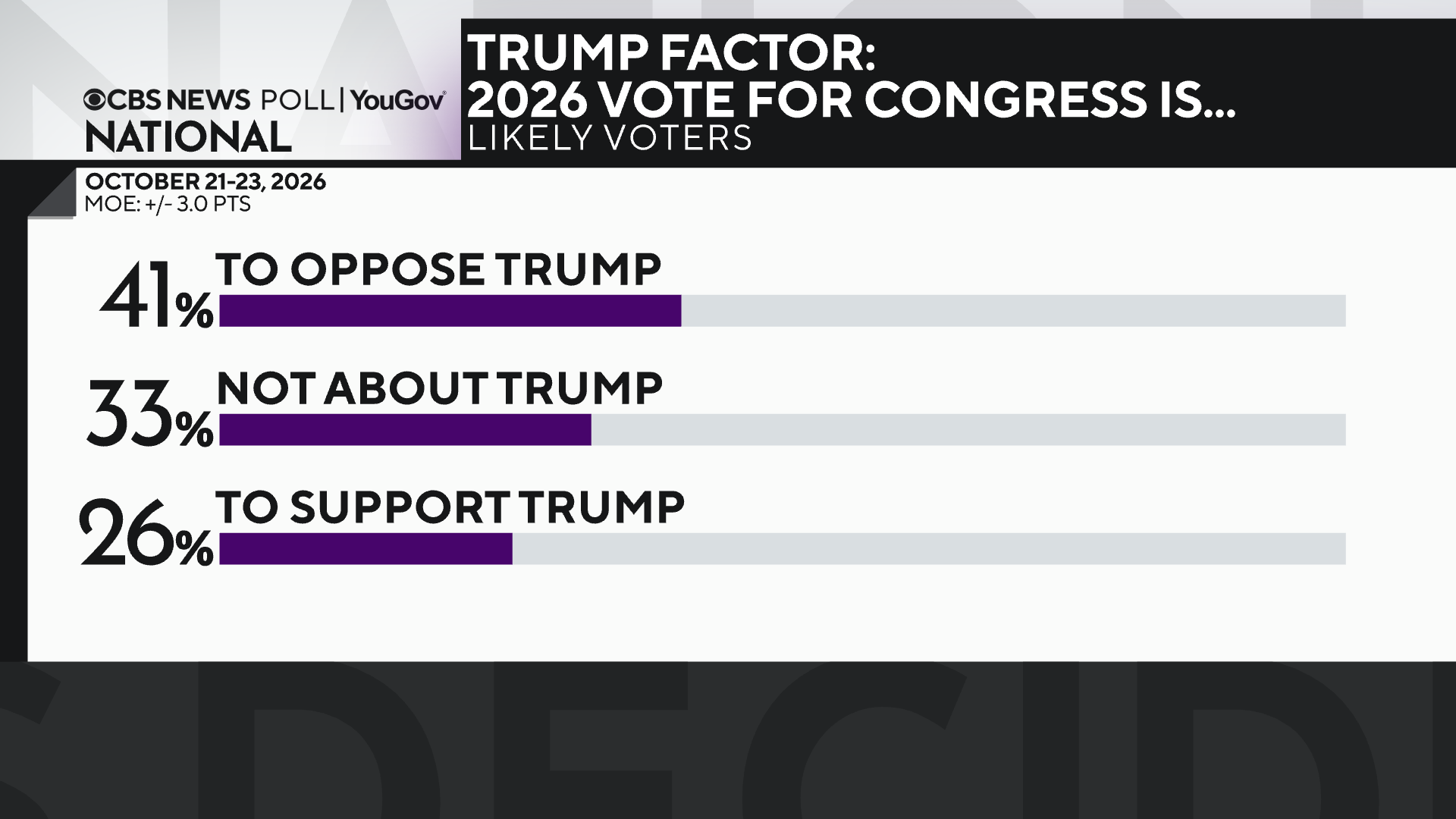
For most who are backing Democrats, their motivation is more about stopping Mr. Trump and GOP policies than advancing the Democrats’ own policies.
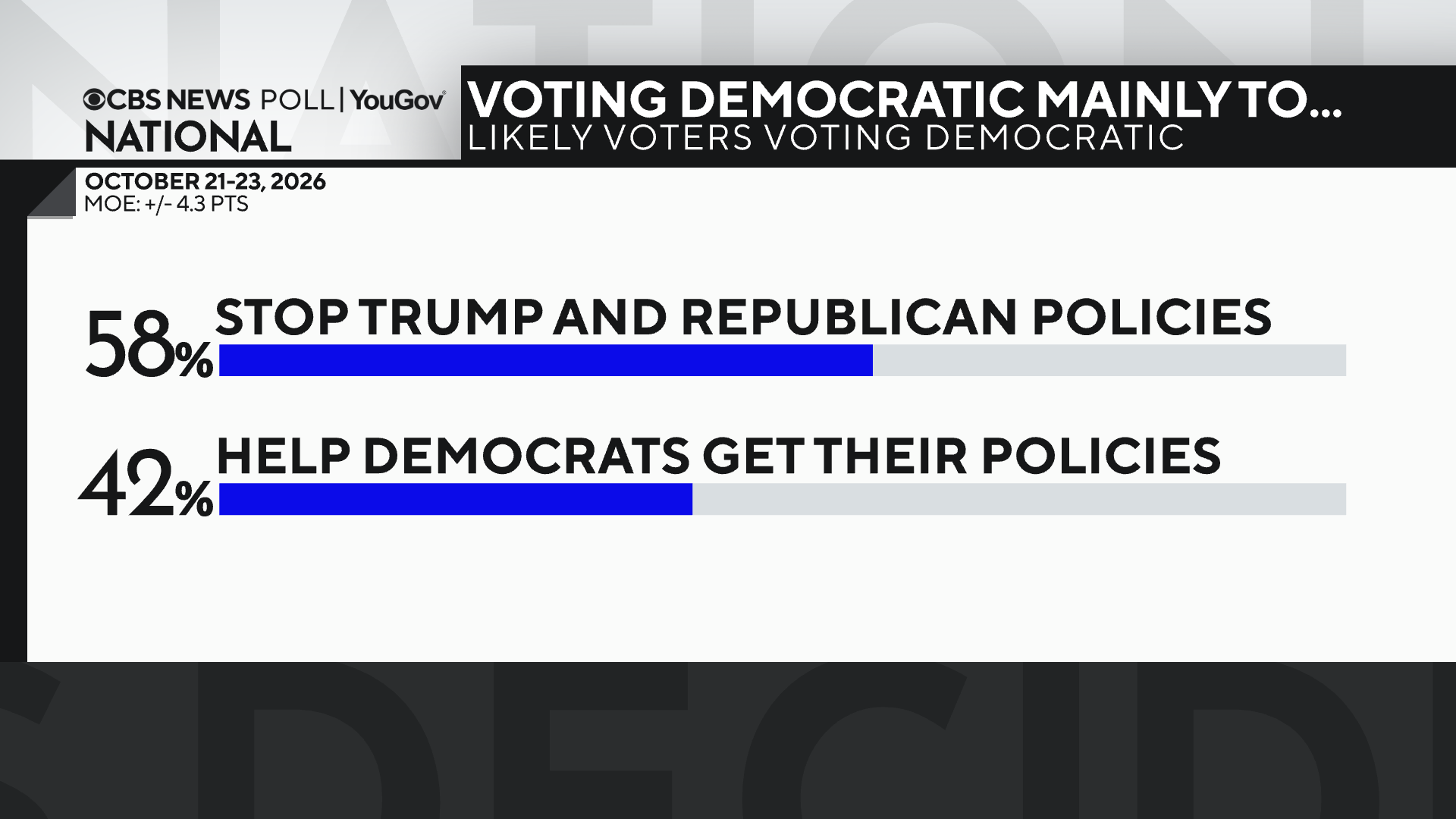
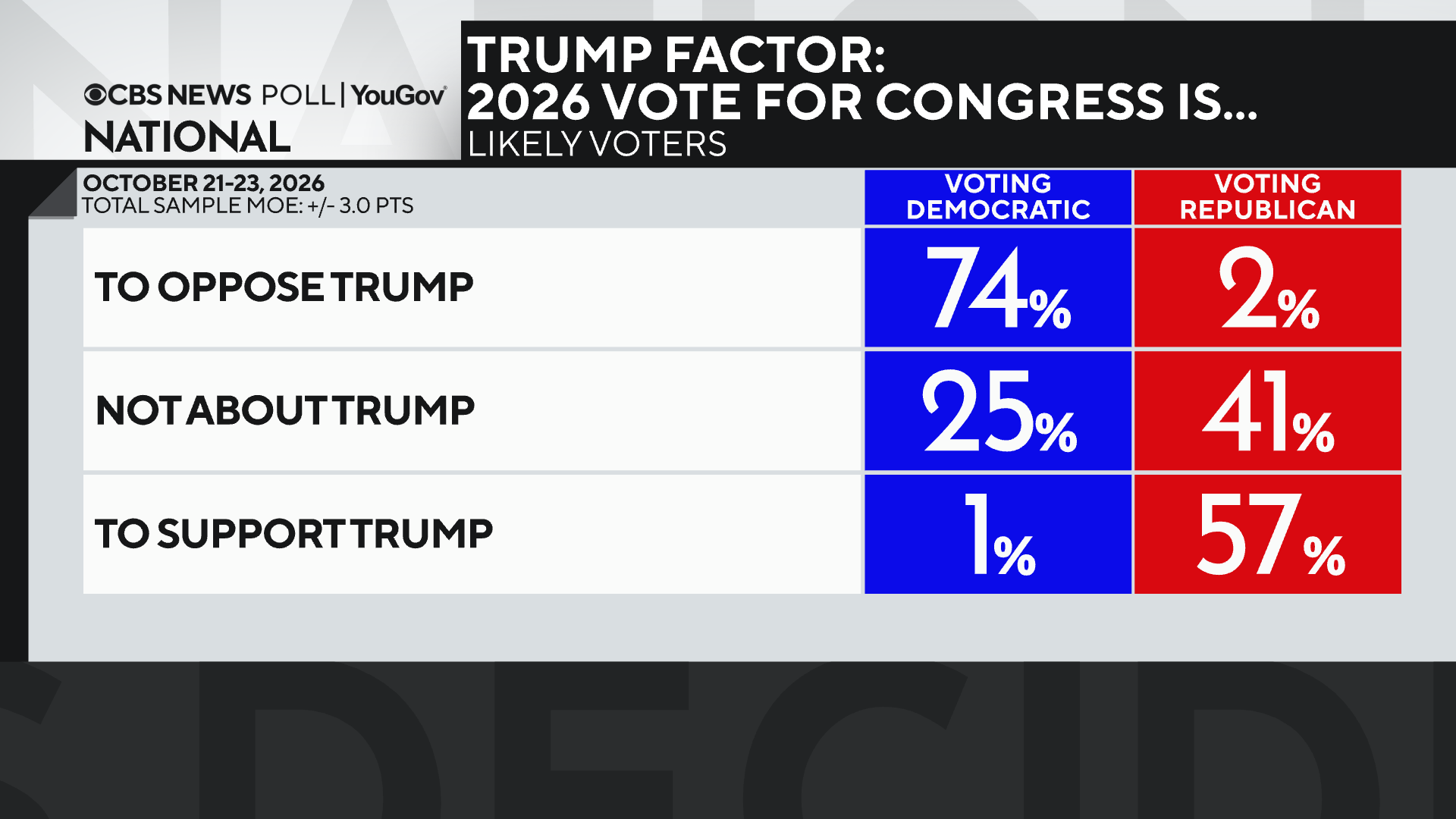
Here’s how prevalent opposition to either party is as a motivating force this year.
Neither Democrats nor Republicans are perceived by a majority of voters as having a clear plan, should either win control of Congress.
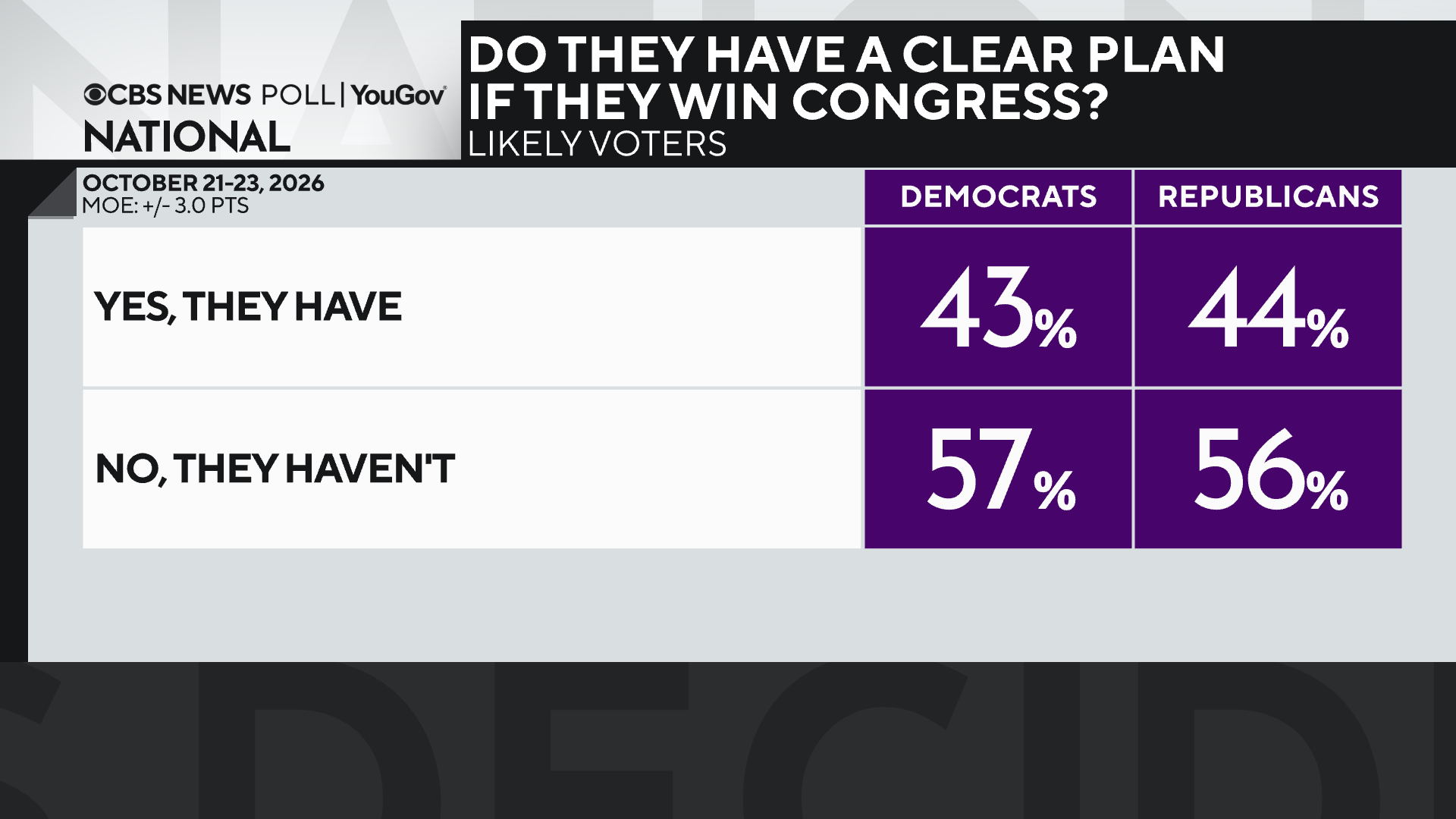
There are four in 10 voters supporting Democrats who don’t believe the party has a clear plan, should they win. They say opposition to Mr. Trump is the main motivator for them.
Meanwhile, there are four in 10 voting Republican who say their vote isn’t about the president. They’re less likely to consider themselves MAGA, tend to just “somewhat,” rather than “strongly,” approve of Mr. Trump. But a big majority of them have an unfavorable view of the Democratic Party – so they remain in the Republican camp.
Other issues
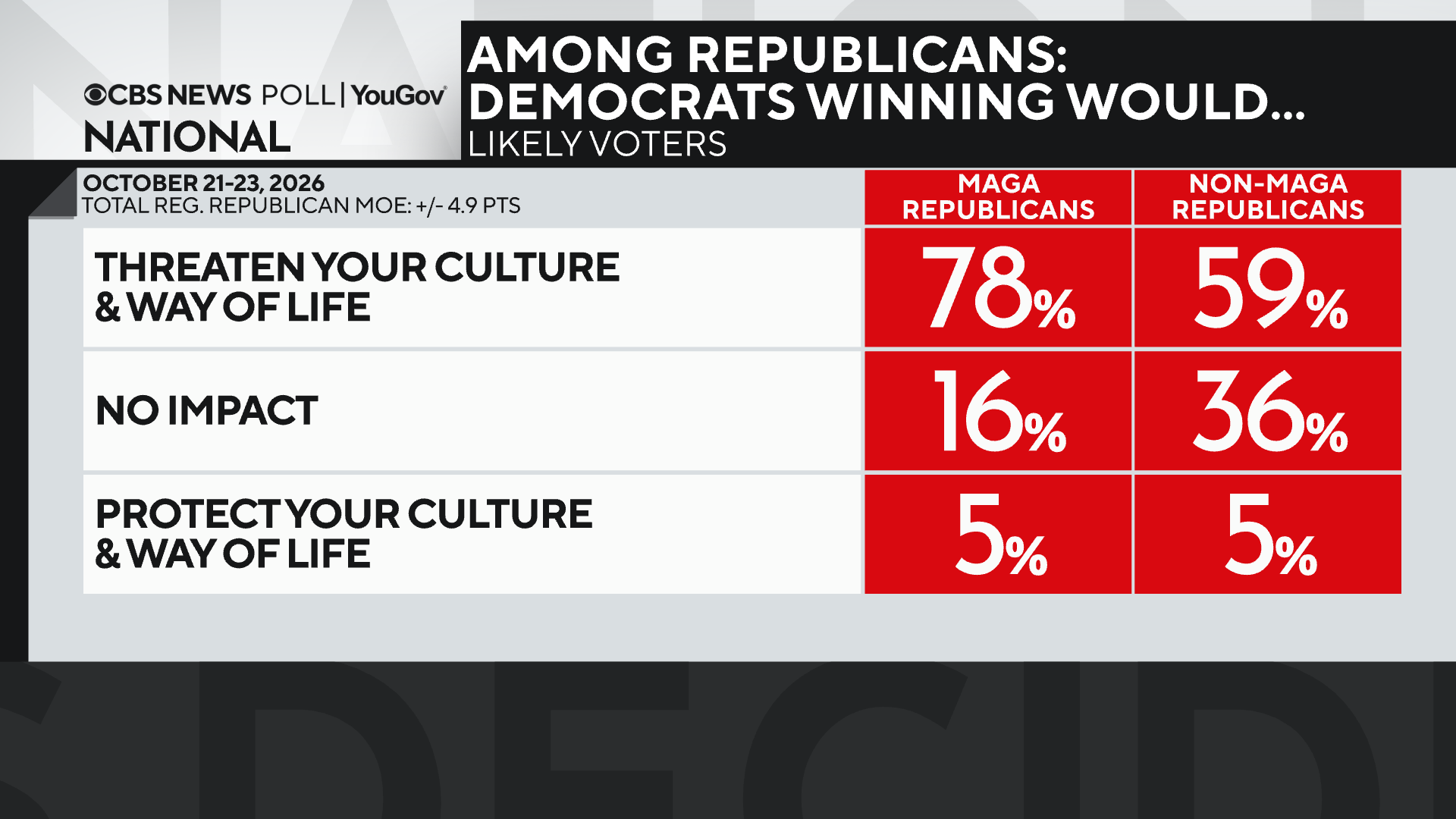
Many voters feel a win by the other side is a threat to their way of life. Democrats think a Republican win would be a threat to theirs.
MAGA Republicans in particular, more so than non-MAGA, think the Democrats would be a threat.
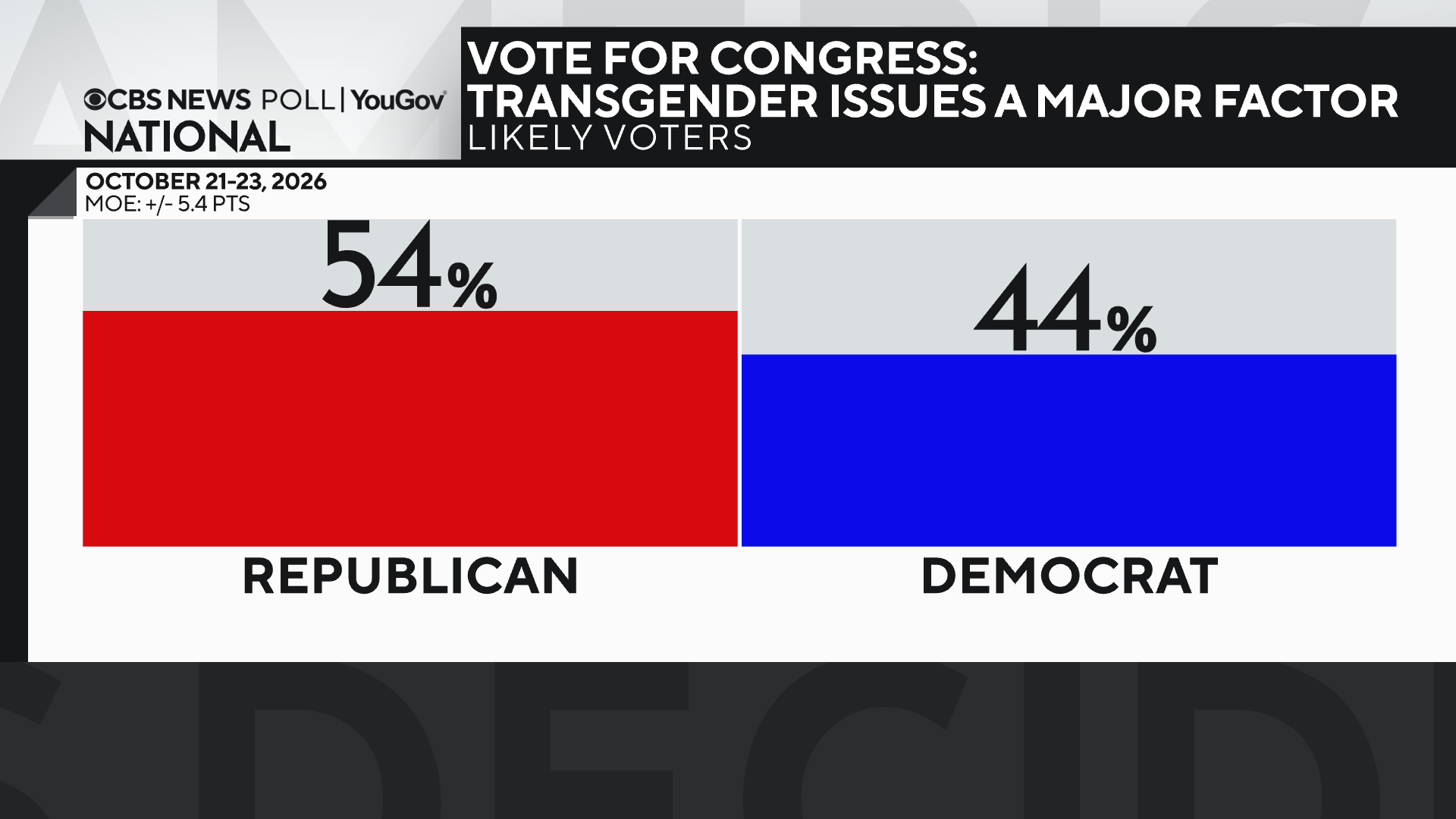
Although the issue ranks behind others as a factor in voters’ decisions, Republicans lead Democrats among those who consider transgender issues a major factor in their vote.
Immigration
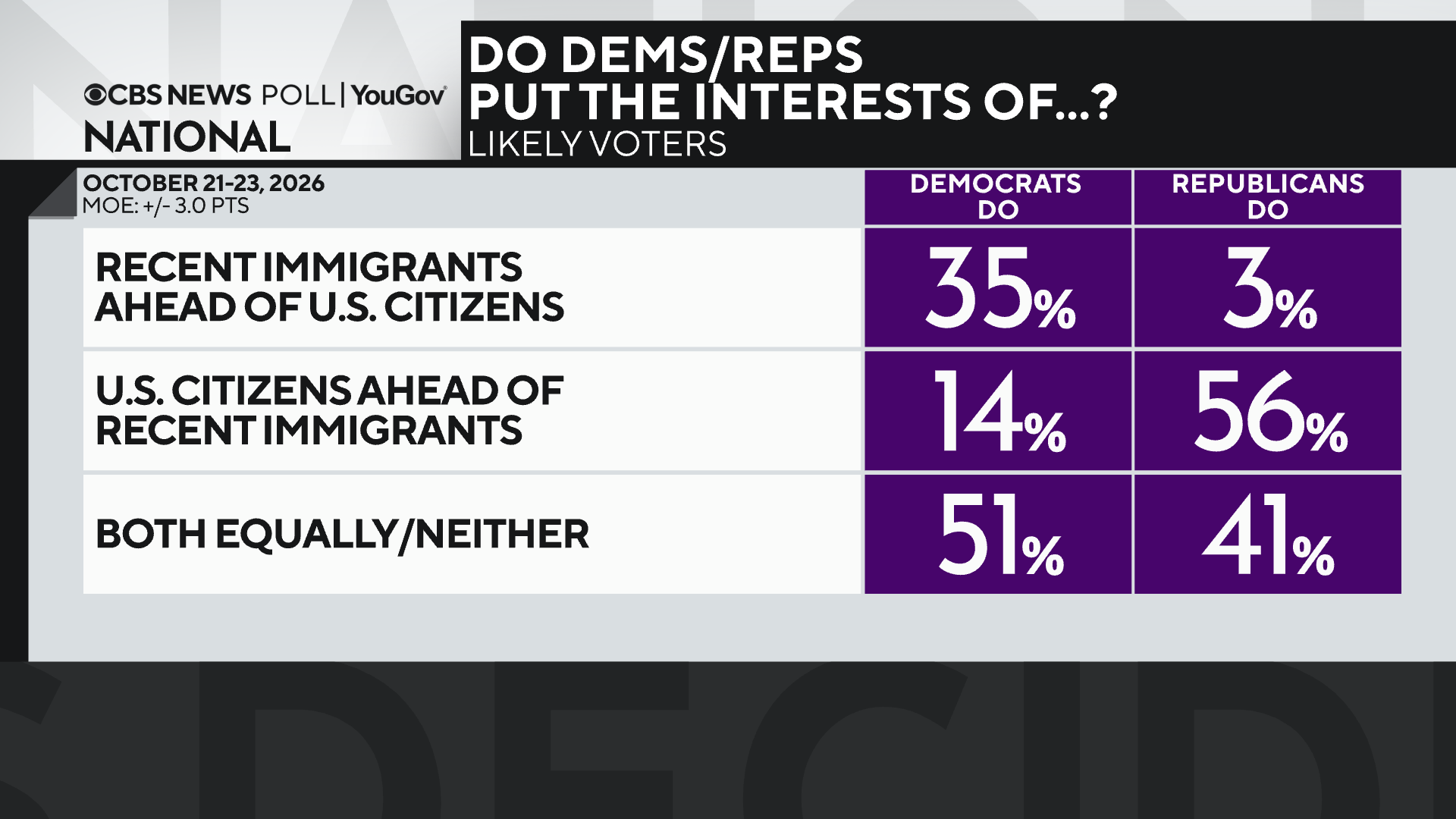
There are a third of voters who think the Democratic Party puts the interests of recent immigrants ahead of those of U.S. citizens, and voters who hold this view are backing Republicans in big numbers.
(Another third does think the Democratic Party prioritizes both groups, and these voters are supporting Democrats.)
Trump and finances
Americans’ overall ratings of the economy continue to be negative, as they have been for years. They’ve even dipped a bit lower now, to where they were last spring.
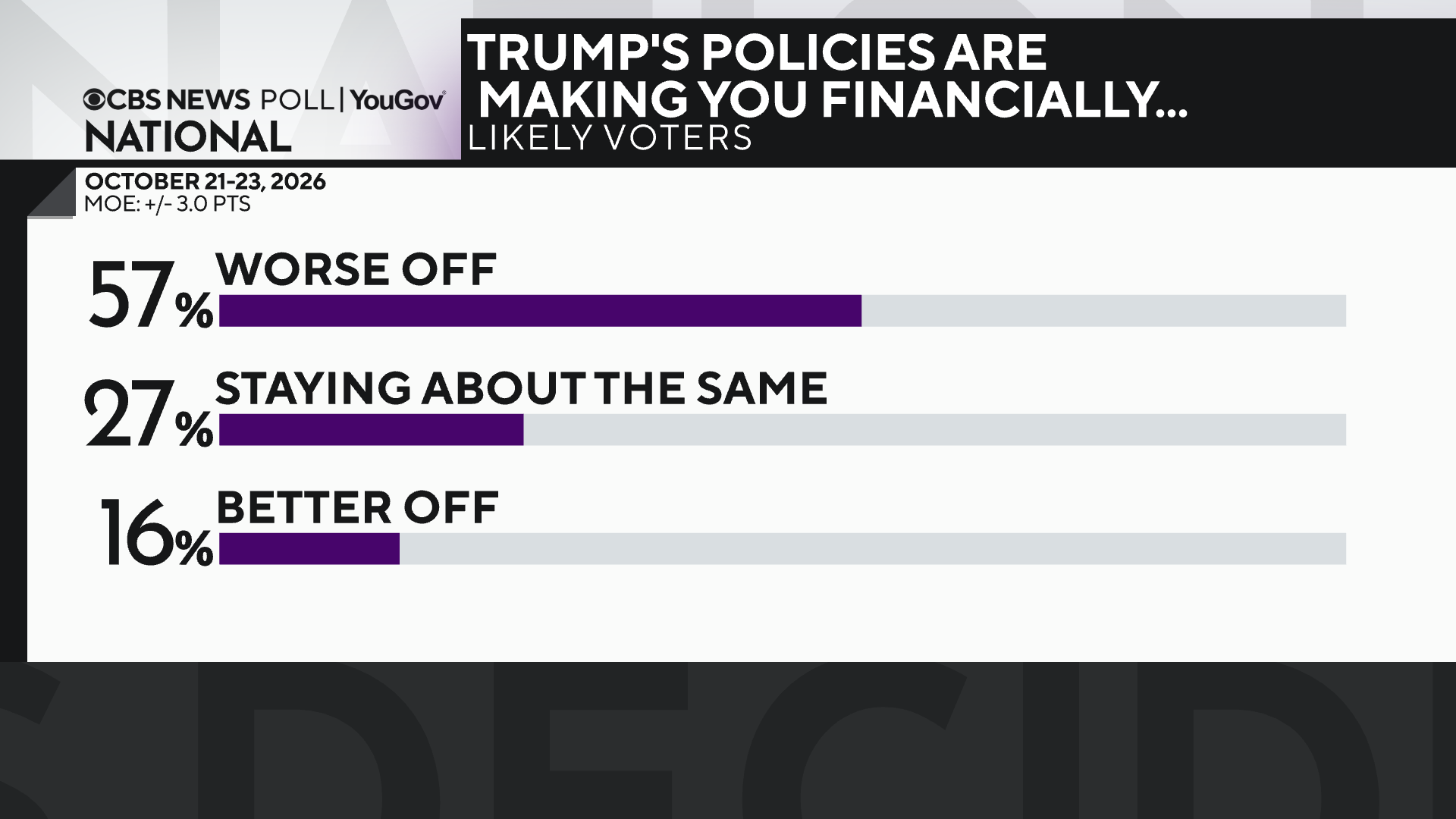
And most likely voters feel the president’s policies are making them financially worse off.
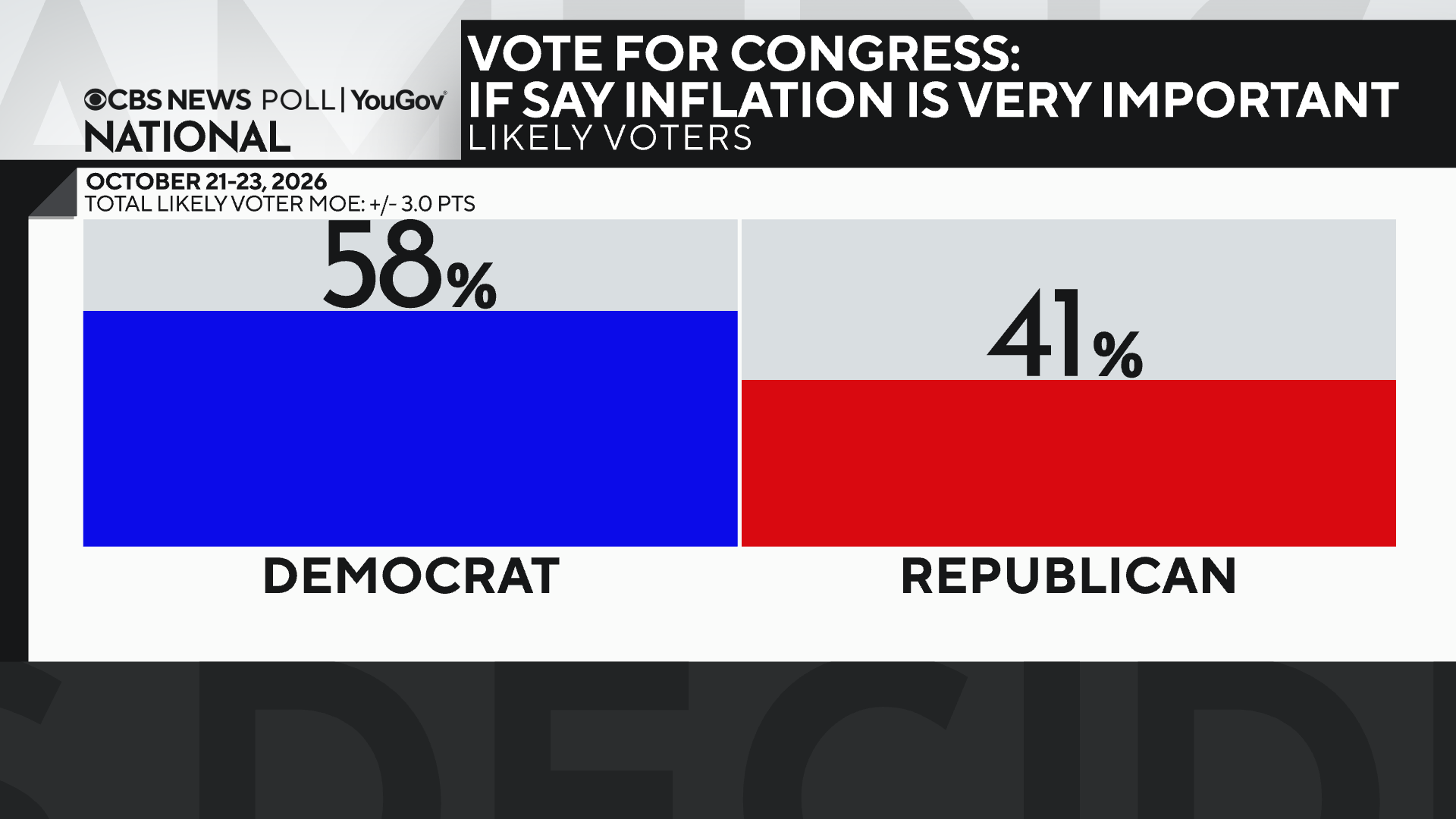
The economy and inflation remain top concerns. Those calling inflation a very important issue mostly back Democrats, as do those who feel prices have been difficult or a hardship.
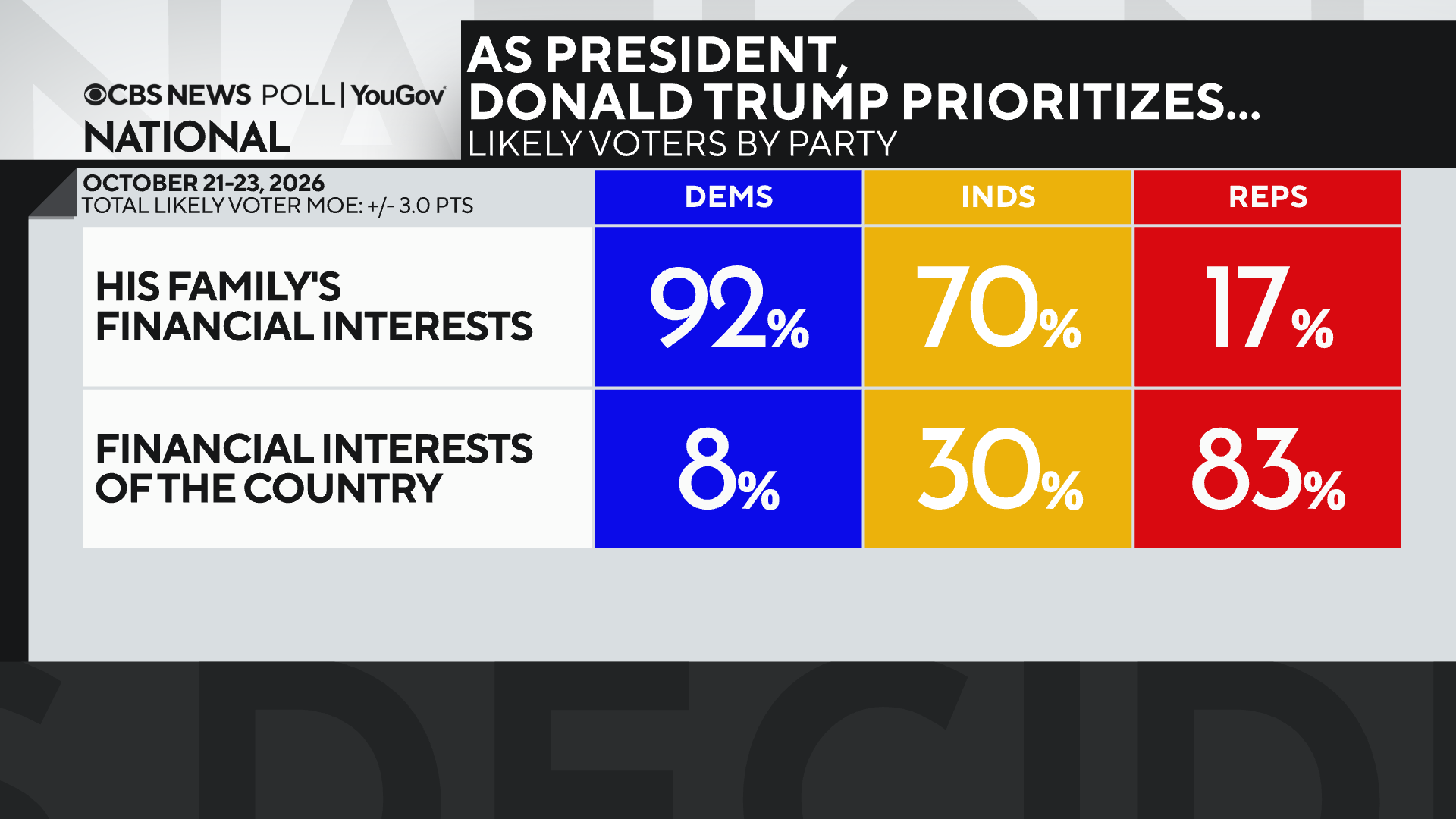
Against that backdrop, voters voice broader concern about whose financial interests they think the president prioritizes.
More feel he prioritizes his own financial interests and those of his family over the financial interests of the people in the country. And those who hold this view are backing Democrats.
Republicans mostly feel Mr. Trump prioritizes the financial interests of people in the country over his own.
Trump on the trail: Is he helping or hurting?
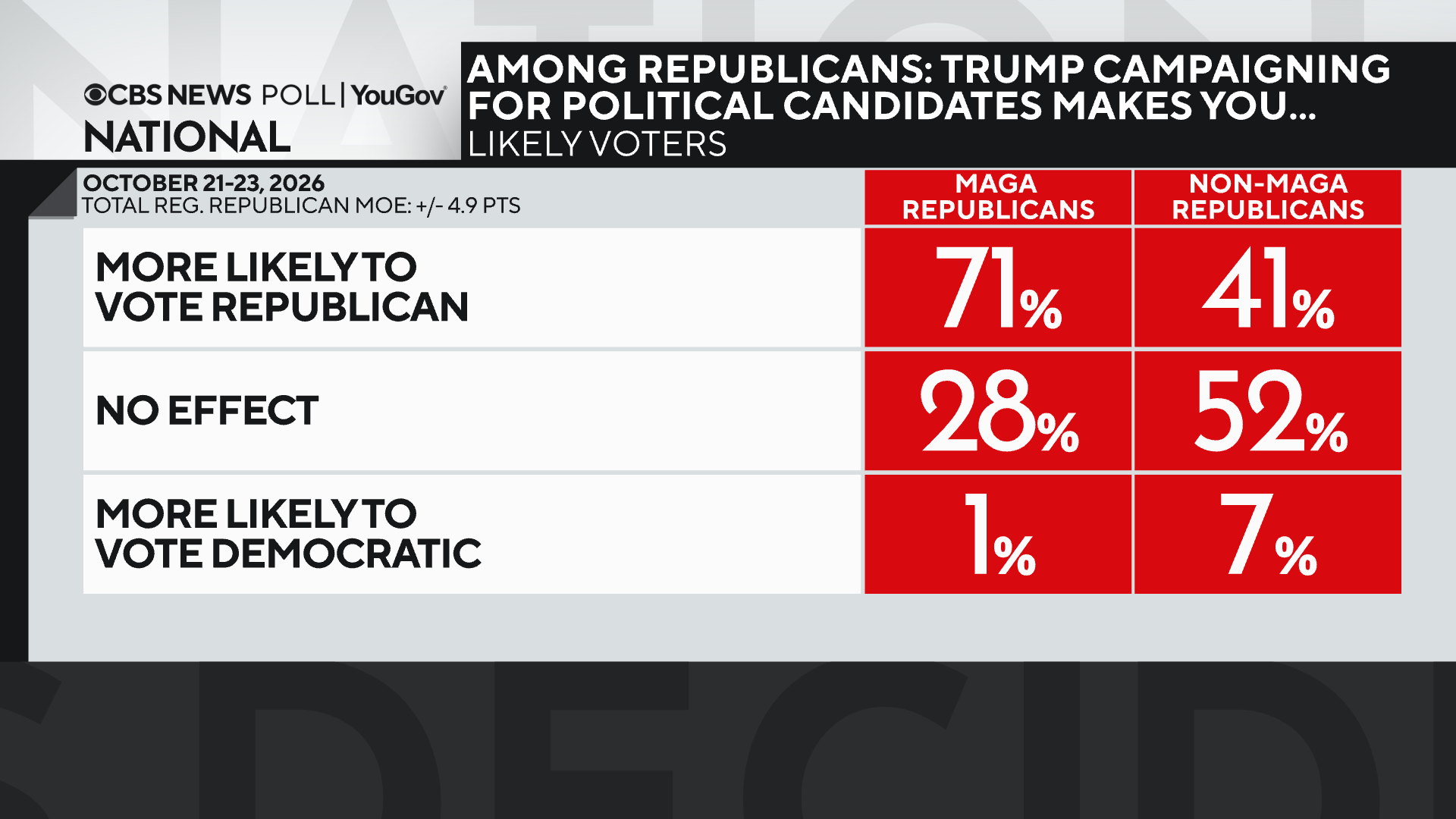
The president’s numerous appearances on the campaign trail may help to rally the base behind Republican candidates, but those events may not have as much impact with the rest of the party.
Most MAGA Republicans say that when they see Trump campaigning for political candidates, it makes them more likely to vote for Republicans.
For many non-MAGA Republicans, these campaign events do not do that.
The voting process
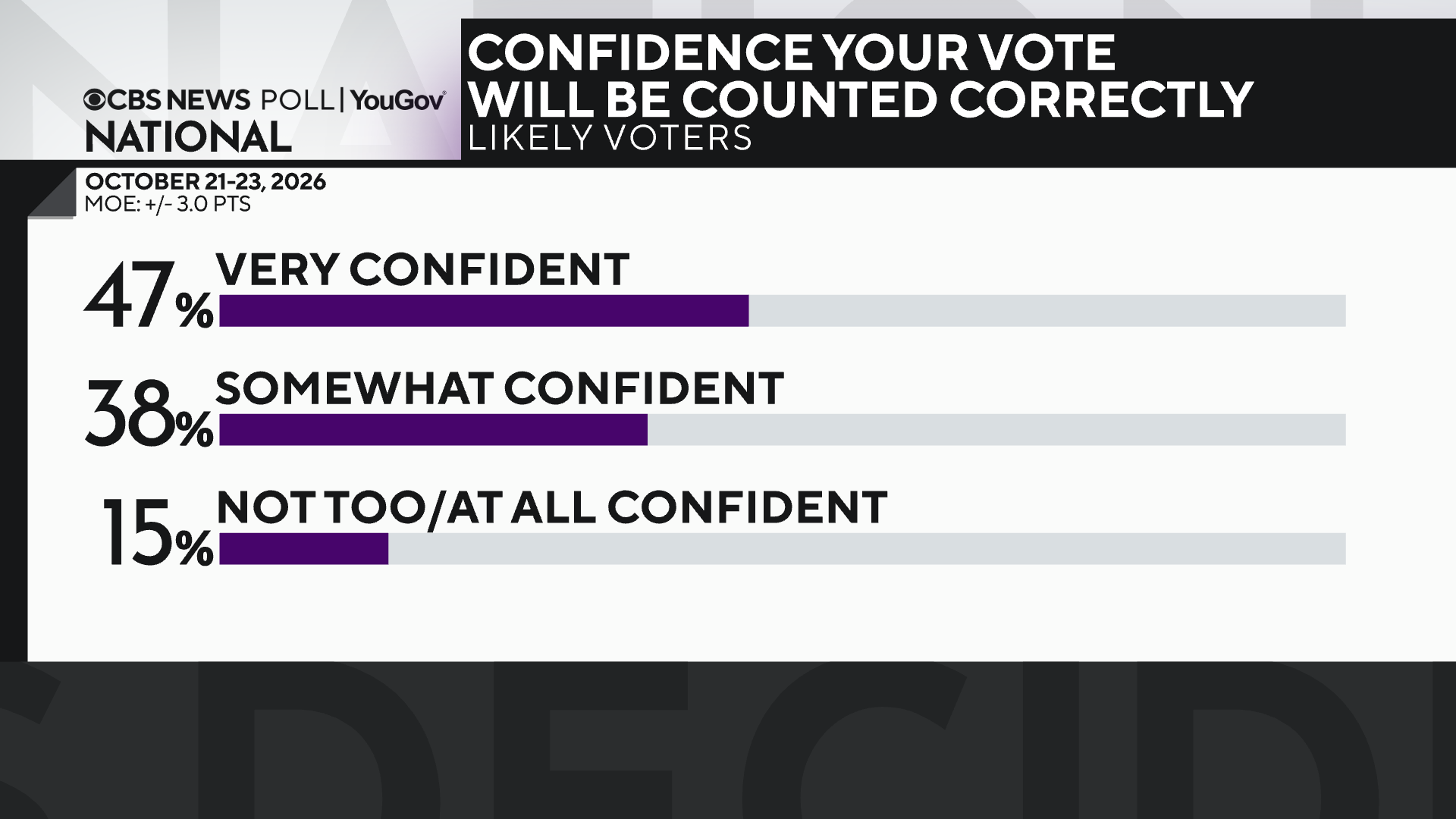
Most voters express at least some confidence in their own local and county elections administration to conduct the election process, including determining eligibility and correctly counting ballots.
In turn, most tend to voice confidence that their own vote will be recorded and counted accurately in this election.
On both of these measures, more Democrats than Republicans are very confident.
Republicans are far more likely to believe that illegal voting by non-citizens happens in federal elections.
This CBS News/YouGov survey was conducted with a nationally representative sample of 2,355 U.S. adults interviewed between October 21-23, 2026. The sample was weighted to be representative of adults nationwide according to gender, age, race, and education, based on the U.S. Census American Community Survey and Current Population Survey, as well as 2024 presidential vote. The margin of error for the total sample is ±2.6 points, it is ± 2.9 points for the sample of registered voters, and ± 3.0 points for likely voters.
The estimated numbers of Republican and Democratic seats come from a statistical model developed by CBS News and YouGov which includes data from this poll, past vote and other district-level characteristics, demographics and historical patterns. These estimates are subject to statistical error. We simulate many elections, with the error calibrated to include historical polling accuracy, to obtain a range of seat estimates. We report 95% confidence intervals from the simulations. These estimates describe which party is ahead today and may change as additional data are collected closer to the election.

